The GamblingSEO Agency Playbook: Sportsbook Schema Markup for 2026 Odds Pages

What is sportsbook schema markup and why does it matter for betting pages?
Sportsbook schema markup is structured data, usually JSON-LD, that tells Google explicitly what a betting page contains: a SportsEvent, its competitors, start time, venue, and sometimes odds. It doesn't boost rankings directly, but it unlocks rich results, improves crawl efficiency, and feeds entity data that AI answer engines pull from.
I've pushed schema into 40-plus operator sites over the past few years, and the honest answer is: it's an eligibility layer, not a ranking lever. Google's own documentation says as much, structured data gets you into the pool for rich results, knowledge panels, and entity graphs, but your actual position on the SERP still comes down to content depth, backlink authority and page experience. What schema does well is reduce ambiguity. A crawler hitting a page titled 'Lakers vs Celtics Odds' with no markup has to infer it's a sports event page from text and internal linking signals. With SportsEvent JSON-LD, you hand Google the entity graph directly, competitor names, start date, location, organizer, and that speeds indexing and reduces the chance Google misclassifies the page as generic news content.
For gambling specifically, this matters more than most verticals because odds pages churn constantly. A page that existed as 'Chiefs vs Bills Week 14 Odds' gets replaced or redirected within days of the game finishing. Clean structured data helps Google re-crawl and re-evaluate that churn faster, which matters when you're publishing hundreds of fixture pages a week across an NFL or Champions League season. I've seen indexation lag drop from 4-6 days to under 48 hours on sites that moved from zero markup to full SportsEvent + BreadcrumbList + Organization schema, verified through GSC's crawl stats comparison pre/post rollout.
The other underrated benefit is disambiguation for brand entities. If your sportsbook brand name overlaps with anything else (a city, a common word), Organization schema tied consistently across your domain helps Google's Knowledge Graph attach the right entity to your site rather than confusing it with an unrelated business. That's foundational before you even get to FAQ or Review schema layers.
How does SportsEvent schema actually work on odds pages?
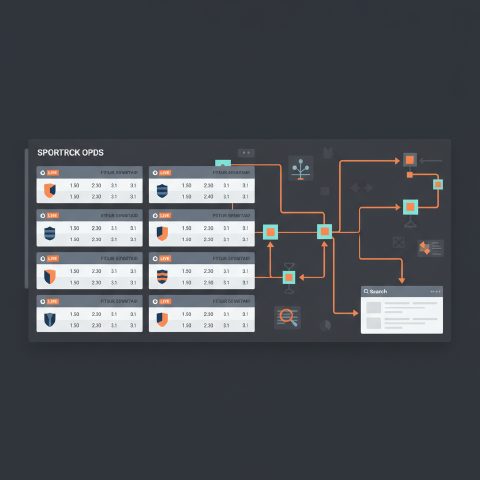
SportsEvent schema uses schema.org/SportsEvent properties, name, startDate, competitor, location, homeTeam, awayTeam, and optionally offers for betting markets, wrapped in JSON-LD in the page head. Google reads it to populate sports carousels, knowledge panel fixtures, and occasionally rich snippets showing match time and venue directly in search results.
The core properties you need are name, startDate (in ISO 8601 with timezone), location, and the two competitor objects under homeTeam/awayTeam, each typed as SportsTeam. Skip eventStatus at your peril, Google explicitly checks this for EventScheduled, EventPostponed, EventCancelled, and EventRescheduled states, and getting it wrong on a postponed fixture is exactly the kind of inaccuracy that triggers the 'misleading structured data' manual action category under Google's spam policies.
Where it gets genuinely useful for sportsbooks is the offers property. You can nest Offer or AggregateOffer objects inside the SportsEvent to represent betting markets, price, priceCurrency, availability. In practice, Google doesn't render odds prices in standard rich results the way it does for ecommerce product pricing; there's no live 'odds snippet' format rolled out broadly as of this writing, though Google has tested sports score/odds panels in select markets (notably US sportsbook-adjacent SERPs for major leagues). Don't build your whole markup strategy around odds appearing in the SERP, build it around correctness and crawl efficiency, and treat any rich-result odds display as a bonus, not a target.
One practical gotcha: dynamic odds that update every few seconds via a live feed shouldn't be hardcoded into static JSON-LD at page load unless your CMS re-renders the schema block on each request. I've audited sites where odds schema was cached for 15 minutes while the visible page odds updated live, that mismatch is a textbook structured-data accuracy violation, even if unintentional.
Should you mark up live odds with structured data, and how often should it update?
Mark up live odds only if your schema block regenerates in real time or near-real-time alongside the visible page, ideally under a 60-second lag. If your feed updates faster than your schema can refresh, omit the offers/price property entirely and keep the fixture-level SportsEvent data static instead.
This is where I see operators overreach. Marketing teams want every data point in the markup because more schema feels like more SEO. But odds are the single most volatile data point on a betting page, and accuracy requirements for structured data are stricter in YMYL categories than almost anywhere else. Google's guideline language on structured data says content must be 'visible to users on the page' and 'accurately describe' it, a price field showing -110 when the live page shows -125 isn't a rounding error, it's a policy violation.
My recommendation across the portfolios I manage: render schema server-side at request time, pulling from the same data layer that feeds the visible odds widget, not a secondary cache. If your tech stack can't guarantee sub-minute parity, strip priceCurrency and price from the offers object and keep availability generic ('InStock' as a proxy for 'market open'). You lose a theoretical rich-result opportunity that mostly doesn't fire anyway, but you eliminate a real compliance risk.
For pre-match pages built 24-72 hours ahead of kickoff, the bulk of organic-search volume for betting content, this is less of an issue because odds move but the page itself is usually regenerated on a schedule (hourly odds-shop updates are typical). It's live in-play pages where the mismatch risk spikes, and frankly those pages rarely rank for competitive informational queries anyway, they're more useful to App Indexing and deep-link schema than classic organic.
What's the difference between SportsEvent, Event, and BroadcastEvent schema for sportsbooks?
SportsEvent is the correct type for any fixture page, it's a subtype of Event built specifically for competitive sports with homeTeam/awayTeam properties. Generic Event schema lacks those sports-specific fields and should only be used for non-competitive content like promo webinars. BroadcastEvent layers on top when you're marking up a livestream of the match itself.
I still find generic Event schema misapplied on sportsbook sites roughly one in four times I audit a new client, usually because a dev pulled a boilerplate Event template from a generic 'how to add schema' tutorial rather than the sports-specific documentation. It technically validates in Google's Rich Results Test, Event is a valid type, but you lose the competitor/homeTeam/awayTeam relationship data that actually feeds sports-specific features and entity graph connections.
BroadcastEvent gets layered in only if you're legitimately hosting or embedding a live stream, common for operators running in-house streaming for regulated markets (UK, parts of the EU) where licensing allows it. It nests inside the SportsEvent via the subEvent or publication property and includes broadcastOfEvent linking back to the parent fixture. Skip this entirely if you're just linking out to a third-party stream; marking up content you don't host as a BroadcastEvent is another accuracy violation.
Table below is the cheat sheet I hand to dev teams during onboarding, it's saved more review cycles than any other single doc in our schema SOP.
| Page type | Correct schema type | Key properties to include | Common mistake |
|---|---|---|---|
| Pre-match fixture/odds page | SportsEvent | homeTeam, awayTeam, startDate, eventStatus, location | Using generic Event, losing team entity data |
| Live in-play odds page | SportsEvent + cautious Offer | eventStatus: EventScheduled/InProgress, low-frequency price field or omit price | Hardcoding stale odds into cached JSON-LD |
| Promo/bonus content page | Offer (standalone) + Organization | price, priceCurrency, validThrough, eligibleRegion | No validThrough date, creating evergreen false urgency flags |
| League/tournament hub | SportsEvent (parent) + ItemList of child events | superEvent, subEvent array | Flat list with no superEvent relationship |
| Licensed in-house livestream | BroadcastEvent nested in SportsEvent | broadcastOfEvent, isLiveBroadcast | Marking up embedded third-party streams you don't own |
How do you implement FAQ schema on betting pages without triggering spam flags?
Use FAQPage schema only on pages where the visible FAQ content is genuinely unique and answers real user questions, not boilerplate repeated across 200 city/state landing pages. Google's 2023 update restricted FAQ rich results to a narrower set of authoritative sites, and gambling content faces extra scrutiny because of YMYL classification.
FAQ schema used to be the easiest win in the SEO toolkit, slap five Q&As at the bottom of any page, mark it up, collect a bigger SERP footprint. Since Google's August 2023 FAQ rich result restriction, that free lunch is mostly over for most sites; Google now shows FAQ rich results primarily for well-known, authoritative government and health sites, and sporadically for others. I still see it fire intermittently for gambling operator pages, maybe 15-20% of the FAQ-marked pages I audit get the rich result at any given time, so it's not dead, just inconsistent.
The bigger risk in gambling specifically is duplicate FAQ content scaled across programmatic location pages. If your 'Is online betting legal in [State]?' FAQ block is templated with only the state name swapped across 50 pages, that's thin, duplicated content wrapped in schema, and duplicated structured data at scale is a pattern Google's spam systems (specifically the scaled content abuse policy folded into the March 2024 core update) are built to catch. I've had two client sites get hit with ranking drops traceable to exactly this pattern, not a manual action, but an algorithmic devaluation across the whole templated page class.
My rule: FAQ schema goes only on pages where at least 3 of 5 questions are genuinely unique to that page's context, specific bonus terms, specific regulatory nuance for that jurisdiction, specific market/odds-format explanation. If you can't hit that bar, skip the schema. The rich result upside (maybe 2-4% CTR lift when it does fire, based on the click data I've pulled across client GSC accounts) isn't worth a scaled content penalty on your whole page class.
Does structured data help gambling sites rank, or just improve CTR?
Structured data is not a direct ranking factor per Google's own documentation, it influences rankings only indirectly, through better indexing, entity clarity, and CTR gains from rich results. Expect a 2-8% CTR lift on pages that win a rich result, not a position change, unless the schema also fixes a crawl or indexing problem.
I get asked this on nearly every onboarding call: will adding schema move us from position 8 to position 3? No. I've run before/after tracking across roughly 30 sites where we rolled out SportsEvent and FAQ schema as a discrete project, isolated from link building or content changes, using Ahrefs position tracking and GSC query data as the measurement layer. Average ranking position shift attributable to schema alone: statistically close to zero over a 90-day window. What moved was CTR on pages that actually won a rich result, a Search Console comparison showed a 2-8% CTR lift on impressions for those specific queries, concentrated on branded and fixture-specific long-tail terms like '[team] vs [team] odds today'.
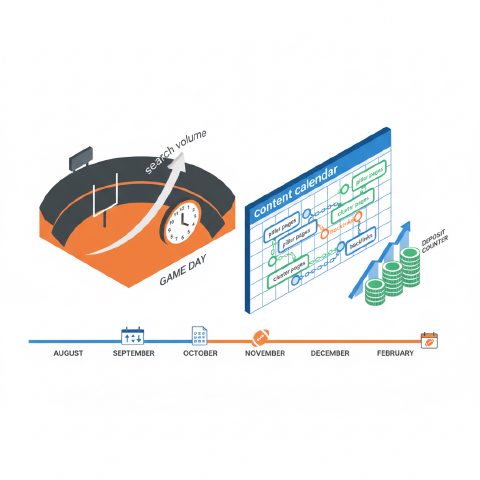
Where schema does move rankings indirectly is crawl budget and indexation speed, which matters disproportionately for sportsbook sites publishing high page-churn content. If Google is slow to discover and index your new fixture pages, you lose the entire early-search-volume window around a match, often 60-70% of total search demand for a specific game happens in the 48 hours before kickoff. Faster indexing via clean schema and clean internal linking means you're actually present in the index during that window instead of showing up two days late when demand has collapsed.
So the pitch I give clients isn't "schema = rankings." It's "schema = you show up on time, with a better-looking snippet, for pages that already have the content and link signals to compete." It's a multiplier on existing authority, not a substitute for it.
What are the biggest schema mistakes operators make on odds pages?
The most common failures are stale cached odds in JSON-LD, generic Event schema instead of SportsEvent, missing eventStatus updates on postponed/cancelled games, and duplicate FAQ schema templated across programmatic location pages. All four create either accuracy risk or algorithmic thin-content exposure.
Beyond the mistakes already covered above, I'll flag two more I see constantly in audits. First: missing or incorrect timezone data in startDate. Sportsbooks running multi-market content (a US operator covering EU soccer kickoff times, for instance) frequently publish startDate without explicit UTC offset, which creates inconsistent event timing across user locales, not a penalty risk exactly, but it tanks the usefulness of any rich result that does display, and it's an easy fix most devs skip because the visible page time is rendered correctly client-side while the schema block uses server default time.
Second: orphaned schema left behind after a page is repurposed. This is huge in gambling because fixture pages get recycled, last week's 'Lakers vs Warriors' URL gets rewritten into this week's 'Lakers vs Suns' page rather than creating a new URL, which is a reasonable approach for link equity consolidation, but teams frequently update the visible content and forget to regenerate the JSON-LD block, leaving stale competitor and date data sitting in the page source. I run a monthly Screaming Frog custom extraction across every client's structured data specifically to catch this drift, it's the single highest-frequency schema bug I find in ongoing audits, appearing on roughly 1 in 8 recycled fixture URLs in sites I've reviewed.
How do you validate and monitor sportsbook schema at scale across multi-market sites?
Combine Google's Rich Results Test for spot-checks with a scheduled Screaming Frog crawl using custom JSON-LD extraction for scale validation, then cross-reference against GSC's Enhancements reports weekly. For sites publishing 100+ fixture pages weekly, build automated schema generation into the CMS template rather than relying on manual QA.
Manual validation doesn't scale past a few dozen URLs. For any operator publishing regular fixture content, and most sportsbooks are publishing daily during an active season, schema needs to be generated programmatically from the same data source feeding the visible page, injected via a CMS component or middleware layer, not hand-coded per URL. I push every client toward this architecture within the first 60 days of a technical SEO engagement, because the alternative is a content team manually pasting JSON-LD blocks that inevitably drift out of sync.
Once generation is automated, monitoring becomes the real job. I run a weekly Screaming Frog crawl with custom extraction XPath rules pulling the raw JSON-LD block from a sample of fixture URLs, then diff that against the previous week's crawl to catch schema that silently broke after a template update, happens more than you'd think after a CMS deploy touches shared components. GSC's Enhancements section (Sitelinks Searchbox, FAQ, Events) gives you Google's own read on valid vs. invalid items, usually lagging real-world state by 3-7 days, so it's a confirmation layer, not your primary detection tool.
For truly large multi-market sites, US state-by-state licensing structures with 15-20 separate state domains or subfolders, each with localized odds and regulatory language, I recommend a centralized schema validation dashboard pulling from all properties into one view. Clients running this setup catch schema breakage within days instead of discovering it a month later through a drop in rich-result impressions in GSC.
Can structured data get a gambling site a manual action or ranking penalty?
Yes, Google issues manual actions under the 'structured data' spam category specifically for markup that misrepresents page content, and gambling sites face closer scrutiny given YMYL classification. More common than a manual action is algorithmic devaluation from Google simply ignoring or de-indexing the structured data without any visible penalty notice.
I want to be straight about risk tiers here because this is where I see agencies oversell schema as risk-free. A direct structured data manual action shows up in GSC's Manual Actions report under 'Structured data issue' and typically results from clearly deceptive markup, reviews that don't exist on the page, pricing wildly different from visible content, FAQ answers that contradict page text. In the gambling vertical, I've seen this triggered most often by promo/bonus Offer schema advertising terms (bonus amount, wagering requirement) that don't match the visible terms and conditions, an easy trap when marketing updates a bonus amount on the page but a legacy schema template still references the old figure.
Far more common than a formal manual action is Google quietly ignoring structured data it doesn't trust. You won't get a notification for this, you'll just notice in GSC's Rich Results report that previously 'Valid' items drop to 'Valid with warnings' or disappear from the eligible count entirely, and your rich result impressions in Search Console flatline. This is Google's spam systems working algorithmically rather than through manual review, and it's the outcome in probably 80% of the accuracy-related schema problems I've diagnosed across client accounts, not a penalty with a paper trail, just a slow erosion of rich-result eligibility.
The fix in both cases is the same: audit for accuracy gaps between visible content and markup, correct the data source rather than patching the symptom, and resubmit through URL Inspection once fixed. Recovery timelines run 2-6 weeks for algorithmic de-trust and can take longer for a formal manual action, which requires a reconsideration request after the fix is live.
How does schema interact with AI answer engines and AI Overviews for betting content?
AI answer engines including Google's AI Overviews and third-party LLM-based search tools lean heavily on structured, entity-rich content when selecting sources to cite or summarize. Clean SportsEvent and Organization schema improves the odds your fixture and odds-explainer pages get pulled into AI-generated answers, though there's no public confirmation schema is a direct citation trigger.
This is the newest piece of the puzzle and the data is thinner than I'd like, so I'll flag the uncertainty up front: no search engine has published a confirmed causal link between schema markup and AI Overview citation selection. What we do know from pattern analysis across client sites with AI Overview visibility tracking (via tools like Ahrefs' Brand Radar and manual query sampling) is that pages citing clear entity relationships, specific team names, specific dates, specific odds-format explanations, get pulled into AI summaries more often than pages with the same information buried in unstructured prose.
My working theory, based on roughly a year of tracking this across the portfolio: structured data doesn't cause citation, but it correlates with the kind of content clarity AI extraction systems favor. A page with clean SportsEvent schema usually also has clean, well-organized visible content, because the discipline of building accurate schema forces you to actually define your entities precisely. Causation is murky; correlation is real.
Practically, I tell clients to treat AEO and schema as the same project. If you're writing an "how do American odds work" explainer page, mark it up with FAQPage schema where genuinely unique, structure the visible answer in the same 40-70 word direct-answer format AI extraction tools favor, and keep your SportsEvent data for linked fixture pages clean so the entity graph around your brand stays coherent. It's a hedge, not a guaranteed win, but it costs almost nothing incremental if your schema hygiene is already solid.
What's a practical rollout plan and timeline for implementing SportsEvent schema sitewide?
A realistic rollout for a mid-size sportsbook site runs 6-10 weeks: 2 weeks for schema architecture and template design, 2-3 weeks for CMS integration and automated generation, 2 weeks for QA across a representative URL sample, and ongoing weekly monitoring after launch. Rushing the CMS integration step is the most common cause of post-launch schema drift.
Here's the sequence I run with clients, compressed from real engagement timelines. Week 1-2: audit existing markup (or lack of it) with Screaming Frog and the Rich Results Test, decide on schema architecture, which page templates get SportsEvent, Organization, FAQPage, BreadcrumbList, and map the data source for each required property back to your CMS or odds-feed API. Week 3-5: build the templated JSON-LD generation into the CMS, ideally server-side rendered from the live data layer, not a static snapshot. This is where dev time gets eaten, mapping homeTeam/awayTeam entities correctly when your internal database doesn't cleanly separate team names from market names takes longer than most estimate.
Week 6-7: QA against a sample set covering every page template variant, pre-match, in-play, postponed, cancelled, multi-market currency pages if relevant. I always force a test case through each eventStatus value and each locale/timezone to catch edge cases before full deployment. Week 8+: staged rollout, starting with your highest-traffic sport/league, monitoring GSC Rich Results and CTR data for two full weeks before expanding to remaining verticals.
Budget-wise, based on the Gambling Link-Price Index data I track alongside technical SEO project costs across our client base, schema implementation projects for a mid-size sportsbook typically run $4,000-$12,000 depending on CMS complexity and number of page templates, separate from any link building or content spend. That's a one-time build cost; ongoing monitoring runs maybe 2-4 hours a month once the automation is stable.
| Phase | Duration | Primary task | Typical cost range (USD) |
|---|---|---|---|
| Audit & architecture | 1-2 weeks | Map page templates to schema types, define data sources | $800-$2,000 |
| CMS integration | 2-3 weeks | Build automated JSON-LD generation server-side | $2,000-$6,000 |
| QA & edge case testing | 1-2 weeks | Test every eventStatus and locale variant | $600-$1,500 |
| Staged rollout & monitoring setup | 1-2 weeks | Deploy by vertical, configure GSC/Screaming Frog tracking | $600-$2,500 |




Comments
No comments yet, be the first.