Major Tournament Betting SEO in 2026: A Playbook for Event Spikes
What Is Tournament Betting SEO And Why Does It Behave Differently From Evergreen SEO?
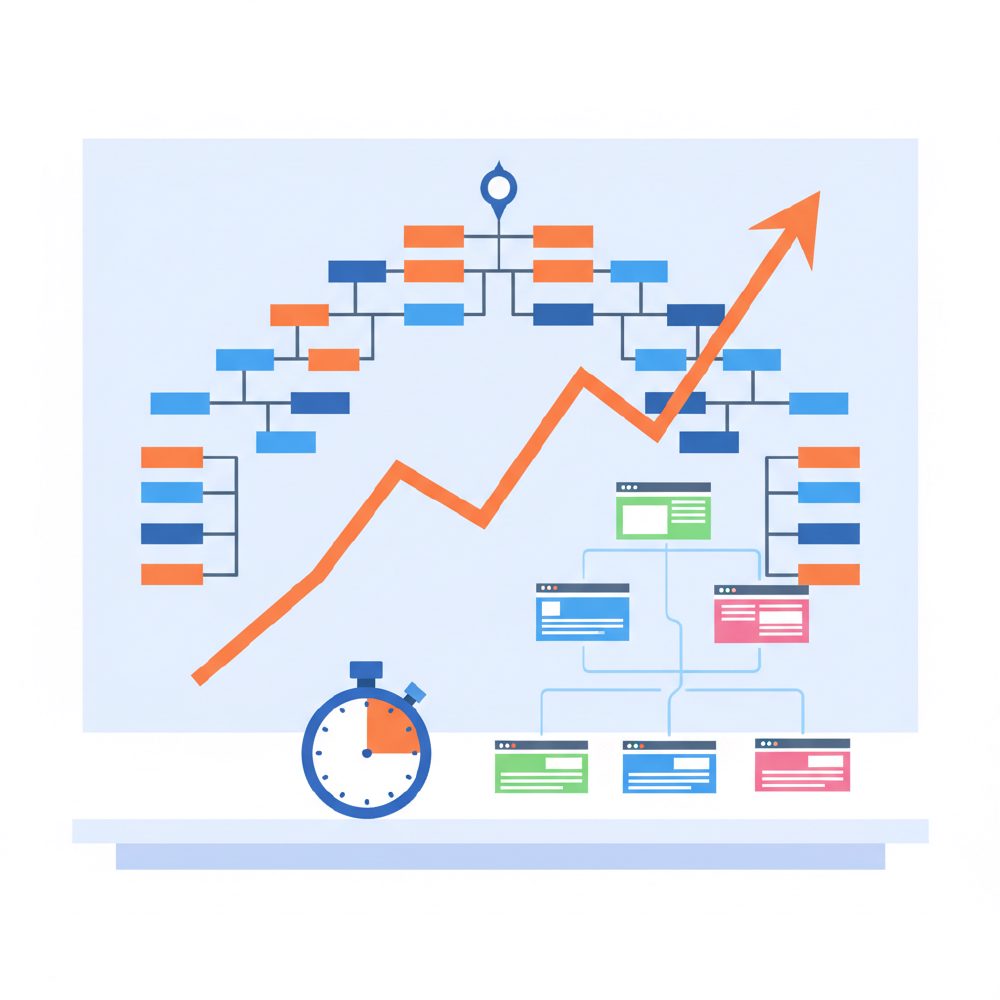
Tournament betting SEO targets short, violent demand curves tied to fixture calendars, World Cup, Euros, Champions League knockout rounds, where search volume for terms like 'World Cup outright odds' jumps 40-60x baseline for six to eight weeks then falls off a cliff. You're racing an indexing clock, not building steady organic equity.
Evergreen sportsbook SEO rewards patience, you publish a 'best NFL betting sites' page, let it accrue links and dwell time over 18 months, and it compounds. Tournament SEO doesn't give you that runway. I've pulled Ahrefs data on 'World Cup betting odds' going from a few thousand monthly searches to over 800,000 in the four weeks around the 2022 Qatar tournament, then back to near-zero by January. If your page isn't ranking on page one before the curve starts climbing, you've missed the entire commercial window.
The mechanism that trips up most in-house teams is Google's own indexing and trust lag. A freshly published page, even a technically flawless one, typically needs two to eight weeks before Google will rank it competitively for anything with real commercial intent, longer for 'betting odds' and 'betting sites' terms because YMYL scrutiny is heavier there. That means your publish date for World Cup betting seo content needs to sit three to four months before the tournament, not three to four weeks.
I treat every major tournament as a demand curve with three phases: pre-draw speculation, group-stage momentum, and knockout-round volatility. Each phase has different query intent, 'who will win the World Cup 2026 odds' during phase one, 'Group C odds' during phase two, 'quarter final odds' during phase three. Building for only one phase is the single most common failure mode I see when I audit competitor sites after the fact.
When Should You Start Building Tournament Content Before Kickoff?
Start four to six months out for global tournaments like the World Cup, three to four months for continental events like the Euros or Copa América. The real trigger isn't the opening match, it's the group-stage draw date, which is when 'group odds' and outright-winner search volume genuinely ignites, often six to eight weeks before ball one.
For the 2026 World Cup, the draw is the single most important date on my content calendar, more important than the opening fixture. The moment groups are confirmed, searches for 'Group B odds', 'England group odds', and team-specific outright pages spike immediately because fans and bettors want to model paths to the final before a single match is played. I've watched competitor domains lose 12-18 months of accumulated topical authority in a single tournament cycle simply because they published group pages after the draw instead of having drafts ready to go live within hours of it.
My working calendar for a World Cup cycle: hub page and outright-winner page live by month six pre-tournament; 32 team pages live by month four; 8 group pages structured but held as drafts until the draw, then published within 24 hours; 48+ individual match pages built on templates and populated with fixtures the moment the schedule is confirmed. For the Euros, compress all of that into a four-month window because the field is smaller and search volume, while still enormous, peaks faster and narrower.
Link building has to start even earlier than content publishing. If you're running tiered link structures or expired-domain acquisition to pass authority into hub pages, you need six to nine months of link velocity building naturally before the spike, because a sudden unnatural burst of backlinks pointing at a brand-new tournament hub right before an event is exactly the pattern Penguin-era spam systems are tuned to catch.
How Do You Structure Tournament Betting Landing Pages For World Cup And Euros Traffic?
Build a three-tier silo: one evergreen tournament hub, group/round pages one level down, and individual match or team-outright pages beneath those. Every page needs live odds tables, FAQ schema, internal links back up the silo, and a last-updated timestamp, that structure is what tournament betting landing pages need to rank fast and hold position through knockout rounds.
The hub page, 'World Cup 2026 Betting Odds & Predictions', is your authority anchor. It should rank for the highest-volume, most competitive term and funnel link equity downward through internal links to every group and match page. I keep this page updated weekly pre-tournament and daily during it, because Google's freshness signals matter more here than almost anywhere else in sportsbook SEO, a stale hub page during an active tournament is a fast way to lose position to a competitor who's updating hourly.
Group and round pages carry the mid-funnel intent: 'Group F odds', 'Round of 16 predictions'. These need genuinely unique analysis, not templated filler with team names swapped in, Google's Panda-lineage quality systems and, more recently, core updates focused on 'unhelpful content' will flatten thin, duplicated group pages across dozens of near-identical templates. I write real form analysis, injury notes, and market movement commentary for each.
Match pages sit at the bottom and convert the highest-intent traffic, 'England vs France odds', searched hours before kickoff. These pages need odds widgets that update in real time (via API feed, not manual entry, manual entry can't keep pace with line movement during a live tournament), FAQ schema answering 'what are the odds for X', and a clear CTA above the fold. I also add a 'live updates' block that refreshes during the match itself, which keeps dwell time high and gives Google a fresh-content signal exactly when search volume peaks.
World Cup Betting SEO vs Euros Betting Content, What Actually Differs?
The World Cup demands a longer lead time, broader geographic targeting, and roughly double the page volume of the Euros because of the larger field and global fanbase. The Euros compresses everything into a shorter, more concentrated European-language window with higher per-market intensity. Both need the same fixture-cluster structure, just scaled differently.
I run these as fundamentally different production schedules even though the template is identical. The World Cup's 48-team format (as of the expanded 2026 edition) means more group pages, more outright markets, and content that has to work across US, LATAM, European and Asian search intent simultaneously, which usually means separate localized hub pages rather than one page with hreflang tags stretched too thin. The Euros' 24-team field concentrated in European time zones lets you run a tighter, more editorially dense content set with less geographic sprawl.
Where operators get burned is applying World Cup timelines to the Euros or vice versa. A six-month build-out for the Euros wastes budget on pages that sit stale too long before demand arrives; a four-month build-out for the World Cup routinely leaves teams scrambling to publish 16 group pages in the 48 hours after the draw, which is exactly when a rushed, thin page underperforms a competitor's page that's been live and accruing signals for weeks.
| Factor | World Cup | Euros |
|---|---|---|
| Recommended lead time | 4-6 months pre-draw | 3-4 months pre-draw |
| Field size / page volume | 48 teams, 12 groups, 100+ pages | 24 teams, 6 groups, 50-60 pages |
| Peak search multiplier vs baseline | ~40-60x on core odds terms | ~25-35x on core odds terms |
| Geographic spread | Global, US, LATAM, EU, Asia clusters needed | Concentrated, EU/UK-dominant, secondary LATAM interest |
| Link velocity window | 6-9 months building naturally | 4-6 months building naturally |
| Content decay speed post-final | Slower, 6-8 weeks residual traffic | Faster, 2-4 weeks residual traffic |
What Does A Fixture-Cluster Model Look Like For A 64-Match Tournament?
A fixture cluster maps every stage of the tournament, outright, group, individual match, into its own page tier, linked in a strict hierarchy back to one evergreen hub. For a 64-match tournament that's roughly 100+ pages built on repeatable templates but populated with unique, stage-specific data and analysis.
I build the cluster top-down in planning but publish bottom-up in priority. The hub page and outright-winner page go live first because they need the longest time to accrue authority. Team pages follow, '[Country] World Cup Odds', since fans search by team well before groups are drawn. Group pages activate at the draw. Match pages activate on a rolling basis, each one published five to seven days before its fixture so it has time to get crawled and indexed before the intent-heavy search window opens 24-48 hours pre-match.
Internal linking is what makes this a cluster instead of a pile of disconnected pages. Every match page links up to its group page and the hub; every group page links to all its constituent match pages and back to the hub; the hub links down to every group and every team page. This gives Screaming Frog crawls a clean, shallow architecture, no page should be more than three clicks from the hub, and it's the structure I've seen recover rankings fastest after a Google core update shakes a competitive SERP, because topical authority is distributed and reinforced rather than sitting in one fragile page.
The template itself needs just enough variation to avoid a doorway-page pattern. I vary the analysis depth, add tournament-specific context (host country betting regulations, weather factors for outdoor tournaments, squad news), and never let two pages within the same tier read as interchangeable with a find-and-replace on team names.
How Fast Can You Build Links Before A Tournament Without Tripping Spam Filters?
Ramp link velocity gradually over 6-9 months rather than compressing it into weeks, a sudden unnatural spike right before a tournament is the exact pattern Google's spam systems flag. Tiered structures and carefully vetted expired-domain acquisition can compress timelines somewhat; bulk PBN or mass niche-edit campaigns in the final weeks are high-risk and can cost you the rankings you're chasing.
My rule: link velocity into a tournament hub should look like a graph that curves upward smoothly, not one that spikes vertically two weeks before kickoff. I plan backward, if I want a hub page holding page-one authority by month five, I start building tier-one links (genuine niche edits on relevant sports/betting sites, guest contributions on established outlets, digital PR around odds/predictions data) by month nine or ten, then layer tier-two link support (links pointing at the tier-one pages, not the money page directly) to reinforce without concentrating anchor text too aggressively on the target.
Expired-domain acquisition works well here because you're buying pre-existing trust rather than manufacturing it under time pressure, I look for domains in the sports/betting/news niche with genuine historical backlink profiles in Ahrefs, not spam-farmed metrics, and redirect or rebuild them into supporting content that funnels equity into the cluster. This is aggressive but effective when done six-plus months out; done in the final month before a tournament, it reads as manipulative link velocity and risks a manual action review right when you can least afford to lose visibility.
Anchor text ratio is where I see the most self-inflicted damage. Operators panic-building links in the final weeks tend to over-use exact-match anchors like 'World Cup betting odds' because they're chasing rankings fast. I cap exact-match anchors at roughly 5-8% of the total profile and lean heavily on branded and naked-URL anchors instead, it's slower to build but it's the profile that survives a spam update instead of triggering one.
Crowd marketing, seeding forum threads, Reddit discussions, and betting community posts with genuine, non-spammy links, is one of the lower-risk tactics I run in the final 4-6 weeks specifically because it mimics real organic discussion volume that naturally spikes around tournaments anyway. It won't move rankings alone, but it supports the velocity curve without the manual-action exposure of bulk paid placements.
What Cadence Should You Publish On, Hub, Fixture, Or Live Match Pages?
Run three cadences simultaneously: the evergreen hub updates weekly pre-tournament and daily during it, group/round pages publish in a burst at the draw and stay static except for line updates, and match pages publish five to seven days ahead of each fixture on a rolling basis through the entire tournament.
Treating all tournament content as one cadence is a mistake I see constantly. The hub page is a living document, I schedule content updates to it weekly for the six months pre-tournament (news, outright market shifts, qualifier results) and then daily once the tournament starts, because freshness and dwell time both spike in importance when a page is trying to hold rank against dozens of competitors updating in real time.
Group pages are closer to a one-time publish with light maintenance. Once the draw happens and groups are confirmed, that content structure doesn't change, what changes is the odds data feeding into it, which should be live via API rather than manually edited. Match pages are the highest-cadence tier: rolling publication throughout the tournament, each one timed to go live five to seven days before its fixture so indexing catches up before the 24-48 hour pre-match search surge.
| Page tier | Publish timing | Update frequency | Primary intent captured |
|---|---|---|---|
| Evergreen hub | 4-6 months pre-tournament | Weekly pre-event, daily during event | 'World Cup betting odds', broad navigational |
| Group/round pages | Within 24-48 hrs of draw | Odds data live via API, content static | 'Group X odds', 'Round of 16 predictions' |
| Team/outright pages | 3-5 months pre-tournament | Bi-weekly through the event | '[Team] to win World Cup odds' |
| Individual match pages | 5-7 days before each fixture | Live during match window | '[Team A] vs [Team B] odds' |
| Recap/results pages | Within 2 hrs of final whistle | One-time, then archived | Post-match residual search |
What Technical SEO Has To Be Solid Before The Spike Hits?
Crawl budget, Core Web Vitals, and server capacity all need stress-testing before traffic multiplies overnight. A slow, poorly-crawled site during baseline periods will get worse, not better, under tournament load, and a page-speed failure during peak search volume can cost you rankings you spent months building.
I run a full Screaming Frog crawl and a Google Search Console coverage check at least eight weeks before any major tournament, specifically hunting for orphaned pages, redirect chains, and crawl budget waste on low-value URLs that could be delaying discovery of the new fixture-cluster pages. For a site adding 100+ new pages in a short window, crawl budget mismanagement is the single most common technical reason I've seen tournament pages sit unindexed for weeks longer than they should.
Server and CDN capacity matters more than most SEO checklists mention. A site that handles baseline traffic fine can buckle under a 40x spike during a semi-final, and slow Time to First Byte during exactly the window when Google is evaluating your freshest content is a bad look twice over, once for users bouncing, once for Core Web Vitals data feeding into ranking signals. I push clients toward a CDN with tournament-aware autoscaling (Cloudflare, Fastly) rather than discovering the limit live during a quarter-final.
Structured data is the other non-negotiable, SportsEvent schema on match pages, FAQPage schema on hub and group pages, and BreadcrumbList schema throughout the silo. This isn't cosmetic; it's what lets Google (and increasingly AI answer engines pulling structured odds and fixture data) understand and surface your content in rich results and direct answers during the exact window when users are searching with high commercial intent but limited patience to click through multiple results.
How Do You Handle Content Decay After The Final Whistle?
Don't delete or let tournament pages 404, redirect match and group pages into a permanent results archive, and convert the hub page into next-cycle's foundation rather than starting from zero. Rebuilding topical authority every two to four years from scratch is the most expensive unforced error in tournament betting SEO.
The morning after a final, search volume for 'World Cup odds' drops by 90%+ within two to three weeks, but it doesn't hit zero, and residual traffic (results lookups, 'who won', historical odds curiosity) has real value if you capture it instead of discarding it. I convert match pages into permanent results/recap pages with 301 signals intact, keep the URL structure, and let them sit as long-tail traffic assets rather than deleting them and losing every backlink pointed at that URL.
The hub page is the real asset to protect. Rather than retiring 'World Cup 2026 Betting Odds' after the final, I rename and restructure it into 'World Cup Betting Odds & History' with a clear content block flagging the next cycle, then rebuild the active odds section fresh when the next tournament approaches. This preserves years of accumulated backlinks and domain trust on a single URL instead of forcing a brand-new page to fight for authority from scratch every cycle, which is exactly the mistake that lets a competitor who did preserve their hub leapfrog you next time around.
I also mine the post-tournament data, which match pages got the most search volume, which group pages converted best, what anchor text actually drove ranking movement, and fold that into the planning doc for the next tournament, whether that's the following year's Euros or the next World Cup cycle. Event-driven SEO rewards operators who treat each tournament as a rehearsal for the next one, not a one-off sprint.
How Do You Measure ROI On Event-Spike SEO Campaigns?
Track organic sessions, keyword rankings, and, critically, deposit or sign-up conversion rate on tournament landing pages against a pre-defined attribution window covering the six weeks around the event. Compare cost per acquisition on organic tournament traffic against your paid acquisition cost for the same keywords to prove the SEO investment.
I set up a dedicated GSC property filter and an Ahrefs rank-tracking project specifically for tournament URLs about three months before the event, so I have clean baseline data to compare against the spike. The metric that actually matters to operators isn't raw traffic, it's new depositing customers attributable to organic tournament pages, tracked through UTM-tagged internal CTAs and post-signup attribution windows of 7-14 days, since a bettor who lands on a Group F odds page might not convert until three days later during the actual match.
The comparison that sells this internally to finance teams is organic CPA versus paid CPA on the same terms. Google Ads doesn't touch most betting keywords cleanly in many markets, and where it does, CPCs on 'World Cup betting odds' class terms can run into double digits during peak weeks. An organic page capturing the same volume at effectively zero marginal cost per click, after the up-front content and link investment, is the number I put in front of stakeholders every cycle, it's usually the single strongest ROI case in the entire SEO budget.
What Mistakes Sink Tournament Betting SEO Campaigns?
The four recurring failures are starting too late, publishing thin templated pages with no unique analysis, ignoring geographic and language targeting for global tournaments, and treating link building as a last-minute sprint instead of a months-long ramp. Any one of these can cost the entire spike window.
Starting late is the most common and most fatal. I've audited operator sites that started World Cup content in the month before the tournament, technically fine pages, zero chance of ranking against competitors who'd been building since the previous summer. Indexing lag alone kills a late start; there's no link-building or technical fix that compresses Google's trust-building timeline down to weeks for competitive commercial terms.
Thin, templated content is the second killer, and it's gotten worse post-Helpful Content updates. Thirty-two nearly-identical team pages with swapped names and no real betting analysis get flagged by Google's quality classifiers as a pattern, not thirty-two individual pages, and one weak pattern can drag down how the whole cluster is evaluated. I insist on genuinely differentiated analysis per page even when it slows production.
Ignoring geographic targeting burns budget on a one-size-fits-all page when US, UK, and LATAM bettors search with meaningfully different intent and terminology, 'World Cup betting odds' versus 'pronósticos Mundial' versus regulatory-specific phrasing tied to licensed markets. And rushing link velocity in the final month, chasing a fast ranking boost through bulk PBN placements or mass niche edits, is the tactic most likely to trigger a spam update or manual action review at the worst possible moment, right as the tournament starts and your visibility matters most.




Comments
No comments yet, be the first.