Betting Odds Page SEO in 2026: Getting Dynamic Odds Content Indexed and Ranked
Why do sportsbook odds pages fail to rank in Google at all?
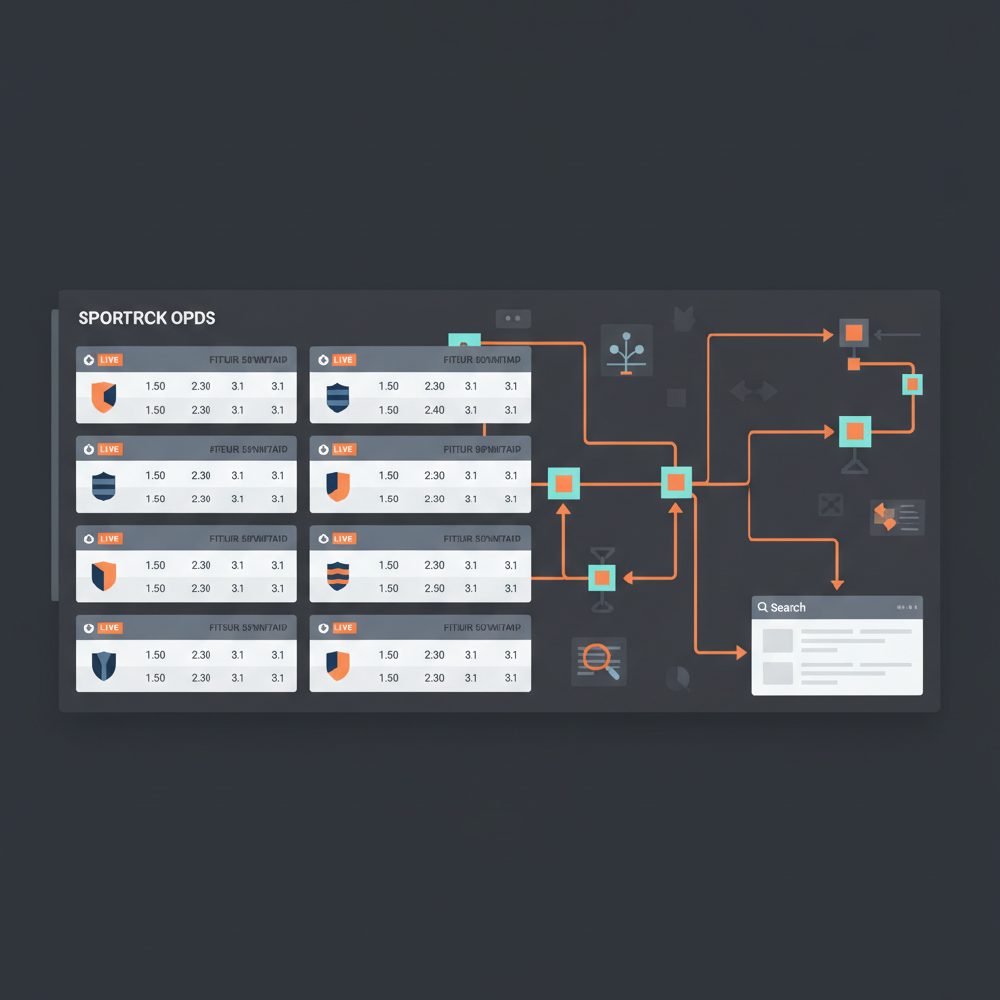
Odds pages fail because they're templated, near-duplicate, and built almost entirely from JavaScript-rendered widgets with no stable text for Google to evaluate. Googlebot crawls them, sees a shell, deprioritizes them, and moves on. Thin content plus poor rendering is the combination that keeps these pages out of the index entirely.
I've audited close to a hundred sportsbook and casino odds sections at this point, and the failure pattern repeats: a template pulls team names, a market widget, and maybe a short auto-generated blurb, and that's the entire page. Strip out the live odds feed and there's nothing left for Google to index. Compare that to a page built around a fixture with 300+ words of static preview content, head-to-head stats, and injury notes, and the difference in indexing rate isn't subtle, it's the difference between 90% of URLs getting indexed within two weeks versus 30% sitting in "Discovered - currently not indexed" for months.
The other piece operators underestimate is duplication at scale. If your Premier League odds page and your La Liga odds page share 95% identical boilerplate with only team names swapped, Google's helpful content systems treat that as scaled content, not unique pages. The March 2024 core update went after exactly this pattern, programmatic pages with thin, templated variation, and I watched several affiliate and operator odds sections lose 40-70% of organic visibility in that update because they'd scaled event pages without scaling actual content differentiation.
The fix isn't complicated, it's just work: every odds page template needs a static content layer that's genuinely different per fixture, not just find-and-replace on team names. That's the baseline before you even touch rendering or crawl budget.
How does Google actually crawl and index odds that change every 30 seconds?
Google never indexes the live odds value, it caches a snapshot at crawl time and re-evaluates the surrounding static content for relevance. What ranks the page is the stable text: matchup names, market descriptions, historical stats, and analysis, not the number that changes before the next crawl even happens.
This is the concept most operator dev teams get backwards. They optimize for the live number being "accurate" for Google, when Google fundamentally can't keep pace with odds that shift every few seconds and doesn't try to. What it indexes is a point-in-time snapshot, then relies on the unchanging elements, page title, H1, entity mentions (team names, league, competition), and body copy, to decide relevance and rank position. If those static elements are weak or absent, the fact that your odds feed is millisecond-accurate is irrelevant to rankings.
Practically, that means treating the odds widget as a conversion tool, not an SEO asset, and building the actual ranking signal separately: a permanent content shell around the widget that talks about the fixture, the market, recent form, and betting context in language a search engine and a human both understand. I've seen operators try to game this by stuffing odds values into meta descriptions or alt text, it doesn't move rankings and occasionally trips spam filters because the described content changes on every crawl, which is itself a soft signal of low quality.
Run a live crawl comparison in Screaming Frog against Google's cached version pulled via GSC's URL inspection tool. If the two look wildly different in structure, not values, structure, you've got a rendering problem, not a content problem, and that's a different fix entirely.
Is client-side rendering (CSR) killing your odds page rankings?
Yes, in most cases. CSR-only odds pages depend on Google's second rendering wave, which can lag the initial crawl by days or weeks depending on your site's crawl budget standing. That delay compounds on odds pages because content changes faster than Google re-renders, so the indexed version is often stale or empty.
Googlebot crawls in two passes: it fetches raw HTML first, queues the page for rendering, then comes back, sometimes hours later, sometimes weeks later on lower-authority domains, to execute JavaScript and see the final DOM. On a blog post that's a minor delay. On an odds page for a match happening in 48 hours, a rendering delay of a week means Google indexes a page that's functionally obsolete by the time it processes it, and it never gets a second look because the event has already passed.
Server-side rendering or a hybrid approach solves this by sending Google a fully-formed HTML page on the first crawl pass, no waiting on the render queue. I've pushed clients from CSR to SSR/hybrid on odds sections and watched indexed-page counts in GSC jump from roughly 25-35% of submitted URLs to 80%+ within a month, with zero content changes, purely a delivery fix.
Dynamic rendering, where you serve a pre-rendered snapshot to bots and the live JS app to users, is a workable middle ground if a full SSR rebuild isn't feasible this quarter. It's more fragile, you're maintaining two rendering paths, but it buys you the indexing speed without a framework migration.
| Rendering Method | What Googlebot Sees | Typical Time to Index | Dev Effort | Verdict |
|---|---|---|---|---|
| Client-side rendering (CSR) | Empty shell until second render wave completes | 1-6+ weeks, inconsistent | Low (default for most React/Vue builds) | Avoid for odds pages, indexing too unreliable |
| Server-side rendering (SSR) | Full HTML with content on first crawl | Days, not weeks | High (framework-level change, e.g. Next.js) | Best long-term fix |
| Dynamic rendering (bot-served static snapshot) | Pre-rendered HTML served to bots only | Days | Medium (needs a rendering service like Prerender.io) | Solid interim fix while planning SSR |
What's the right URL and internal linking structure for thousands of odds pages?
Use permanent, descriptive URLs per fixture or market that don't change when odds move or events reschedule, and link every odds page from a stable league/sport hub page that carries the internal authority. Never rely on query strings alone to differentiate markets, Google frequently treats those as duplicates.
Sportsbooks generate URL sprawl fast, thousands of fixture pages, dozens of markets per fixture, and often a new URL every time an event is rescheduled or a market opens. That sprawl is a crawl budget problem before it's a rankings problem. Google allocates a finite crawl budget per domain based on authority and server response health, and if half your budget is spent re-crawling stale or duplicate URLs from postponed events, your genuinely new content gets crawled slower.
The structural fix I use with clients: a permanent slug per fixture that doesn't change post-scheduling changes (e.g. /nfl/chiefs-vs-bills/), with market variations handled as sections on that same URL rather than separate pages wherever possible. Query-string market pages (?market=spread) get indexed inconsistently and often get canonicalized incorrectly by Google's own algorithmic canonicalization, which can strip pages you actually wanted separate.
Every fixture page needs at least one inbound internal link from a stable hub, your NFL odds hub, your Champions League hub, because that hub is what accumulates external links and passes authority downward. Don't expect individual event pages to earn links on their own; they won't, and they shouldn't be your link target.
| URL Pattern | Example | Indexing Behavior | Recommendation |
|---|---|---|---|
| Permanent fixture slug | /nfl/chiefs-vs-bills/ | Stable, accumulates authority over time | Use as primary pattern |
| Date-based slug | /nfl/2026-01-14-chiefs-bills/ | Breaks on reschedules, orphans old URLs | Avoid unless you 301 rescheduled dates |
| Query-string market filter | /nfl/chiefs-vs-bills/?market=spread | Often auto-canonicalized away, inconsistent indexing | Use only for non-SEO-critical filters |
| League hub with anchor jump | /nfl/odds/#chiefs-bills | Never indexed as a separate result | Use for low-value, high-churn markets only |
How much static content does an odds page actually need to avoid a thin-content penalty?
Aim for 250-500 words of genuinely unique static content per fixture page, team form, head-to-head history, injury notes, and market context, separate from the live odds widget itself. Below that threshold, pages routinely get swept into scaled-content classifications during core updates.
I don't treat word count as a magic number, Google doesn't either, but it's a useful proxy for the real question: is there enough unique, evaluable content on this page for a quality system to distinguish it from the 500 other fixture pages on your site? Below roughly 250 words of genuinely differentiated text, most odds pages read as interchangeable to both users and algorithms.
What goes in that content matters as much as the volume. Auto-generated filler that just restates the fixture ("Team A will face Team B on this date") adds word count without adding signal, and Google's systems are decent at detecting that pattern now, especially post-Helpful Content integration into core ranking. What actually works: recent form summaries, specific injury/lineup notes, historical head-to-head results, and market-specific analysis (why the spread moved, what's driving public vs. sharp money), content a bettor would actually read before placing a wager.
The tradeoff is production cost. Hand-writing 300 words for every fixture across five sports isn't scalable without either a larger content team or a well-supervised AI-assisted workflow with genuine editorial review. I generally recommend clients tier this: full editorial treatment for top-20 revenue-driving leagues, a lighter templated-but-differentiated approach for everything else, and acceptance that long-tail niche markets may just stay thin and unindexed, that's fine, they weren't driving deposits anyway.
| Page Element | Type | Changes Over Time? | SEO Role |
|---|---|---|---|
| Matchup title / H1 | Static | No | Primary relevance signal |
| Live odds values | Dynamic | Every few seconds | Conversion tool, not indexed for ranking |
| Form/H2H stats block | Semi-static | Updates weekly | Differentiation, avoids duplicate content |
| Market analysis paragraph | Static per fixture | Written once, stays | Core ranking content |
| Betting trends widget | Dynamic | Continuous | UX/conversion, minimal SEO weight |
Which schema markup actually helps odds pages get indexed and surfaced?
SportsEvent schema (with startDate, competitor, and location) is the most reliably supported markup for odds pages, and it's what enables event carousels and rich fixture cards in search. There's no officially supported schema type for betting odds themselves, so don't rely on structured data to display live prices.
This is an area where I see operators over-invest based on hope rather than documentation. Google's structured data guidelines support SportsEvent markup for fixture information, teams, kickoff time, venue, and that can earn you visibility in sports-specific SERP features and Google's sports knowledge panels in some markets. It does not support a schema type for betting odds or lines, and attempting to shoehorn odds values into Offer or Product schema is against Google's guidelines for that markup and has, in a few cases I've seen, triggered manual structured data actions.
What I actually recommend: implement SportsEvent schema cleanly for every fixture page (correct startDate in ISO format, competitor names matching your visible content, eventStatus updated when games are postponed or cancelled), and use BreadcrumbList schema to reinforce your hub-to-fixture hierarchy for crawl efficiency. That's the safe, documented value. Beyond that, treat schema as a nice-to-have layer on top of solid rendering and content, not a substitute for either.
One practical warning: eventStatus needs to actually update when a game is postponed. I've audited sites still showing EventScheduled schema on games that were cancelled three weeks earlier, that's a quality signal problem as much as a technical one, and it's an easy Screaming Frog custom extraction check to catch at scale.
How do you handle odds pages for events that get postponed, cancelled, or already happened?
Redirect completed or cancelled event pages to the relevant league hub or team page with a 301 rather than leaving them live or 404ing them outright, unless the URL has zero historical traffic or backlinks, in which case a 410 is cleaner. Never let dead event pages accumulate as crawlable orphans.
Sportsbooks generate stale-page debt constantly, every fixture eventually resolves, and the URL either needs to disappear cleanly or get repurposed. Leaving a resolved fixture page live with no updates is a soft-404 risk: Google increasingly classifies pages with no remaining useful content (no live odds, no result info) as low-value, and that classification bleeds into how it treats the rest of your fixture template, not just that one URL.
My default rule: if the page has earned backlinks, indexed history, or meaningful organic traffic, 301 it to the closest relevant permanent page, the team's page, the league hub, or (best case) convert it into a results/recap page with the final score and a link to the next fixture. That preserves the accumulated authority instead of losing it. If the page never earned links or traffic, most long-tail prop pages fall here, a straight 410 (Gone) is more honest to Google than a redirect that implies equivalent content exists, and it removes crawl budget waste faster than a 404 does since Google deprioritizes re-checking 410s sooner.
Set this up as an automated pipeline tied to your events database, not a manual task, at the volume most sportsbooks operate, manual redirect management falls behind within a week and you end up with hundreds of orphaned URLs quietly dragging on crawl efficiency.
Do odds pages need their own link building strategy, or do they ride on the domain's authority?
Individual fixture pages almost never earn or need external links directly, build links to sport and league hub pages instead, then let internal linking distribute that authority down to fixture-level odds pages. Treat fixture pages as authority recipients, not authority targets.
This trips up operators who apply a generic link building playbook to every page type. Links to a specific NFL Week 14 fixture page are close to worthless the moment the game ends, the URL's value window is days, sometimes hours. No reasonable outreach or content campaign should target that page directly; the ROI timeline doesn't work.
What does work: building genuine editorial links (guest content, data-driven studies, expert quote placements, HARO-style journalist outreach) to your evergreen hub pages, /nfl/odds/, /premier-league/odds/, that persist and accumulate authority year over year. I also use tiered internal link sculpting here rather than tiered external link networks: money pages and hub pages pass PageRank to fixture pages through consistent internal linking, not through direct external acquisition. That's the efficient version of a tactic that used to be done with PBNs and expired-domain links pointed straight at deep pages, slower to burn out, and it survives algorithm updates that specifically target manipulative link patterns aimed at deep, low-value URLs.
If you're running a broader link acquisition program for the domain, niche edits, guest posts, crowd marketing on forums, direct that budget at your hub and money pages exclusively. Fixture-level pages should never appear in an anchor text or link velocity report; if they do, something's misallocated.
How fast can you expect odds pages to actually rank after fixing indexing and rendering issues?
Expect 4-8 weeks for indexing rates to normalize after an SSR or dynamic rendering fix, and 3-6 months for hub-level pages to reach competitive rankings in contested sports/leagues. Fixture-level pages themselves often never rank competitively before the event happens, that's fine, hub pages carry the organic weight.
I set this expectation with every operator client upfront because it prevents the wrong conversation three months in. The technical fix, SSR migration, redirect cleanup, schema implementation, shows up in Google Search Console's index coverage report fastest, typically within 2-4 weeks of deployment as re-crawl catches up. That's a leading indicator, not a rankings outcome yet.
Rankings for competitive terms, "nfl odds", "premier league betting odds", sit on hub pages, and those move on core-update and authority-accumulation timelines: 3-6 months for meaningful movement if the technical and content foundations are solid, longer if you're competing against entrenched affiliates and major sportsbooks with a decade of accumulated links. Individual fixture pages for this week's game were never going to outrank an ESPN or a major affiliate hub in the 4 days before kickoff, the realistic goal for fixture pages is capturing long-tail, lower-competition queries (specific player prop searches, "team A vs team B odds" exact-match searches) where competition is thinner and intent is high.
I track this with a split view in Ahrefs: hub page rankings on a monthly cohort basis, fixture page indexing rate and impressions in GSC on a weekly basis. Two different timelines, two different success metrics, conflating them is the most common reporting mistake I see internal SEO teams make to leadership.
How do you actually measure ROI on odds page SEO investment?
Track organic sessions on odds pages through to registration and first deposit using a proper attribution setup in GA4 or your BI stack, not keyword rank alone. Rank position is a leading indicator; deposits from odds-page-sourced organic traffic is the number that justifies budget.
Every client conversation at this agency ends up here because it's the only number that matters commercially. I don't report "we're now ranking #3 for premier league odds" as a success metric on its own, I report organic sessions landing on hub or fixture odds pages, the registration conversion rate from that specific traffic segment, and the first-deposit rate within a defined attribution window, usually 7 or 30 days depending on the operator's typical time-to-deposit.
Set this up with UTM-consistent internal tracking or, better, server-side event tracking that ties a session's landing page to eventual account creation and deposit through your CRM or affiliate platform, most sportsbook tech stacks (Everflow, Income Access, in-house systems) support this if someone actually wires it up. Without it, you're guessing at attribution and SEO budget conversations become subjective.
The comparison I push clients toward is straightforward: what's the cost per deposit from paid search or paid social on gambling terms right now (often $150-400+ CPA in competitive US states given advertising restrictions), versus the marginal cost of an SEO team maintaining and expanding odds page content and technical infrastructure. Once odds pages are indexing and ranking at scale, the cost-per-deposit from that organic channel typically undercuts paid acquisition by a wide margin, precisely because Google Ads restricts or blocks most gambling advertisers outright, organic is often the only scalable digital acquisition channel available in regulated markets, which is the whole reason this work is worth doing properly instead of treating odds pages as an afterthought behind a JS widget.




Comments
No comments yet, be the first.