Sports Betting Keyword Research in 2026: Mapping Terms to Links That Actually Rank

Why does sports betting keyword research work differently than other niches?
Sports betting keyword research differs because volume and value diverge sharply, high-volume terms carry brutal KD scores dominated by affiliates and legacy operators, while converting terms are seasonal, event-driven, and regulated by state. You're not researching topics; you're researching a moving legal and competitive landscape.
Most SEO guides treat keyword research as a static exercise: pull volume, check difficulty, group by topic. Betting keywords break that model because the SERP itself is unstable. A term like 'NFL odds today' can have three different top-10 compositions depending on the week of the season, and affiliate sites like Action Network, Covers, and OddsShark rotate positions faster than in almost any other vertical I track.
Then there's the legal layer. 'Sports betting Ohio' behaves nothing like 'sports betting Texas' because one is a live regulated market and the other is dead traffic dressed up as opportunity. I've seen operators burn six months of link budget chasing volume in states where betting isn't even legal yet, because the keyword tool showed 40,000 searches a month and nobody checked the regulatory calendar.
The third difference is intent volatility. A user searching 'parlay calculator' during the Super Bowl is a different buyer than the same person searching it in July. Betting keyword research has to layer in a seasonality index on top of volume and difficulty, something Ahrefs and SEMrush don't do natively, you build that layer yourself from 12 months of Google Trends and GSC impression data.
How do you map betting search intent before you build any links?
You map betting search intent by sorting every keyword into one of four buckets, informational, navigational, comparison, and transactional, then assigning each bucket a target page and a link tier before outreach starts. Skipping this step means your anchors and your money pages fight each other later.
I run every operator keyword list through a four-way intent split before touching outreach. Informational terms ('how does a moneyline work', 'what is a same game parlay') feed evergreen guide pages that earn natural, unbranded anchors from editorial sites, these are your Tier 1 link magnets. Navigational terms ('DraftKings sportsbook login', '[brand] promo code') go to brand and account pages and rarely need external links at all; internal linking does the job.
Comparison terms ('BetMGM vs Caesars odds boost') are the highest-value zone most operators under-invest in. These convert at 2-4x the rate of generic bonus pages because the searcher is already deciding between two specific books. I put these pages on my Tier 1 niche-edit budget, averaging $220-$450 per placement in my Link-Price Index for DA 40+ gambling-adjacent sites in 2025-2026.
Transactional terms ('bet on NFL online', 'best sportsbook sign up bonus') are where the real anchor-text risk lives. These are the pages Google's spam systems watch closest for over-optimization, so exact-match anchors here should stay under 3-5% of the total profile pointing to that URL. I've pulled two operator sites out of Penguin-style over-optimization filters in the past three years, and both times the fix started with re-mapping which pages were absorbing branded versus exact-match anchors, not by removing links.
Which keyword research tools give the most reliable data for sportsbook terms?
Ahrefs and SEMrush give the most usable volume and difficulty baselines for betting keywords, but neither captures the fast seasonal swings unique to sports calendars. I cross-reference both against Google Search Console impression data and DataForSEO's SERP API for real-time volatility checks before finalizing a keyword map.
Ahrefs' Keywords Explorer is my default for difficulty scoring because its backlink-based KD model matches gambling SERP reality better than SEMrush's, gambling rankings are still heavily backlink-driven, so a tool that weights link signals scores difficulty more accurately here than one that leans on content-quality proxies. SEMrush earns its seat at the table for its Position Tracking and its better handling of local/state-level modifiers, which matters enormously once you're segmenting by regulated market.
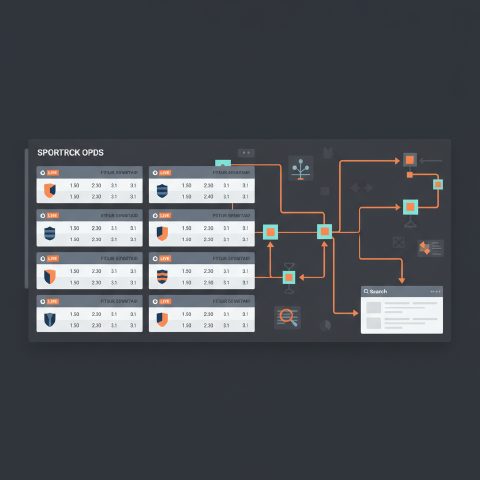
DataForSEO's API is the one most agencies skip because it's not a polished dashboard, it's raw data. I use it to pull live SERP snapshots during NFL and March Madness windows to catch volatility Ahrefs' monthly-refresh model misses entirely. Betting SERPs can reshuffle top-10 composition by 15-20% week over week during peak events; a stale KD score from a tool that refreshes monthly will send you chasing a keyword that's already been won by a media outlet with a live-odds widget.
Google Search Console is non-negotiable and free. Query-level impression data shows you what you're already ranking for by accident, long-tail betting search intent phrases you never targeted deliberately. On more than one operator audit I've found 200+ untapped query variants sitting in GSC that outperformed the site's actual target keyword list, because the content team never checked what Google was already crediting them for.
| Tool | Best use case | Gambling-vertical quirk | Approx. monthly cost |
|---|---|---|---|
| Ahrefs | Backlink-weighted difficulty scoring | KD tracks affiliate link density accurately | $99-$399 |
| SEMrush | State/local modifier tracking, position tracking | Better keyword-to-market mapping for regulated states | $139-$499 |
| DataForSEO API | Live SERP volatility during sports events | No dashboard, needs a developer or Screaming Frog integration | $50-$300 usage-based |
| Google Search Console | Real query-level intent discovery | Free, but only shows what you already rank for | Free |
How do you build a sportsbook keyword strategy around seasonality and events?
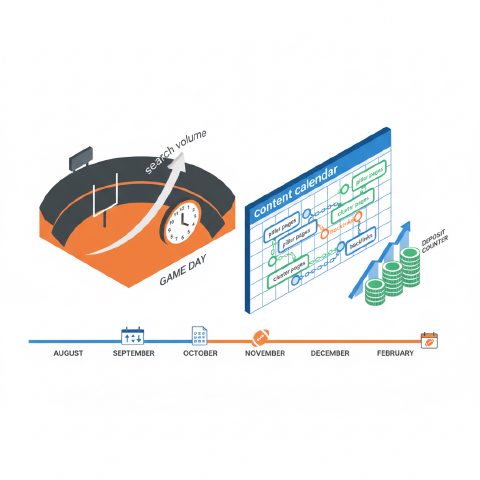
You build a sportsbook keyword strategy around seasonality by mapping every major keyword to a sport calendar 8-12 weeks ahead, pre-building content and links before search volume spikes rather than reacting to it. Ranking a page the week the Super Bowl happens is already too late.
Search volume for 'Super Bowl odds' or 'March Madness bracket picks' doesn't ramp gradually, it spikes 300-500% in a 10-14 day window and collapses just as fast. Google needs lead time to trust a page for that spike, which means the content and the link push both need to land 6-10 weeks before the event, not during it. I've watched operators launch Super Bowl content the Monday of the game and wonder why they never cracked page one, Googlebot simply hadn't recrawled and re-evaluated the link signals in time.
NFL and college football dominate the US calendar from September through February; NBA and MLB fill the gaps; combat sports (UFC, boxing) and soccer (World Cup years especially) create secondary spikes that most US-focused operators under-plan for. A proper keyword strategy tags every term with its peak month and builds a rolling 12-month content and link calendar, I run this as a literal spreadsheet with columns for peak week, target KD, current rank, and link tier assigned.
The link-building implication is direct: seasonal pages need their Tier 1 links front-loaded 60-90 days out, then a smaller crowd-marketing and forum-mention push in the 2-3 weeks before the event to simulate the natural spike in discussion that Google expects to see around real events. Pages that get zero link activity until event week look manufactured to both Google and to any manual reviewer checking for spam signals.
How should multi-state and multi-market operators segment betting keywords?
Segment betting keywords first by legal market status, then by state-specific promo and regulatory language, then by sport. A term's difficulty and value can shift 3-4x between states with identical wording because the competitive set and legal context are completely different in each.
'Sports betting bonus Michigan' and 'sports betting bonus Kentucky' look like the same keyword pattern with a swapped noun, but Michigan's market has been live since 2021 with entrenched competitors, while Kentucky only launched retail and online betting in 2023. Difficulty, CPC, and available link inventory all differ. I build a separate keyword table per regulated state rather than a single national list with state variables swapped in, the national-list approach is where cannibalization starts.
Offshore and LATAM operators face a different segmentation problem: language and payment-method modifiers matter more than state law. 'Apuestas deportivas en línea con crypto' behaves nothing like its English equivalent in volume or competitor set, Betano, Rushbet, and regional books dominate Spanish-language SERPs with different link profiles than US-facing DraftKings or FanDuel competitors. Treat LATAM as its own vertical with its own keyword map, not a translated copy of the US list.
EU markets add a third variable: regulatory bodies (UKGC, MGA, Spelinspektionen) generate their own search demand around licensing and responsible-gambling terms that don't exist in unregulated markets at all. Ignoring these terms means missing trust-signal content opportunities that also happen to be some of the easiest DA 50+ links to earn, because regulators and consumer-protection sites will link to genuinely useful compliance content when nothing else from an operator earns that kind of link naturally.
| Market type | Example keyword pattern | Typical KD range | Link-building note |
|---|---|---|---|
| Live regulated US state | 'sportsbook promo code [state]' | 55-80 | Entrenched affiliates dominate; niche edits on state news sites work best |
| Newly regulated US state | 'best sportsbook app [state] 2026' | 25-45 | Lower competition window, 3-6 month link push before affiliates saturate |
| LATAM crypto/fiat | 'apuestas en línea con [payment method]' | 20-40 | Language-specific outreach required; separate keyword map from English terms |
| EU regulated | 'licensed sportsbook UKGC bonus' | 40-65 | Compliance content earns natural links from consumer and regulator sites |
How many keywords do you need mapped before you start outreach?
I don't start outreach on any operator campaign with fewer than 150-200 mapped keywords across the intent buckets, enough to assign realistic anchor-text distribution without repeating the same three phrases across every placement, which is the fastest route to an over-optimization penalty.
A common mistake I see from in-house teams: they build 20-30 target keywords, hand them to a link-building vendor, and wonder why the anchor-text profile looks robotic within three months. With only a handful of target phrases, every placement ends up using near-identical anchors, and that pattern is exactly what Penguin-era filtering and modern spam systems flag. A 150-200 keyword map gives enough natural variation, branded, partial-match, generic, and naked-URL anchors, to build a profile that looks like organic mention growth rather than a campaign.
The breakdown I use on most sportsbook engagements: roughly 40% informational long-tail terms (these feed the guide content that earns natural editorial anchors), 25% comparison terms, 20% state or market-specific transactional terms, and 15% brand and navigational terms. That ratio isn't arbitrary, it roughly mirrors what I see in the anchor-text profiles of sportsbook sites that have survived multiple core updates without manual actions, based on the 2,000+ placements I track in the Link-Price Index.
Below 150 keywords, you also lose the ability to spread link velocity naturally. If you're only targeting 25 phrases and pushing 15-20 links a month, you're forced to concentrate placements in a way that spikes individual page link velocity to levels Google's algorithms treat as suspicious, generally anything past a 3-4x jump in monthly referring domains to a single URL without a corresponding traffic or brand-mention event.
How do you handle head-term competition versus long-tail betting keywords?
Head terms like 'best sportsbook bonus' need a dedicated Tier 1 authority-link budget and 6-12 months minimum; long-tail intent terms like 'how does hedge betting work' rank in 4-8 weeks with a single strong niche edit and convert better per visitor because they match a specific decision moment.
Head terms in this vertical are some of the most contested real estate in all of SEO. 'Best sportsbook bonus' and similar phrases carry KD scores of 70-85 in Ahrefs and are held by a mix of affiliate giants and the operators themselves running enormous link budgets, I've seen top-10 pages for these terms backed by 800+ referring domains. Realistically, an operator entering this fight needs a 6-12 month runway, a Tier 1 budget of at least 8-15 high-authority placements a month ($300-$800 each in current index pricing for DA 50+ sites), and the patience to accept slow, staged gains rather than expecting quick wins.
Long-tail betting search intent terms are where operators without massive budgets actually win market share. 'How does a teaser bet work in NFL betting', 'what's the difference between American and decimal odds', these sit at KD 10-30, have lower absolute volume, but convert visitors who are actively trying to place their first bet and need a nudge of confidence. A single strong niche edit from a relevant sports-content site, plus solid on-page answer structure, can move these into page-one positions inside 4-8 weeks.
The smart allocation I recommend to most clients: 60-70% of link budget toward long-tail and comparison terms that compound quickly and convert well, 30-40% toward a sustained, patient push on 3-5 head terms that matter most to brand visibility. Trying to fight on 15+ head terms simultaneously spreads link equity too thin to move any of them meaningfully.
What anchor-text ratios come out of a solid betting keyword map?
A keyword map that's properly segmented by intent naturally produces an anchor-text ratio near 55-65% branded/naked URL, 20-25% partial-match, and under 10% exact-match, the same ratio I use to pull sites out of over-optimization filters. If your keyword list is too narrow, you can't hit these numbers without repetition.
Anchor text isn't a separate task from keyword research, it's the direct output of it. Every keyword bucket I mentioned earlier maps to an anchor style: informational terms generate natural, varied anchors because outreach targets (journalists, bloggers, sports content sites) write their own link text based on context, not your target phrase. Comparison and transactional terms are where operators try to force exact-match anchors, and that's exactly where the risk concentrates.
Across the campaigns I've audited for over-optimization issues, the common failure pattern is the same: fewer than 15% of the anchor profile is branded, and 20%+ is a single exact-match phrase like 'best online sportsbook' pointed at the homepage. Google's classifier for this kind of pattern doesn't need many more signals to flag manipulation, the ratio alone is the tell. The fix in both recovery cases I've run wasn't removing links; it was building enough branded, naked-URL, and topically-varied anchors on other pages to dilute the ratio site-wide back toward that 55-65% branded target within 4-6 months.
This is why a thin keyword map is actually a link-safety problem, not just a content gap. If you only have 20 target phrases, your outreach team will naturally reuse them as anchor suggestions because there's nothing else to suggest. A 150+ keyword map gives writers and outreach specialists enough natural phrase variation to avoid that trap entirely, variation isn't a nice-to-have here, it's the mechanism that keeps the anchor profile inside safe ratios.
How do you stop keyword cannibalization across state pages and brand sites?
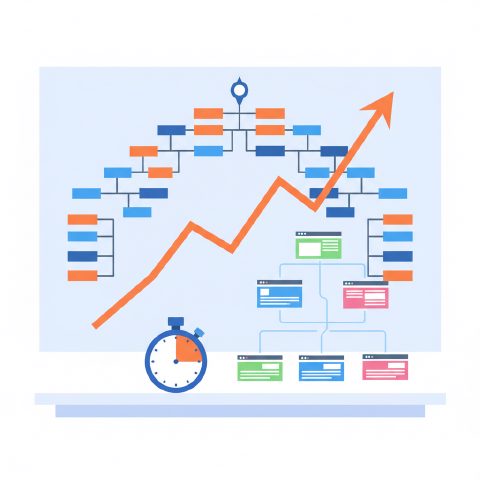
Stop cannibalization by assigning exactly one canonical URL per keyword-intent combination before any content is written, tracked in a single keyword-to-URL map shared across content, SEO, and link teams. Without that map, state pages, blog posts, and landing pages compete against each other and links get split across duplicate targets.
Cannibalization is the most common structural issue I find on multi-state operator audits, and it's almost always a keyword-research failure that shows up later as a link-building problem. Someone builds a 'New Jersey sports betting' landing page for conversions, then six months later the content team publishes a blog post titled 'Complete Guide to Sports Betting in New Jersey' targeting the same core phrase. Now you have two pages splitting rankings and, worse, links pointing at both, I've seen sites lose 30-40% of their achievable ranking position purely from this kind of internal competition, with a link profile that should have supported a top-3 position stuck at position 8-12 instead.
The fix is a single keyword-to-URL mapping document that every team touches before publishing anything new, content, dev, and link-building all check it. Each target keyword gets exactly one canonical destination URL. If a new content idea overlaps with an existing target, it either gets merged into the existing page or explicitly assigned a different, non-competing angle and keyword.
For link builders specifically, this map is what prevents wasted spend. There's no faster way to burn a $300 niche edit than pointing it at a page that Google has already decided is the weaker of two competing URLs for that term, the link equity partially transfers through internal linking at best, and at worst it just reinforces confusion in Google's own ranking signals about which page should rank.
What metrics prove your keyword research is actually converting, not just ranking?
Track deposit-attributed organic sessions per keyword cluster, not just rank position, a page ranking #3 for a comparison term with a 4% deposit-conversion rate outperforms a #1 head-term page converting at 0.5%. Rank tracking alone tells you nothing about whether the keyword research was worth the link spend.
I push every operator client toward cluster-level conversion tracking rather than keyword-by-keyword rank checks, because rank position is a vanity metric without a revenue layer attached. Set up GA4 events or your affiliate-tracking platform to tag which content cluster drove the click-through to signup, then which cluster's traffic actually completed first deposit. This exposes patterns that pure rank tracking hides completely, in my experience, comparison-intent clusters ('X vs Y odds', 'X vs Y bonus') consistently outperform generic bonus-page traffic by 2-4x on deposit conversion, even when they rank lower and get less raw traffic.
Second metric: cost per acquired depositor by keyword cluster, calculated against the actual link spend that built that cluster's rankings. If you spent $4,000 in niche edits and guest posts building out a head-term cluster that's driven 40 depositors over six months, that's $100 per depositor from organic, compare that directly against your paid CPA to know whether the SEO investment is actually beating the channel it's meant to supplement.
Third, watch keyword-level impression-to-click and click-to-conversion trends in GSC and your analytics platform over 90-day windows, not weekly snapshots, betting search behavior is noisy week to week around events, and short windows will make you second-guess a strategy that's actually working on the timeline it needs. I tell clients not to make cluster-level go/no-go calls before 90 days of post-link-placement data exists, because gambling SERPs take longer to stabilize after link pushes than most other verticals, typically 8-14 weeks for a niche edit to fully reflect in rankings versus 4-6 weeks in less competitive niches.



Comments
No comments yet, be the first.