MMA Betting SEO in 2026: The Fight Card Content Playbook That Beats the Odds Boards to the SERP

What makes MMA betting SEO different from other sports betting verticals?
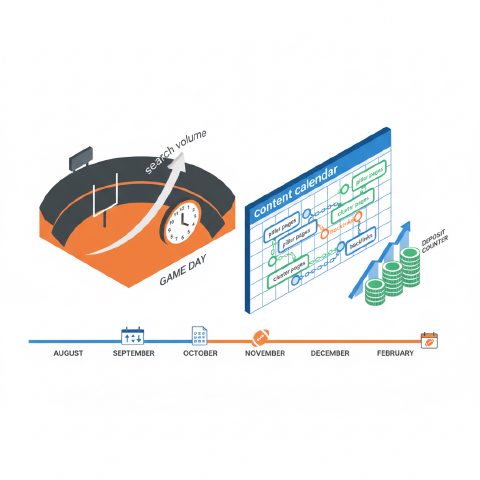
Combat sports search demand spikes 10-20x in a 72-hour window around a fight card, then collapses to near-zero baseline. UFC runs roughly 42 events a year on a fixed schedule; boxing mega-fights happen 6-10 times annually with unpredictable gaps. Your link and content strategy has to front-load authority before the spike, not react to it.
I've run campaigns across NFL, NBA, tennis and combat sports, and nothing behaves like MMA and boxing. A keyword like "UFC 310 odds" might sit under 300 monthly searches for ten months, then spike past 30,000 in the seven days around the card. Boxing is more extreme, "Fury Usyk odds" can pull six-figure spike volume for a single mega-fight and then disappear for half a year. NFL content has a weekly rhythm you can plan around; combat sports gives you a handful of massive, short-lived windows per year, and if your page isn't already indexed and trusted before the spike hits, you miss the entire event.
The practical fix is a two-layer architecture: an always-on hub page (/ufc-betting/, /boxing-betting/) that absorbs link equity continuously, and event-specific subpages that get created or refreshed on a schedule and inherit authority from the hub through internal links. I've watched operator sites try to build a standalone event page from a cold domain three days before a card and get buried behind ESPN, ESPN BET and ten-year-old affiliate sites that had links pointed at their hub months earlier.
Because UFC and the major boxing promoters (Top Rank, Matchroom, PBC) announce cards 60-120 days out, you have a real planning window most other verticals don't give you. Use it. Link building to a hub page in month one of that window and then launching the event subpage in week two of fight week is a completely different ranking trajectory than starting cold.
How do you build a fight card content calendar that ranks before fight week?
Lock your calendar to the promoter's announcement cycle, not your editorial whim. Publish the event page 10-14 days before the card so Google has time to crawl, index and pass link signal, build supporting prop and "how to bet" content in the same window, and keep a rolling 90-day view so you're never building from zero.
Most operator sites I audit publish fight content reactively, the card gets announced, someone writes the page three or four days out, and it never has time to earn trust signals before search volume peaks. The fix is mechanical, not creative. I run client calendars on a 90-day rolling basis anchored to three data sources: the UFC's own event schedule page, Top Rank/Matchroom/PBC press releases, and BoxRec for undercard confirmation dates.
The build sequence that's worked across 40+ operator campaigns looks like this: publish the event page skeleton the day the card is officially announced (odds TBD placeholder is fine, Google indexes the structure), add opening lines within 48 hours of sportsbooks posting them, push 3-5 niche edits or a digital PR angle 10-14 days before the card to pass authority while there's still time for it to mature, and update prop bet sections daily during fight week as lines move. The final ingredient is what I call anchor persistence, the URL for "UFC 310 betting odds" stays live after the event and gets repurposed into a results/recap page rather than getting deleted or 301'd, which preserves the backlinks you already spent money acquiring.
One mistake I see constantly: teams build a brand-new URL for every single card. That resets your authority clock every time. Keep the URL pattern stable (/ufc/ufc-310-odds/) and treat the page as a living asset that gets rewritten, not replaced.
What anchor text ratio should you use for UFC and MMA betting link campaigns?
Keep branded anchors at 55-60% of your link profile, naked URLs and generic CTAs around 12-15% each, partial-match around 8-10%, and exact-match anchors like "mma betting" under 5%. Combat sports sites get flagged faster than mainstream verticals because link velocity bunches tightly around fight dates, which Google's spam systems read as unnatural.
I track anchor distribution across every casino and sportsbook campaign we run, and MMA/boxing sites are the single most common vertical where I see operators self-inflict an over-optimization filter. The reason is structural: because so many links get built in a tight 2-3 week window before a fight, exact-match anchor clustering looks far more artificial to Google than the same ratio spread evenly across a 12-month NFL calendar. A site that's fine running 7% exact-match anchors on a steady drip can get hit running that same 7% compressed into nine days.
My standard model, built from recovering three sites out of what looked like Penguin-era anchor suppression in 2024-2025, caps exact-match combinations of the primary keyword ("mma betting", "ufc betting", "boxing betting odds") at 5% of the total link profile, measured on a trailing 90-day basis, not per campaign. Branded anchors carry the bulk of the weight because they mirror how real sites actually get linked to, nobody organically links out with "best mma betting site" as anchor text, they write "check odds on DraftKings" or just drop the URL.
The table below is the allocation I run as a default starting point, then adjust per client based on existing Ahrefs anchor data before touching a single new link.
| Anchor Type | Target % | Example | Risk If Exceeded |
|---|---|---|---|
| Branded | 55-60% | "DraftKings UFC odds", "bet365 MMA lines" | Low, this is your safety ceiling |
| Naked URL | 12-15% | operatorsite.com/ufc-betting | Low |
| Generic / CTA | 12-15% | "bet on the main card here", "get the odds" | Low |
| Partial-match | 8-10% | "UFC 310 betting odds guide" | Medium above 12% |
| Exact-match | 3-5% | "mma betting" / "ufc betting" | High above 7% in a compressed window |
Which link building tactics actually move rankings for combat sports betting sites in 2026?
Niche edits on aged sports blogs and digital PR angles tied to real fight storylines deliver the most durable authority; parasite SEO on Medium, Reddit and YouTube descriptions gets event pages indexed fast but fades quickly; vetted PBNs still work as a short-term fight-week lever, used sparingly and never as a primary strategy.
Our Link-Price Index tracks what these placements actually cost across live campaigns, not list-price card rates from outreach vendors. Niche edits, inserting a contextual link into an existing, already-ranking article on a sports or betting blog, remain the best cost-to-durability ratio I've found for combat sports. A DR 40 sports blog niche edit runs $180-$350 right now; the same slot on a DR 60+ site with real organic traffic runs $400-$900. The reason these outperform fresh guest posts is simple: you're borrowing an existing page's trust and traffic rather than starting a new page from zero trust.
Digital PR works unusually well in this niche because combat sports journalism has a genuine appetite for betting angles tied to fighter storylines, "why the betting markets have Fighter X as a 3-1 underdog despite the layoff" is a pitch sports editors will actually run, and it earns tier-1 do-follow links from outlets Ahrefs rates DR 70+. That costs more in staff time than cash, but the links are close to unimpeachable.
Parasite SEO, publishing on Medium, LinkedIn articles, Reddit threads with contextual links, or YouTube video descriptions tied to fight breakdowns, gets indexed within 24-48 hours and is genuinely useful for capturing fight-week long-tail traffic the main domain hasn't earned yet. It's cheap, $50-$150 per placement, but it decays once the platform algorithm deprioritizes the post. PBNs are the tool I'm most candid about: they still move rankings fast, 3-7 days to pass signal, at $80-$250 per link, but a sloppy footprint (shared hosting, templated content, thin pages) gets caught in de-index sweeps. I use them for maybe 5-8% of total link volume on aggressive campaigns, timed specifically to the 10-14 day pre-fight window, never as the backbone of a domain's link profile.
| Tactic | Avg Cost (DR 30-50) | Avg Cost (DR 50-70) | Risk Level | Best Use |
|---|---|---|---|---|
| Niche edit on sports blog | $180-$350 | $400-$900 | Low-Medium | Durable authority on existing ranking content |
| Guest post + do-follow | $150-$300 | $350-$800 | Low | Building out hub page authority |
| Vetted PBN placement | $80-$200 | $250-$600 | High | Short-term fight-week rank push only |
| Digital PR (fight storyline pitch) | Time cost mainly | $500-$2,000 | Low | Tier-1 trust + brand signal |
| Parasite SEO (Medium/Reddit/YouTube) | $50-$150 | $150-$400 | Medium | Fast-indexing event long-tail |
| Forum / crowd marketing (MMA forums) | $20-$60/link | $60-$150 | Medium-High | Diversifying a lopsided anchor profile |
How much should operators budget for MMA betting SEO link building in 2026?
Affiliate-scale sites can compete for long-tail odds pages on $1,500-$3,000 a month. Mid-market sportsbooks chasing terms like "ufc betting" need $5,000-$12,000 monthly across 20-35 mixed links. Tier-1 operators fighting for "mma betting" or brand-adjacent terms are realistically spending $15,000-$40,000+ a month with 6-9 month timelines.
I get asked this on nearly every discovery call, and the honest answer depends entirely on who currently holds the SERP you're targeting. "Mma betting" and "ufc betting" as head terms are dominated by operators with DR 80+ domains, ESPN BET, Action Network, and long-established affiliate sites with a decade of link history. Trying to outrank those on a $2,000/month budget is a waste of the client's money and I'll say so in the pitch.
What scales down cleanly is long-tail event content. "UFC 310 odds", "Fury vs [opponent] prop bets", "best boxing sportsbook promo for [event]", these terms reset difficulty every single card because nobody's built sustained authority against a one-off event page. That's where a $1,500-$3,000/month affiliate or smaller operator budget actually produces page-one results in 2-4 months, because you're not fighting decade-old domain authority, you're fighting whoever published fastest and cleanest.
Mid-market sportsbooks sit in an awkward middle zone, enough budget to compete on "ufc betting" variants but not enough to out-brute-force the big affiliates on head terms, so I steer that budget toward hub page authority building plus aggressive long-tail capture across every card on the calendar, compounding small wins into a bigger domain authority position over 4-6 months. Tier-1 operators need to treat this as a standing cost of doing business, not a campaign with an end date, because the moment you stop building and defending links on "mma betting", a well-funded affiliate site will take the position back within one or two core updates.
| Tier | Monthly Link Spend | Links/Month | Target Keywords | Timeline to Page 1 |
|---|---|---|---|---|
| Affiliate / niche site | $1,500-$3,000 | 8-15 niche edits | Long-tail event odds pages | 2-4 months |
| Mid-market sportsbook | $5,000-$12,000 | 20-35 mixed links | "ufc betting", "boxing odds" | 4-6 months |
| Tier-1 operator (brand/head terms) | $15,000-$40,000+ | 40-80+ links incl. PR | "mma betting", "ufc betting sites" | 6-9 months, then ongoing defense |
What content formats actually convert fight week traffic into registrations?
Live odds comparison tables outperform static guides for conversion because bettors arrive wanting a decision, not education. Fighter-by-fighter prop breakdowns, a live-updating blog during the card, and embedded expert picks with clear CTAs placed above the fold consistently beat long-form "how to bet on MMA" guides on conversion rate, even when the guides pull more raw traffic.
Traffic volume and conversion rate are not the same metric, and I see operators chase the wrong one constantly. A 3,000-word "how to bet on MMA for beginners" guide can pull solid search volume year-round, but fight-week visitors arriving on a specific event page are bottom-funnel, they already know who's fighting, they want the number and a reason to click through to a book, right now.
The formats that convert best in our client data: a sortable odds comparison table at the top of the page (moneyline, method of victory, round props across 4-6 books), a short fighter-by-fighter breakdown with one clear betting angle each (not a full scouting report, three sentences and a number), and a live-updating section during the card itself that keeps the page open in a browser tab for hours, which also happens to be excellent for dwell time signals. Embedding a short expert pick video or even a simple quote-card format from a recognizable handicapper adds trust without adding word count bloat that buries the CTA.
Long-form educational content still has a job, it's what earns the links and the evergreen search volume that feeds the hub page I described earlier. Just don't expect it to convert at the same rate as the odds table. I typically structure the page with the odds table and CTA above the fold, prop breakdowns in the middle, and the educational/how-it-works content below, so Google sees depth and the bettor sees the number first.
How do you keep fight card event pages from tanking as thin or stale content after the fight?
Repurpose the page into a results and recap format within 24 hours of the final bell instead of leaving outdated pre-fight odds live or deleting the URL. Preserve the link equity by keeping the same URL, update the content type, and add a results schema and internal link to the next relevant card to signal the page is still actively maintained.
This is one of the most common technical mistakes I find in combat sports audits. An operator builds a strong event page, earns real links to it pointing at fight-week odds, the fight happens, and then the page sits untouched for eight months showing odds for a fight that's already over. Google reads that as abandoned content, traffic craters, and worse, the links you paid for are now pointing at a page with zero current relevance.
The fix costs almost nothing: within 24 hours of the card ending, swap the odds table for a results summary, keep the prop bet section but mark which hit and which didn't (this is genuinely useful content and a strong trust signal), and add a module linking to the next upcoming card in that promotion. This converts a page that would otherwise decay into one that keeps earning long-tail search traffic from people searching "[fighter] vs [opponent] results" and "[fighter] vs [opponent] payout" for months afterward, queries that often have less competition than the pre-fight odds terms and convert well for parlay/same-game-parlay promotion.
I also flag against 301-redirecting these pages into a generic hub once the event passes. I've seen that cut the long-tail post-fight traffic to near zero within two crawl cycles, because you're sending that specific search intent to a page that doesn't answer it. Keep the URL, change the content type, preserve the backlinks.
PBNs or niche edits, which is actually safer for combat sports betting links?
Niche edits are the safer default for 80-90% of your link budget because they attach to pages that already have organic trust and traffic history, making detection far harder. PBNs still pass authority faster and cheaper but carry real de-index exposure in 2026's spam systems if used beyond a disposable, fight-week-only role.
I run both, and I'm not going to pretend PBNs don't work, they do, and they're cheaper per link than almost anything else in the Link-Price Index. The problem isn't effectiveness, it's exposure. A sloppy PBN footprint (shared C-class hosting, templated WordPress themes, thin 300-word filler content, no real traffic history) is exactly the pattern Google's current spam systems are built to catch in batches, and when they do, every linked site in the network takes damage, not just one.
Niche edits sidestep most of that risk because you're not building the host page, you're inserting a contextual link into content that's already established, a real sports blog with a real publishing history and actual organic traffic. Detection requires Google to flag an individual insertion as unnatural within genuinely legitimate content, which is a much higher bar than flagging an entire network of lookalike domains.
My practical rule: niche edits and digital PR should make up 80-90% of a combat sports link campaign's volume. PBNs get a reserved 5-10% slot, used specifically in the 10-14 day pre-fight window where you need a fast authority spike and you're willing to accept some domain risk in exchange for speed. I never recommend PBNs for a brand's primary head-term campaign ("mma betting", "ufc betting"), that's where a manual action or algorithmic devaluation does the most damage, because it's your highest-value real estate.
| Factor | PBN | Niche Edit |
|---|---|---|
| Avg cost per link | $80-$250 | $150-$500 |
| Time to pass authority | 3-7 days | 2-4 weeks |
| De-index risk (2026 spam systems) | High with sloppy footprint | Low |
| Best for | Short-term fight-week rank spikes | Long-term hub authority |
| Primary detection vector | Shared hosting, templated footprint, thin content | Rare, reads as editorial placement |
How should internal linking be structured across fighter, event and odds pages?
Build a hub-and-spoke model with sport-level hub pages (/ufc-betting/, /boxing-betting/) at the top, promotion or weight-class category pages in the middle, and individual event/fighter pages at the bottom, each linking up two levels and sideways to the most recent 3-5 related events to keep crawl paths fresh.
Combat sports sites tend to accumulate hundreds of event pages over a few years, and without deliberate internal link architecture, most of them end up orphaned or buried four clicks deep, which is where I find the majority of crawl budget waste in site audits using Screaming Frog. The hub-and-spoke model fixes this: the UFC betting hub page sits at the top, links down to the current card and the next 2-3 announced cards, and every individual event page links back up to the hub plus sideways to the 3-5 most recent comparable events (same weight class, same main-eventer, same promotion).
This does two things simultaneously. It funnels the link equity you're building toward the hub page down into fresh event pages immediately, which is exactly the mechanism behind ranking a new event page quickly instead of waiting for external links to mature independently. And it keeps old event pages from going fully orphaned, since they stay connected to the network through sideways links even after they've dropped out of the main hub's featured rotation.
One structural detail that matters more than people expect: fighter profile pages (if you build them) should link to every event they've appeared in, not just their most recent fight. A fighter page for a long-tenured UFC champion becomes a genuinely strong internal linking asset over time, distributing authority across a decade of event pages with a single evergreen page that keeps earning its own backlinks from fight-fan content.
What technical SEO issues are unique to fight card betting hubs?
Core Web Vitals under traffic spikes is the biggest risk, live odds tables with frequent API-driven updates can tank LCP and CLS scores exactly during the 72-hour window that matters most. SportsEvent structured data, correct canonical handling for near-duplicate undercard pages, and CDN caching built for burst traffic are the three fixes I check first.
I've had clients with technically solid sites fall apart purely because of traffic-spike performance, not content quality. A page that loads fine at 500 daily visitors can show serious layout shift and slow largest contentful paint once odds widgets are firing API calls for 40,000 concurrent fight-week visitors, and Google's Core Web Vitals data is measured on real user experience, not a clean lab test run at 2am with no load.
SportsEvent schema markup is underused in this niche and it's close to free value, it gives Google explicit structured data on event date, competitors and location, which improves eligibility for enhanced SERP features and helps the algorithm understand that your page's relevance is time-bound and currently active rather than stale evergreen content. Pair it with Organization and Review schema on operator comparison sections for added SERP real estate.
Canonicalization is the other recurring problem I find in audits: operators often publish near-duplicate pages for the same card across different market pages (US odds page, UK odds page, same fight) without clear canonical tags, and Google ends up choosing which version to index for you, sometimes picking the wrong regional variant. Set explicit canonicals and use hreflang correctly if you're serving LATAM or UK audiences separate odds formats (decimal vs American), rather than hoping Google sorts it out.
How do you measure ROI on MMA and boxing betting SEO campaigns?
Track keyword position against FTD and registration spikes within the specific fight-week window, not monthly organic traffic averages, because this vertical's value concentrates in 72-hour bursts. Use Ahrefs or SEMrush rank tracking set to daily granularity during event windows, paired with GA4 event-level conversion tagging on odds table clicks.
Standard monthly organic traffic reporting undersells combat sports SEO performance badly, because a page that ranks #3 for eleven months and #1 for the three days that matter looks mediocre on an average traffic chart but is actually converting at its peak value during exactly those three days. I set rank tracking to daily, not weekly, granularity for 10 days before and 3 days after every major card so clients see the actual trajectory, not a smoothed-over monthly number that hides the real signal.
On the conversion side, tag odds table clicks and "claim offer" CTA clicks as distinct GA4 events tied to the specific event page, then cross-reference timestamp data against the operator's own FTD/registration logs for that window. This lets you attribute a real dollar figure to a specific page's fight-week performance instead of relying on last-click organic attribution across the whole domain, which blurs which page actually did the work.
The other ROI lever operators miss: long-tail compounding. A single event page that ranked well for "UFC 300 odds" keeps pulling "UFC 300 results" and "UFC 300 payout" traffic for months afterward if you've repurposed it correctly. Track that residual traffic separately, it's real incremental value from a link investment you already made, and it's the clearest argument for why combat sports SEO budget shouldn't be evaluated campaign-by-campaign but as a compounding annual asset.




Comments
No comments yet, be the first.