In-Play Betting SEO in 2026: Ranking Live Markets Before the Odds Move

What is in-play betting SEO and how does it differ from pre-match sportsbook SEO?
In-play betting SEO targets transactional, time-decayed queries like "live odds NBA" or "in-play betting football" that spike for minutes or hours around a live event, not days. Unlike pre-match SEO, the page has to earn rankings and update content in near-real time before the market it's built around simply stops existing.
Pre-match SEO is a patient game. You publish a preview, build links to it over weeks, and let it climb for a fixture that's still three, five, ten days out. Google has time to crawl, render and re-rank the page multiple times before kickoff. In-play SEO doesn't get that luxury. The demand curve for "Lakers vs Celtics live odds" spikes hard the moment tip-off happens and collapses to near zero by the final buzzer. If your page isn't already indexed and trusted before that window opens, you've lost the session entirely.
This is where I see most operators misallocate SEO budget, they treat in-play pages like scaled-down pre-match pages instead of a genuinely different animal. Google's freshness systems (the modern successor to what used to be branded "Query Deserves Freshness") reward pages that have a track record of updating fast and reliably during live windows, not pages that happen to update fast once. That track record is built on the hub, not the individual match page.
Practically, this means in-play betting SEO lives or dies on architecture decisions made months before any specific game happens: persistent URLs, server-side rendering of live data, and internal linking that funnels authority into evergreen live hubs rather than disposable event pages. Get that foundation wrong and no amount of content or links fixes it in-season.
Why do live odds pages struggle to rank in Google?
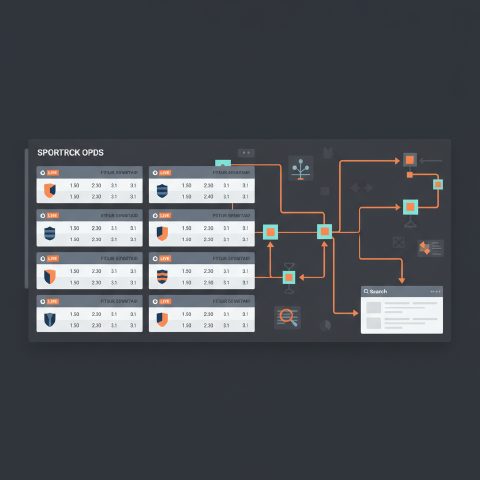
Most live odds pages fail because the actual odds render through client-side JavaScript widgets fed by third-party feeds (Sportradar, Betradar-style data), which Googlebot has to render in a separate, delayed pass. Add near-duplicate content across dozens of operators pulling the same feed and you get pages with nothing unique to rank on.
Google's indexing runs in two waves: crawl the raw HTML first, then queue the page for rendering to execute JavaScript. That rendering queue isn't instant, I've measured delays of 4 to 8 seconds routinely, sometimes longer under load, on JS-heavy odds widgets. For a page whose entire value proposition is "see the live line right now," that lag is close to fatal. Googlebot may index a shell with a loading spinner and nothing else.
The duplication problem compounds it. When forty sportsbooks license odds from the same data provider and drop it into near-identical templated match pages, Google's duplicate content systems (the same family of algorithms that emerged post-Panda and still get reinforced in core updates) have no reason to differentiate one operator's live page from another's. Unique commentary, unique market framing, and genuinely different UX are what separate a page that ranks from one that gets folded into a canonical cluster you don't control.
Run a Screaming Frog crawl with JavaScript rendering enabled and compare it against a raw-HTML crawl on your own live pages. If the odds table, scoreline or bet slip only appears in the rendered version and not the raw HTML, you've found your indexing bottleneck before Google finds it for you.
How should you structure in-play sportsbook pages for crawlability and indexing?
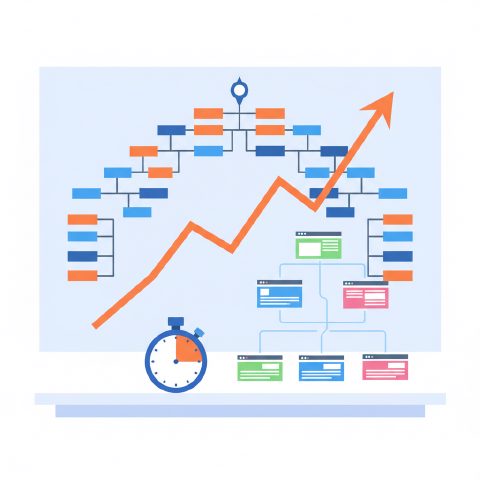
Build permanent, evergreen hub URLs per sport and league, /live-betting/nba/, /live-betting/soccer/premier-league/, that persist year-round, and nest individual live matches as internal modules inside them. Authority accumulates on the hub instead of resetting to zero with every new fixture.
This is the single highest-leverage architecture decision in in-play betting SEO. Operators who spin up a fresh URL for every match (/nba/lakers-vs-celtics-march-14/) are throwing away every backlink, every crawl signal and every ranking history the moment the game ends. Instead, that hub URL should exist permanently, with the live match content rotating through it and archived matches either 301-redirected into a relevant evergreen section or noindexed if they carry no lasting search value.
Internally, I run this as a silo: sport-level pillar page → league-level hub → individual live match module, with pre-match preview content linking down into the live hub as the event approaches and strategy/explainer content linking up into it as supporting authority. This mirrors how I'd structure any topical cluster, but the live layer adds a time dimension most SEOs ignore.
Check your actual crawl behavior in Google Search Console's Crawl Stats report and, if you have server access, in raw log files. If Googlebot is hitting your live-match URLs at a lower frequency than your evergreen hubs, that's your crawl budget telling you where the authority actually lives, and it's rarely on the disposable page.
What technical SEO requirements do live-market pages need to actually pass Core Web Vitals?
Live pages need sub-2.5s LCP even with a real-time odds widget, CLS under 0.1 despite auto-refreshing scorelines, and INP under 200ms during traffic spikes when thousands of users hit refresh at once. That means server-side rendering the odds table and reserving fixed layout space for anything that updates live.
Live betting pages break Core Web Vitals in ways static content never does. A live scoreline that shifts layout every time it updates is a CLS problem by design. A bet slip that lags under peak load, kickoff of a Champions League final, Super Bowl Sunday, is an INP problem that only shows up when you actually need the page to perform. Lab data from a quiet Tuesday afternoon test tells you almost nothing about how the page behaves during the traffic spike that matters.
The fix isn't exotic, but it takes engineering buy-in most SEO teams don't have direct control over: server-side render the core odds table so it's present in the initial HTML response, reserve fixed-height containers for anything that refreshes (scores, odds movement arrows, live stats), and push static assets and non-critical JS off the critical rendering path.
| Metric | Target | Live-betting-specific risk | Fix |
|---|---|---|---|
| LCP | < 2.5s | Odds widget loads client-side after main content | SSR the odds table; lazy-load below-the-fold widgets |
| CLS | < 0.1 | Auto-refreshing scoreline or odds shift layout | Reserve fixed-height containers for dynamic elements |
| INP | < 200ms | Bet slip click lag during peak concurrent traffic | Defer non-critical JS; edge-cache static template shell |
| TTFB | < 0.8s (target) | Origin server overload during simultaneous live spikes | CDN edge caching via Cloudflare/Fastly for template layer |
How do you build topical authority for live betting without shipping thin doorway pages?
Wrap your transactional live-odds hubs in a real content cluster, in-play strategy guides, cash-out explainers, same-game parlay breakdowns, that link into the transactional pages and give Google genuine topical depth beyond an odds feed with a headline slapped on top.
Google's core updates have gotten sharper at spotting pages that exist purely to host an affiliate odds feed with zero original value add. A live-odds page with three lines of boilerplate and a widget is a doorway page whether you intended it that way or not. The fix is a proper cluster: sports-betting-seo as the pillar, in-play betting seo as the subtopic, and supporting content, how in-play odds move, live betting bankroll strategy, cash-out mechanics explained, same-game parlay rules by sportsbook, feeding authority into the transactional hub via internal links.
E-E-A-T matters more here than almost anywhere in the gambling vertical because Google can cross-reference your claims against live sports data. Author bios that reference real trading or odds-compiling experience, citations to league data providers, and content that's demonstrably written by someone who understands how a line moves during a live event all separate you from the template-and-feed competitors.
I'll flag one shortcut that's tempting and wrong here: publishing thin in-play content on Medium, Quora or a parasite host to grab quick rankings might move traffic short-term, but it builds zero authority on your own domain. Every click you send off-platform through parasite SEO is a click your own hub never gets credit for.
What's the right link building strategy for in-play betting SEO in 2026?
I run tiered campaigns mixing vetted expired-domain acquisitions in sports niches, ongoing niche edits on real tipster and sports sites, and digital PR timed to major tournaments, I do not run mass PBN blasts directly at live-odds money pages. That's the fastest route to a manual action on a domain you need to keep earning from.
Link velocity for in-play betting SEO should track your content calendar, not your urgency. Expired-domain 301s can rebuild authority fast for a new market launch, but every domain needs a full Ahrefs backlink-history and Wayback Machine check before you touch it, a domain with a spammy prior life or a deindexation flag will drag your live pages down with it, not lift them.
Digital PR is underused in this vertical and it's the safest high-authority play I know: real data stories tied to the World Cup, the Champions League final, or the NBA playoffs earn links from genuine sports and news outlets with a 4-6 week lead time, and those links carry zero anchor-text risk because they're editorial, not placed.
PBN links can still move a domain fast pre-tournament, I won't pretend otherwise, but I only deploy that on secondary or geo-specific domains I'm prepared to lose, never on the primary money domain carrying license and brand equity. Anchor diversification matters just as much as source quality: keep exact-match anchors under 10% of your total profile regardless of which tactic you're running.
| Tactic | Risk level | Best use case | Operator note |
|---|---|---|---|
| Expired domain 301s (sports/tipster niche, DR 20-40) | Medium | Fast authority injection for new market launch | Vet full backlink history in Ahrefs before acquiring |
| Niche edits on live tipster/sports content sites | Low-Medium | Steady link velocity into live-odds hubs | Target real traffic sites, not link-farm networks |
| Digital PR around World Cup/Champions League/Super Bowl | Low | Big authority spikes tied to real events | Needs a genuine data angle, 4-6 week lead time |
| PBN links pointed directly at money pages | High | Pre-tournament rank push | Use only on expendable secondary domains |
| Crowd marketing / forum seeding | Medium | Long-tail live betting community links | Requires native-language seeding for LATAM/EU markets |
How does schema markup help live odds SEO?
SportsEvent schema with dynamic eventStatus, startDate/endDate and team properties helps Google understand whether a match is upcoming, live or finished, which improves eligibility for sports rich results and entity association Google increasingly pulls into AI Overviews. It won't beat Google's own sports knowledge panel on the click, but it strengthens your entity signal.
Schema.org's SportsEvent and Game properties let you tell Google explicitly what a page represents rather than hoping it infers correctly from a JS-rendered widget. eventStatus values, EventScheduled, EventRescheduled, EventPostponed, matter more in live betting than almost any other vertical because the difference between a match starting on time and being postponed changes the entire intent of anyone searching for it in that moment.
The catch: this schema has to update as fast as the match does. Stale structured data claiming a match is live three hours after it ended isn't just a missed opportunity, it edges toward the kind of misleading structured data Google's guidelines explicitly flag for manual review. If you're going to mark up live state, you need the same real-time pipeline feeding your schema that feeds your odds widget, not a static template someone forgot to update.
Worth being honest with clients about: Google's own sports knowledge panel now answers a huge share of live-score and live-odds intent directly in the SERP, competing with your organic listing for the same click. Schema won't reclaim that click on its own, but it does strengthen the entity association that increasingly determines whether your brand gets cited in AI Overviews and other generative answer surfaces, which is becoming its own acquisition channel worth optimizing for separately.
Should operators run SEO or PPC for in-play betting traffic?
SEO carries the weight in this vertical because Google Ads gambling certification is restricted or unavailable in most markets, and even where it's allowed, CPCs on live-event terms spike hard during peak windows. In-play betting SEO is often the only channel that scales without a linear cost curve attached to it.
This is the conversation I have with almost every new operator client. In most other verticals SEO and PPC run in parallel, informing each other's keyword data. In gambling, PPC access is gated by country-specific Google Ads certification, and a huge share of the markets operators actually want to serve, most of LATAM, most offshore-friendly jurisdictions, simply don't have a legal path to paid search at all. That makes in-play betting SEO not just a growth channel but frequently the only scalable one.
Where PPC is available and certified, CPCs on live-event terms climb fast, I've seen $15-60+ per click on head terms during marquee live windows, with budgets exhausted in hours if not capped tightly. SEO has a brutal upfront cost in time and technical work, but once a hub is ranking, the marginal cost of an additional organic session during a traffic spike is close to zero. That's the ROI ceiling that makes patient in-play SEO investment worth defending to a CFO who's used to thinking in CPC terms.
| Factor | In-play SEO | PPC |
|---|---|---|
| Market availability | Works everywhere, no certification needed | Google Ads gambling certification required per country; many markets fully blocked |
| Time to first deposit | 3-6 months to rank on competitive live terms | Immediate, but CPCs $15-60+ on peak live terms where allowed |
| Cost curve | High upfront build, near-zero marginal cost once ranked | Cost scales linearly with volume; live-spike traffic drives CPC spikes |
| Compliance exposure | Google spam policy / manual action risk | Account suspension risk, strict landing page policy enforcement |
| Scaling during a live spike | Can't spike instantly, needs pre-built authority | Budget can be dialed up same-day if certified |
How should operators measure ROI on in-play betting SEO?
Track deposits per organic session and FTD cost by landing page and sport, not rankings. A live-odds page ranking #1 that converts at 0.3% is worse for your business than a page sitting at #4 converting at 2%, rank position is a leading indicator, not the number you should be reporting up.
I don't send operator clients ranking screenshots. I send them GA4 data blended with GSC query-level clicks, segmented by sport and market type, showing organic sessions against first-time depositor cost per landing page. That segmentation matters because live football pages routinely outperform live NBA or NFL pages in EU and LATAM markets, and if you're pooling all sports into one blended metric you'll misallocate content and link budget toward the sport with the loudest search volume rather than the highest deposit yield.
Attribution windows behave differently here than in most of SEO. In-play conversions often happen within the same session, sometimes within minutes of landing, because the entire point of the query is "I want to bet on this right now." That means last-click organic attribution actually works reasonably well for in-play pages, unlike pre-match content where multi-touch attribution over several days is more honest.
Set up a micro-conversion in GA4 for scroll-to-bet-slip-click or odds-widget interaction. It's not a deposit, but it's the earliest signal that a live page is doing its job, and it lets you diagnose a traffic problem versus a conversion problem weeks before deposit data confirms which one you actually have.
What content strategy actually supports live betting hubs?
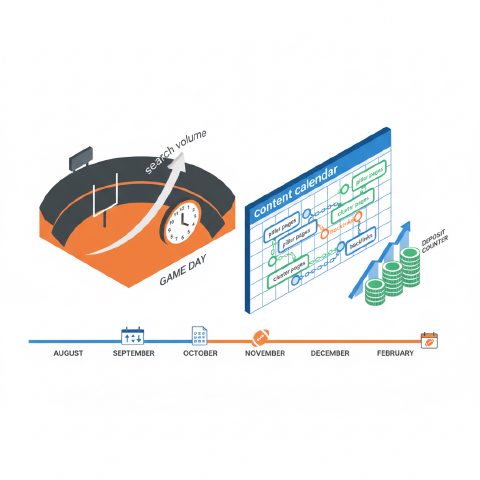
Pair permanent live-odds hubs with a content calendar of in-play strategy guides and market explainers published 6-8 weeks ahead of major tournaments, since Google rewards hubs with a publishing history before demand actually hits rather than scrambling to publish once the tournament starts.
The operators who win live-market SERPs during a World Cup or March Madness aren't the ones who started publishing when the tournament began, they're the ones whose hub already had six to eight weeks of fresh, relevant content and updated evergreen guides sitting on it, giving Google's freshness and crawl-priority systems a reason to trust the domain before the spike hit.
I run this as a fixed cadence tied to the sports calendar rather than an ad-hoc blog schedule: pre-tournament content push, in-tournament live-page monitoring and rapid updates, post-tournament content refresh that folds lessons and updated stats back into the evergreen guides. That refresh cycle is also where freshness signals get reinforced without publishing net-new URLs every time, updating an existing high-authority page beats creating a new thin one almost every time.
Internal linking discipline matters as much as the content itself: every strategy guide, cash-out explainer and market breakdown should link down into the relevant sport's live hub, and every live hub should link back up into two or three of the most relevant supporting guides. That reciprocal linking is what turns a stack of individually decent pages into a cluster that actually outranks incumbents.
What are the biggest risks in aggressive in-play SEO tactics?
The two fastest ways to torch a sportsbook domain chasing live rankings are mass-producing near-identical odds-feed match pages at scale (a thin/doorway content violation still enforced under core updates) and blasting exact-match-anchor PBN links directly at money pages, which is a textbook Penguin-style trigger for a manual action.
I've inherited domains that lost 60-80% of organic sportsbook traffic overnight from exactly this pattern: hundreds of auto-generated match pages, identical structure, identical feed data, differentiated only by team names, indexed en masse before a season started. Google's algorithmic systems don't need a human reviewer to catch that pattern, it gets algorithmically suppressed, often silently, with no manual action notice to explain it.
On the link side, anchor text discipline is non-negotiable on live betting money pages specifically because these pages are commercially obvious, "live odds," "in-play betting," exact match phrases are exactly what a spam classifier expects to see over-optimized on a gambling domain. I keep branded anchors around 50% of the profile, naked URLs and generic anchors ("click here," "this site") around 20%, and exact-match under 10%, even when running aggressive tiered link campaigns.
One more risk specific to this vertical: geo-redirect cloaking to route restricted-jurisdiction traffic elsewhere can cross into Google's spam and Safe Browsing policies if implemented sloppily, triggering warnings that tank click-through rate even on pages that still technically rank. If you're segmenting by jurisdiction, do it with clean hreflang and legitimate content differences, not server-side sniffing that shows Googlebot one thing and users another.
How long does it realistically take to rank for competitive live-market keywords?
Expect 4-6 months minimum to break into the top 10 for high-volume in-play terms like "live football odds," and 8-12 months to consistently outrank established DR70-90 incumbents like Bet365 or DraftKings on head terms. New or lower-authority domains should target long-tail league-and-market-type combinations first to generate revenue while the hub matures.
I structure this as a four-phase roadmap with clients rather than a single timeline promise, because domain age and existing authority are gating factors no content or link budget shortcuts around entirely. Months 1-2: technical foundation, hub architecture, SSR/rendering fixes, schema implementation. Months 2-4: content cluster build-out and the start of measured link acquisition. Months 4-6: first meaningful rankings, almost always on long-tail terms first, "live odds NBA over/under" ranks long before "live odds NBA" does. Months 6-12: genuine competition for head terms against established operators.
Check Ahrefs Keyword Difficulty on your target terms before setting expectations internally. Head terms in this space routinely sit at 60-80+ KD, reflecting incumbents with backlink profiles built over years, not months. That's not a reason to avoid the vertical, it's a reason to build a long-tail revenue base first so the campaign is self-funding by the time you're seriously contesting head terms.



Comments
No comments yet, be the first.