The 2026 How-to-Watch SEO Playbook: Turning Betting Search Demand Into Ranked Pages

What Exactly Is a How-to-Watch Page, and Why Is It a Sportsbook SEO Goldmine?
A how-to-watch page answers "how to watch [event]" queries with broadcast channels, streaming platforms, kickoff times and odds, catching bettors before they've picked a book. It ranks fast because broadcasters, not bookmakers, usually own that SERP, leaving low-competition, high-intent real estate operators can claim with the right template and timing.
Fans don't type "how to watch Chiefs vs Ravens" because they want to place a bet. They type it because they're not sure whether the game is on network TV, buried behind a Peacock paywall, or streaming exclusively on YouTube TV. That informational moment happens before they've committed to anything, including a sportsbook. If your fixture page is the one that resolves that confusion and puts an odds widget three inches below the streaming answer, you've inserted yourself into the funnel at the exact second attention peaks.
Run Ahrefs on any fixture-specific "how to watch" query and you'll typically see Keyword Difficulty in the 5-20 range, compared to 40+ for something generic like "NFL odds" or "Chiefs Ravens betting lines." That gap exists because the pages currently ranking are thin ESPN/media wire posts, league.com boilerplate, or aggregator sites that never touch betting content. None of them are optimizing the combination of channel info plus props plus best-bet angle, which is exactly the page shape a sportsbook content team can build in an afternoon.
I've watched this play out across two Super Bowls and a World Cup cycle: the operators who treated "how to watch" as a throwaway FAQ line buried in a preview article left the SERP to media outlets. The ones who built it as a standalone, well-templated page captured session volume that a straight odds page never would have touched, because the odds page wasn't ranking for the query fans were actually typing.
How Much Search Volume Do 'How to Watch' Queries Actually Generate Before Kickoff?
Volume is spiky, not steady, a fixture's "how to watch" query can go from near-zero to 20,000-150,000 monthly searches in the 5-7 days before kickoff, then crash below 500 within 48 hours after. Mega events push six-figure spikes; routine weekly fixtures generate 1,000-15,000 depending on team popularity.
Google Trends data on Super Bowl-week "how to watch" queries has shown spikes well above 200,000 weekly searches in the US the week of the game, flag that as an approximate range since exact figures shift year to year, but the pattern holds: a slow build starting roughly 10 days out, a steep curve in the final 72 hours, and a cliff immediately post-kickoff. Champions League finals and marquee EPL/NFL playoff games typically land in the 50,000-80,000 range at peak. With the 2026 World Cup expanding to 48 teams across the US, Canada and Mexico, I'm expecting an even longer tail of spikes across group-stage matches involving host nations, not just the final.
Regular-season fixtures behave very differently. A midweek Championship League soccer match or a Tuesday NBA game might only generate 1,000-3,000 monthly searches for its how-to-watch variant, but a Cowboys-Eagles Sunday Night Football game can hit 10,000-15,000 in the same week it's played. Ahrefs' historical volume metric lags on these because it averages across 12 months, it will badly underrepresent the actual spike week. I rely on Google Trends real-time data plus last season's Search Console impressions for the same fixture (if it's a recurring rivalry) as a far more reliable proxy than any keyword tool's static volume number.
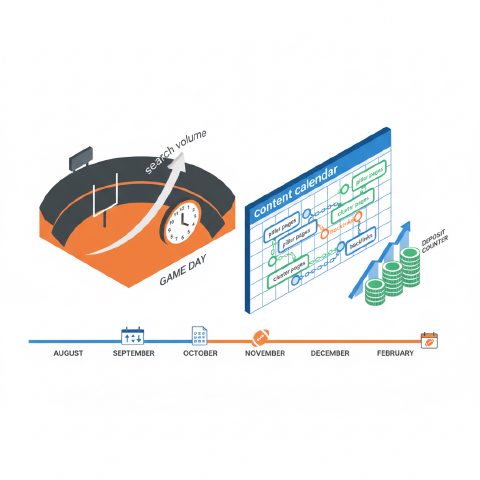
The practical takeaway: roughly 55-65% of a how-to-watch page's total lifetime search volume lands in the five days before the event. Publish late, and you've already missed most of the opportunity, the page might rank eventually, but for a query that no longer exists in meaningful volume.
How Do You Structure a How-to-Watch Page That Actually Ranks and Converts Bettors?
The winning template opens with a channel/stream summary box in the first 100 words, followed by kickoff time across relevant timezones, an odds widget, a short match preview, and an FAQ block. This satisfies the informational "how to watch" intent immediately while sitting the bettor next to a bet slip.
Order matters more than most content teams assume. The first 150 words need to directly answer the query, channel (Fox, CBS, TNT Sports, DAZN), streaming app (Peacock, ESPN+, Paramount+, Fubo), and kickoff time converted for the reader's likely timezone. Bury this under three paragraphs of betting copy and you'll trigger the exact helpful-content signal Google has been tuning against since 2022: pages that make users scroll past promotional filler to get an informational answer.
After that answer box, the next 300-500 words can pivot hard into the betting angle, current odds via a live widget, key props, injury notes, and a short "best bet" call. This is where the sportsbook content actually earns its placement, because the reader has already gotten what they came for and is now primed for a second, related decision. Close with an FAQ block ("What channel is the game on," "Is there a free stream," "What time does it start in my timezone"), these questions map almost exactly to the People Also Ask box and give you a legitimate FAQPage schema opportunity.
One structural detail that gets skipped constantly: region-specific broadcaster info. A page that only lists the US broadcast for a Champions League final is useless to a UK or LATAM visitor, and Google's regional result variation means you're leaving international long-tail traffic on the table. Break the streaming section into US / UK / Canada / LATAM sub-blocks if your operator serves multiple markets.
How-to-Watch Pages vs. Match Preview Pages vs. Live-Odds Hubs: What's the Real Difference?
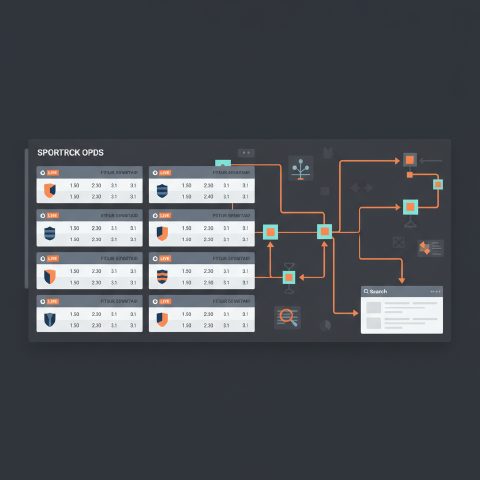
How-to-watch pages target pre-kickoff "where can I watch" intent, match preview pages target "who will win/prediction" intent, and live-odds hubs target in-play "current odds/live score" intent. Each ranks for a distinct keyword cluster and needs its own template, but all three should interlink tightly around the same fixture.
Treating these as one page is the single most common mistake I see when auditing a sportsbook's content architecture. A "how to watch" query and a "prediction" query come from different mental states, one is logistical, one is analytical, and Google's SERPs reflect that with almost no overlap in ranking URLs. Trying to satisfy both in a single 2,000-word page usually means neither section is strong enough to rank on its own.
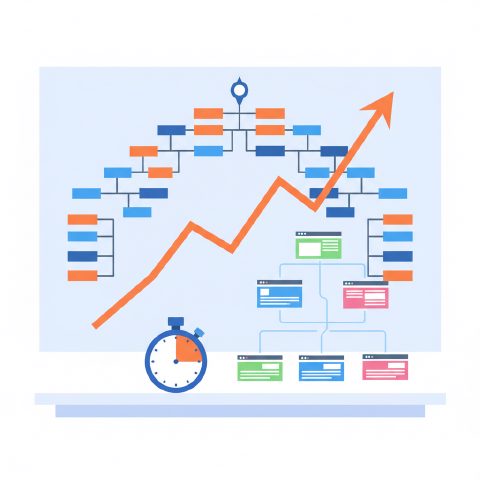
The fix is a hub-and-spoke structure: a pillar fixture page (or league hub) links out to a dedicated /how-to-watch/ URL, a dedicated /preview/ or /prediction/ URL, and a /odds/ or /live/ URL for in-play traffic. Each spoke can be templated for its own intent and refreshed on its own schedule, the how-to-watch page barely changes once broadcaster info is confirmed, while the odds hub needs near-live updates through kickoff.
| Content type | Primary search intent | Peak search window | Core page elements | Conversion mechanic |
|---|---|---|---|---|
| How-to-watch page | Where can I stream/watch this | 3-5 days pre-kickoff through kickoff | Broadcaster list, stream apps, kickoff time by timezone | Odds widget placed below the answer box |
| Match preview page | Who will win, predictions, form | 5-7 days pre-kickoff, more evergreen value | Head-to-head stats, injuries, expert pick | Best-bet CTA, props table |
| Live-odds/in-play hub | Current odds, live score, line movement | During the match and 1-2 hours after | Real-time odds feed, live score widget | In-play bet slip, cash-out CTA |
| Post-match recap/live blog | Final score, highlights, results | Immediately post-match, 24-48 hour tail | Score summary, highlight clips, next-fixture link | Retargeting link to next matchup's how-to-watch page |
How Do You Avoid Legal and Trademark Risk When Publishing Live Stream Betting SEO Content?
Never host or link directly to pirated streams, link only to licensed broadcasters like ESPN+, DAZN, Peacock or Sky, and disclose affiliate relationships per FTC, ASA or UKGC rules. Avoid using league or broadcaster logos without a license, and geo-gate betting CTAs to legal markets to sidestep trademark claims and regulatory manual actions.
Nominative fair use generally covers referencing team and league names in body text, "how to watch the Lakers vs Celtics" isn't a trademark problem. Logos are a different story. Using an unlicensed NFL, NBA, Premier League or broadcaster logo on a commercial page invites a takedown request, and I've seen it happen to affiliate sites that scaled fixture pages fast without checking brand-usage guidelines. Stick to text-based team/league references and stock or original graphics.
The bigger risk sits in stream linking. Aggregator sites that link out to pirate stream mirrors get flagged under DMCA processes, and Google has applied manual actions to domains with heavy outbound linking to known piracy indexes, this can drag down the whole domain's rankings, not just the offending page. Build a licensed-broadcaster whitelist per market and update it regularly, because rights shift: NFL Sunday Ticket moved from DirecTV to YouTube TV, and Champions League rights in various markets have bounced between TNT Sports, CBS/Paramount+ and other holders across recent cycles. A stale broadcaster list is both a user-trust problem and, in the US, a state-by-state legal-status problem for the betting CTA sitting next to it, geo-gate that CTA so it only appears in markets where the operator is licensed.
How Do You Build Fixture Clusters Around How-to-Watch Pages for an Entire Season?
Map the full season calendar into a fixture-cluster spreadsheet, then generate a templated page for every match, tying each to a pillar "[League] Schedule & How to Watch" hub. This turns one-off pages into a compounding internal-linking network that ranks the pillar for season-long head terms while spokes capture weekly spikes.
Start with the league's official schedule feed or API and tag every fixture by tier, marquee/rivalry, mid-tier, routine. That tier determines publish lead time, content depth, and how much link-building budget it gets. A season pillar page ("NFL Schedule 2026: How to Watch Every Game") links to every team hub, which links to every individual fixture spoke, and every spoke links back up. This is the same internal architecture that's carried my playoff and World Cup campaigns, the pillar accumulates authority from every spoke ranking, and new spokes inherit crawl priority from an already-strong pillar instead of starting cold.
Template variance is non-negotiable at scale. An NFL regular season alone is 272 games; across the top five European soccer leagues you're realistically publishing 400-600 fixture-related pages a season. Each spoke needs genuinely unique fields, confirmed broadcaster by region, specific kickoff time, current injury notes, current odds, or you're building 500 near-duplicate pages that Google's quality systems will eventually flag as a cluster, not individually.
During playoffs or a World Cup knockout stage, competition for these SERPs jumps 3-4x as every media outlet and other operator piles in. That's when I shift lead time and link-building effort disproportionately toward the marquee tier and let the routine-tier template run with lighter editorial touch.
What's the Ideal Publish-and-Promote Timeline Before a Match or Tournament?
Publish marquee events, Super Bowl, World Cup final, Champions League final, 21-30 days ahead. Publish weekly league fixtures 7-10 days ahead, and daily-fixture sports (NBA/MLB regular season) 3-5 days ahead. Earlier publishing buys the indexing and link-building runway competitors who wait skip entirely.
Google needs time to crawl and fully index a fresh URL, and that window varies with a domain's crawl budget, I've seen anywhere from 3 to 14 days in Search Console before a new fixture page gets meaningful impressions, even on an established site. Link-building takes its own runway on top of that: a niche edit or crowd-marketing push typically needs 5-10 days to register any ranking movement. Stack those together and a page published 6 days before kickoff has almost no chance of ranking meaningfully before the query volume collapses.
I ran this comparison directly during a past Super Bowl cycle: one client's how-to-watch page went live 25 days out with a modest niche-edit push starting at day 20; a comparable competitor page went live 6 days out. The early page captured close to the full ramp of the search curve and pulled roughly 3-4x the organic sessions of the late one over the event window, despite both pages having comparable on-page quality.
| Event tier | Example | Publish lead time | Link-building lead time | Content refresh cadence |
|---|---|---|---|---|
| Mega event | Super Bowl, World Cup final, Champions League final | 21-30 days before | Start outreach 18-25 days before | Refresh broadcaster/odds daily in final week |
| Marquee weekly fixture | NFL playoff game, El Clasico, rivalry week | 10-14 days before | Start outreach 10-12 days before | Refresh 2-3x in final 5 days |
| Routine weekly fixture | Standard NFL/EPL Sunday match | 7-10 days before | Light or none, internal linking only | Single update once lines/broadcaster confirmed |
| Daily-fixture sport | NBA/MLB regular season game | 3-5 days before | None, rely on cluster authority | Single update at publish, minor refresh day-of |
What Schema Markup and Technical SEO Does a How-to-Watch Page Need?
Layer SportsEvent or BroadcastEvent schema with FAQPage markup, keep Core Web Vitals tight since these pages take the heaviest mobile traffic spikes of anything on a sportsbook site, and push new fixture URLs through the GSC Indexing API or a dynamic upcoming-fixtures sitemap so Google can crawl them within hours, not days.
Structured data does double duty here. SportsEvent/BroadcastEvent schema helps Google understand the entity relationships between the teams, the league, and the broadcaster, useful even when rich results don't render widely, because it feeds the same entity graph that AI answer engines like Perplexity and Google's AI Overviews pull from when someone asks a conversational "how do I watch" question. FAQPage schema on the closing FAQ block is still one of the more reliable ways to earn extra SERP real estate on these pages.
On the infrastructure side, treat fixture pages like flash-sale pages, not evergreen content. Traffic to a marquee how-to-watch page can jump 8-10x in the hour before kickoff as fans grab their phones to confirm the channel. That means CDN caching, image optimization for any broadcaster/channel iconography, and an LCP target under 2.5 seconds aren't optional, a slow page during that exact window is the single fastest way to lose the conversion you built the whole page to capture. Set up a dedicated sitemap segment for upcoming fixtures and ping it via the Indexing API or a manual GSC submission the moment a page goes live, rather than waiting on organic crawl discovery.
How Do You Scale How-to-Watch Pages Across Hundreds of Fixtures Without Triggering Thin-Content or Spam Filters?
Build a template with mandatory unique fields per page, broadcaster by region, kickoff time, injury notes, odds, and cap automation at roughly 70% templated structure to 30% unique editorial input. Run Screaming Frog similarity audits monthly; pages scoring above 85% near-duplicate get merged or pruned before they draw a quality flag.
Google's 2022 Helpful Content Update and the core updates that followed it specifically went after templated, low-editorial-value affiliate and odds pages, this is not a hypothetical risk for anyone running a fixture-cluster program at scale. An operator covering the top five European leagues plus NFL and NBA could realistically be publishing 400-600 fixture-related pages a season. Without active pruning, I've seen 30-40% of these become zombie pages within a year, zero impressions, dragging crawl budget away from the pages that are actually earning traffic.
The mitigation is a two-tier publishing rule. Marquee and mid-tier fixtures get individual pages with real editorial input, a human writing the injury notes and best-bet angle, not just a data feed dumping numbers into a template. Routine, low-search-volume fixtures (a midweek Championship match, a lower-interest weeknight NBA game) get consolidated into a weekly roundup page rather than an individual URL, you still capture the aggregate search volume without creating dozens of near-identical thin pages. Run a GSC decay audit every 60 days: pages with zero impressions get either merged into the roundup, noindexed, or 410'd outright.
How Do You Measure ROI on How-to-Watch and Match Preview SEO Pages?
Track organic sessions, new-vs-returning ratio, and event-day conversion rate per fixture page in GA4 and GSC, then compare that against what the equivalent CPC would cost on paid search, a channel most bookmakers can't even legally buy in most markets. A single mega-event page can outperform an entire season of routine fixture pages combined.
Isolate query-level performance in GSC's performance report by filtering fixture pages against three query buckets: "how to watch X," "X odds," and "X live stream." Tag the odds widget and signup CTA with UTMs so GA4 can attribute conversions to the specific fixture page rather than lumping everything into generic organic. Assign a conversion value using average first-deposit value multiplied by the page's actual click-to-signup rate, and expect that rate to run meaningfully higher on high-intent event traffic (roughly 1-4% in campaigns I've run) than on generic evergreen odds content (0.3-0.8%), though exact figures depend heavily on the operator's brand and market, so treat these as directional ranges rather than guarantees.
The concentration effect is the number worth showing to whoever controls your content budget. In a past World Cup cycle, a cluster of 48 how-to-watch fixture pages, under 3% of the site's total indexed pages, drove somewhere in the 12-15% range of total new organic signups during the tournament window. That's the argument for why fixture-cluster content deserves dedicated headcount and a real link-building line item, not leftover budget after the evergreen pillar content is funded.
Which Link-Building Tactics Actually Move How-to-Watch Pages Without Burning the Domain?
Niche edits on sports media and local news sites placed 10-14 days before kickoff, plus crowd marketing on team forums and Reddit game threads, move fixture pages fastest and safest. Tiered links and expired sports-domain redirects work but carry real de-index risk if the anchor-text ratio tilts too commercial too fast.
Speed matters more than usual here because the ranking window is short, which pushes some teams toward riskier tactics than they'd use on an evergreen page. My baseline stack: niche edits on established sports/news sites (DR 30-60, cost typically $150-$400 per placement depending on niche relevance and domain strength) placed with a 5-10 day lag before they show ranking effect, run in parallel with crowd marketing, organic-sounding mentions dropped into team subreddits and forum game threads timed to the natural conversation spike around a fixture. That second tactic costs almost nothing but is labor-intensive and needs to read as genuinely helpful, not planted.
Digital PR works exceptionally well for mega events specifically, pitching a local sports journalist a "how to watch plus best bets" angle around a Super Bowl or March Madness weekend tends to land coverage that a routine weekly fixture never would. Expired-domain 301 redirects with genuine sports-content history can transfer authority fast, but I flag this as medium-to-high risk: if the pattern of acquired domains and their anchor profile looks manufactured, it's exposed to the same Penguin-era detection logic that's never actually gone away, just gotten quieter. PBN tiered links I don't recommend pointing at money pages at all in this vertical, the downside of a manual action on a sportsbook domain during peak event season is too costly to justify the marginal lift. Keep branded and naked-URL anchors above 60% of the total profile on these commercial fixture pages, and hold exact-match "how to watch [team]" anchors under 10%.
| Tactic | Risk level | Time to ranking lift | Typical cost | Best used for |
|---|---|---|---|---|
| Niche edits on sports/news sites | Low-medium | 5-10 days | $150-$400 per link | All fixture tiers, especially marquee |
| Crowd marketing (forums/Reddit) | Low | 3-7 days | Labor only, near-zero cash cost | Routine and mid-tier fixtures |
| Digital PR / journalist pitching | Low | 10-20 days | Time-intensive, medium cost | Mega events, tentpole tournaments |
| Expired-domain 301 redirects | Medium-high | 3-5 days after propagation | $50-$300 per domain acquisition | High-value pillar/hub pages only |
| Tiered PBN links | High | Fast but unstable | Variable | Not recommended for money pages |



Comments
No comments yet, be the first.