Betting Promo Code SEO for 2026: Building Promo Pages That Outlast the Thin-Content Purge
Why do sportsbook promo code pages get hit by thin-content filters?
Promo pages get flagged because operators publish the same 200-word template across a dozen state URLs with only the city and license number swapped. Google's March 2024 scaled content abuse policy targets exactly this pattern, and I've watched entire promo hubs lose 60-70% of organic visibility within three weeks of a core update.
I had a sportsbook client running 19 state promo pages, same hero copy, same bulleted T&C block, same generic FAQ with "Yes" and "No" swapped for the state name. The pages ranked fine for 18 months. Then the March 2024 update hit, and GSC showed a 68% drop in impressions for the /promo/ subfolder inside four weeks. Nothing else on the domain moved. That's not a coincidence, that's a scaled content abuse penalty landing on a template, not a page.
Google treats gambling promo pages with extra suspicion because they sit at the intersection of YMYL and pure commercial intent. A casino lobby page explaining slot RTP gets some benefit of the doubt. A page whose entire purpose is pushing a bonus code into a deposit funnel gets scrutinized for value-add, because the conversion incentive to mass-produce near-duplicate pages is obvious to Google's systems and to the reviewers behind them.
The fix isn't abandoning state-level pages, multi-state sportsbooks need them for geo-targeting and licensing compliance. The fix is making each one earn its URL with unique legal context, state-specific betting examples and a claim walkthrough that reflects that state's actual deposit and KYC flow. That's the rest of this piece.
What exactly does Google flag as thin on a bonus code page?
Thin isn't about word count, it's repeated boilerplate with no unique value per URL. Signals include identical T&C summaries across pages, FAQ answers that only swap a state name, stale codes left live past expiry, and zero editorial fingerprints like author attribution or last-verified timestamps.
Run Screaming Frog's near-duplicate content report across any multi-state promo hub and you'll usually find 70-90% textual similarity between URLs, that's the smoking gun reviewers and algorithms both look for. I've audited hubs where the only unique string per page was the state name and the sportsbook's license number, repeated in a sentence template eleven times across eleven pages.
Google's doorway page guidance is explicit about this pattern: pages built to funnel multiple geographic or similar variations to the same destination count as doorways even if each one technically "ranks" for a city or state modifier. A promo code page for New Jersey and one for Pennsylvania that differ only in license disclosure language is textbook doorway construction, regardless of how it was built or who wrote it.
The other thin-content tell specific to this vertical: stale offers. A page still showing "bet $5, get $150 in bonus bets" three months after the operator switched to a flat deposit match reads as neglected to both users and crawlers. Google's helpful content systems weight freshness heavily on commercial pages tied to time-sensitive offers, a promo page is one of the few page types where "last updated" dates are a legitimate, checkable ranking signal rather than cosmetic trust theater.
How long should a 2026 promo code landing page actually be?
Forget a target word count. I've ranked a 650-word promo page above a competitor's 2,200-word version because mine had a live odds screenshot, a numbered claim walkthrough and a current-offer timestamp, theirs had padding. Build for completeness of the claim journey, not a length quota.
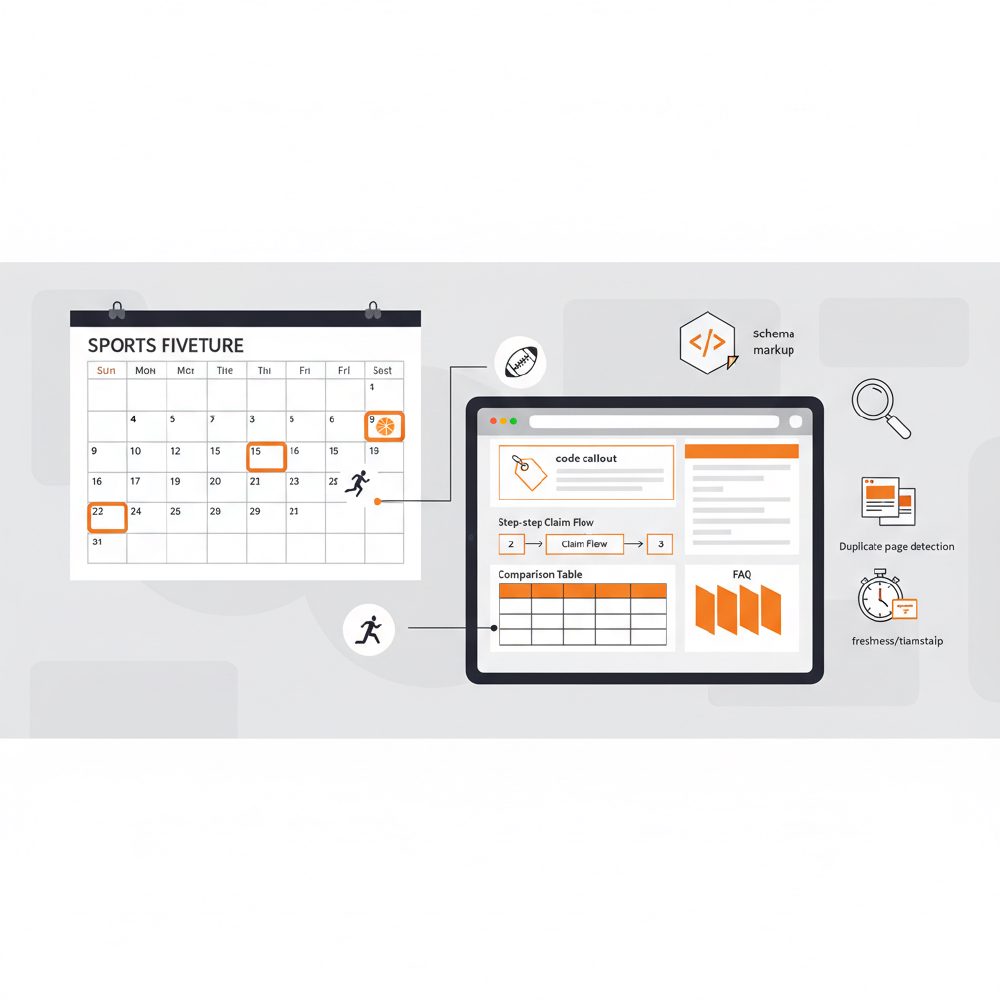
The content blocks that actually matter, in order: (1) the code and headline offer stated plainly, (2) eligibility, new customer, state-licensed, minimum age and deposit requirements, (3) a 5-7 step claim walkthrough written for someone who has never used the book, (4) how the bonus actually pays out, bonus bets vs real cash, rollover or no rollover, (5) a state-specific legal line confirming licensing status, (6) a short comparison against the runner-up offer in that state, and (7) a last-verified date with a named reviewer.
That structure runs 500-900 words of genuinely unique content per page before you even touch FAQ schema. Compare that to the 1,800-word "ultimate guide" pattern a lot of affiliate sites still run, which pads with generic sports betting explainer content that has nothing to do with the promo itself. Google doesn't reward the padding; it rewards the page that answers the claim-flow question fastest and most accurately.
I track this with Ahrefs' content gap tool against the top three ranking promo pages for a given code term, what I'm looking for isn't word count parity, it's which unique claim-flow questions they answer that I don't. Usually it's two or three gaps: deposit method restrictions, same-game parlay eligibility on the bonus, or whether the bonus applies to live betting. Close those and the page competes regardless of length.
How do you scale promo pages across states without duplicating content?
Build one content skeleton but vary at least five elements per state: legal status language, licensed book roster, deposit method availability, a locally relevant bet example, and tax/withholding notes where applicable. Automate the data pulls, but write the legal and example sections manually or through a reviewed AI pass per state.
Most operators I audit automate the wrong layer. They template the narrative copy and manually update only the code and odds, backwards. Narrative framing should be hand-written per state cluster (group similar-market states together: new-launch states, mature mobile-betting states, retail-only states), while the factual data points, license numbers, deposit minimums, available books, should pull from a managed spreadsheet or CMS field so they stay accurate without manual rewrites.
States with no legal online sports betting still deserve a page, but it needs to say that clearly and pivot to DFS or retail options rather than displaying a dead promo code. I've seen operators keep "coming soon" pages live in non-regulated states for over a year with zero content update, that's a doorway shell Google will eventually deindex, and it offers nothing to a user who landed there.
| Content Element | Thin Template Approach | Depth-Built Approach |
|---|---|---|
| Legal status line | Generic "where legal" disclaimer | State-specific regulator name, launch date, licensing body cited |
| Book roster | Same national list on every page | Filtered to books actually licensed in that state |
| Bet example | Omitted or generic "$10 on any game" | Named team/league active in that state's market this week |
| Deposit methods | Identical national list | Flags state-specific restrictions (e.g., PayPal unavailable in some states) |
| Tax note | Absent | Short line on state betting tax treatment, link to IRS W-2G guidance where relevant |
What content elements actually earn rankings on bonus code pages?
The elements that move rankings are the ones competitors skip: a verified claim-flow walkthrough, a side-by-side comparison against the next-best offer, a visible last-checked date, and FAQ answers that address the specific mechanics of that bonus type, bonus bets, odds boosts or deposit matches, rather than generic betting FAQ filler.
I rank-test this constantly during event windows. During the 2025 NFL season, the promo pages that held top-3 positions through Week 1 traffic spikes weren't the longest, they were the ones with a dated "verified" badge updated within 48 hours of the offer going live, plus a comparison table against two competing sportsbook offers. That comparison element alone correlates with lower bounce and longer dwell time in GSC data across three client accounts I manage.
Generic FAQ padding, "What is a sportsbook bonus?", "Is sports betting legal?", adds volume without differentiation, because every competitor answers those identically. The FAQ entries that actually earn featured snippets and AI Overview citations are narrower: "Does this promo apply to same-game parlays?", "What happens to the bonus bet if my first wager pushes?" Those are the questions a bettor actually has mid-claim, and they're the ones competitors leave unanswered.
| Element | Thin Template | Authority Page |
|---|---|---|
| Intro copy | Swapped state name only | State-specific market context, unique per cluster |
| Claim walkthrough | Absent or 2-step summary | 5-7 step walkthrough matching actual app flow |
| Comparison | None | Table vs 2-3 competing state offers |
| Freshness signal | None or fake 'updated' date | Real timestamp, named reviewer, change log note |
| FAQ | Generic betting 101 questions | Bonus-mechanic-specific questions (push, SGP, live bet eligibility) |
Should promo pages be built around fixture calendars and event peaks?
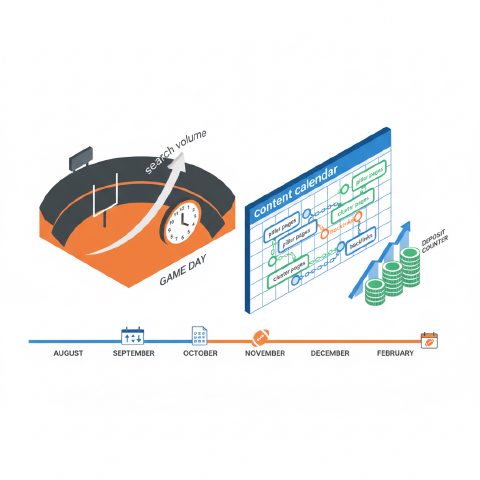
Yes, and this is where most promo SEO fails. Promo code search volume spikes 300-500% in the 10 days before the Super Bowl and NFL Week 1, so pages need to be refreshed and re-indexed 6-8 weeks ahead, not updated the week of kickoff when competitors flood the SERP with fresh content and bigger ad budgets squeeze organic further down.
I run a fixture-cluster calendar for every sportsbook client that maps content refresh dates against the actual demand curve, not the calendar date of the event. Super Bowl promo search starts climbing in mid-December for the following February, well before conference championship games are decided. If your promo page for that event isn't refreshed, re-crawled and earning fresh internal links by early January, you're publishing into a SERP that's already consolidating around whoever moved first.
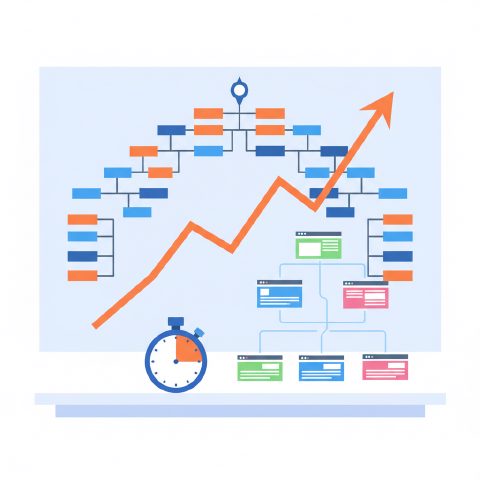
The same logic applies to March Madness, the NFL season opener and, every four years, the World Cup, I ran event-driven content for two Super Bowls and a World Cup cycle, and the pattern holds every time: organic traffic to promo pages follows a steep ramp starting 3-4 weeks pre-event, peaks the week of, then crashes 80% within 72 hours after. If your page isn't ranked before that ramp starts, you've missed the window entirely; you cannot SEO your way into peak week traffic that's already being captured by competitors with an eight-week head start.
Practically, that means your promo page refresh cadence should be event-triggered, not quarterly. Build a content calendar that flags each major fixture 8 weeks out, assigns a content owner, and schedules the freshness update, internal link injection from relevant news and odds content, and a re-submission through GSC's URL inspection tool to accelerate recrawl.
How do you handle expired promo codes without tanking rankings?
Update the page in place rather than deleting or 404ing it. Swap the expired code for the current live offer, update the timestamp and FAQ answers, and keep the URL intact so accumulated backlinks and rankings carry over. Only 301 redirect when a state exits the market entirely or the operator retires the brand.
The worst mistake I see is operators 404ing or noindexing a promo page the moment a code expires, assuming it's now worthless. That page likely has months of accumulated backlinks, internal link equity and ranking history, deleting it means starting the authority clock over on a replacement URL. Update in place instead: new code, new headline offer, refreshed claim steps if the flow changed, and a visible note like "Previous offer expired March 3; current offer below" that signals active maintenance to both users and crawlers.
Schema needs to move with the content. If you're using Offer schema with a validThrough date, that field has to update the same day the offer changes, stale schema showing an expired validThrough date is a trust signal Google's shopping and offers systems actively check, and gambling offers increasingly get pulled into similar structured validation.
Where's the line between a legitimate promo hub and a doorway page?
The line is editorial fingerprint. A legitimate hub has named authorship, a visible review/update process, state-specific legal commentary that couldn't be auto-generated, and internal links that make sense for a human reader. A doorway page has swapped geo-tokens, no byline, and exists purely to rank a location modifier.
Every promo page on a client site I manage carries a byline and a one-line "last reviewed by" credit, not for vanity, but because Google's quality raters are explicitly trained to look for this on YMYL commercial pages, and it's one of the few E-E-A-T signals that's cheap to implement and hard to fake at scale. If you're running 40 state pages, having one named editor who's demonstrably reviewed all 40 within the last 30 days is a stronger trust signal than having 40 anonymous pages that look identical.
The other tell is internal linking logic. Doorway clusters link to each other in a flat, mechanical hub-and-spoke pattern with identical anchor text. Legitimate hubs link contextually, a Super Bowl odds article linking to the relevant promo page with varied, natural anchor text, a state regulation page linking to that state's specific promo, a comparison article linking to three competing offers. If your internal link pattern would look suspicious printed out as a spreadsheet, it'll look suspicious to a link graph analysis too.
What schema and technical signals matter most for promo pages?
Offer schema with accurate price, validThrough and eligibility fields, FAQPage schema matched to visible on-page FAQ content, clean canonical tags that consolidate affiliate-parameter URL variants, and mobile page speed under a 200ms INP threshold, bettors claiming codes on mobile during live events abandon slow pages within seconds.
Canonical hygiene is the most common technical failure I find on promo pages. Affiliate tracking parameters generate dozens of URL variants for the same page, ?aff=123, ?utm_source=..., ?clickid=..., and if canonicals aren't pointed at a clean base URL, Googlebot wastes crawl budget indexing duplicates and occasionally picks the wrong variant as canonical, fragmenting link equity across versions that each rank weakly instead of one page ranking strongly.
FAQ schema only helps if it matches visible content word-for-word; mismatched schema has triggered manual actions on client sites before, and gambling verticals get reviewed more aggressively than most. On page speed, promo code claims disproportionately happen on mobile in the final minutes before kickoff, I've pulled GSC Core Web Vitals reports showing INP spiking above 300ms during traffic surges because promo page templates load third-party odds widgets and affiliate tracking pixels synchronously. Lazy-load everything that isn't the code and the claim button above the fold.
Do promo pages need backlinks, or is content depth enough?
Depth gets you competitive on-page; links still decide who wins a contested SERP. Low-risk tactics, niche edits on relevant sports content sites, digital PR around odds boosts for major fixtures, and HARO-style expert quote placements, build authority safely. Tiered PBN links to promo pages are high-risk and burn fast in this vertical.
I won't recommend PBNs or heavy link-scheme tactics pointed directly at money pages in gambling, the anchor-text concentration on a page targeting "[Sportsbook] promo code" is already commercially loud, and stacking exact-match anchors from low-quality network sites is one of the fastest ways to trigger a Penguin-style devaluation or manual action in a vertical Google already scrutinizes closely. I've seen it happen within one core update cycle on an account I inherited.
What works instead: build authority on a supporting content hub, odds explainers, state legalization news, fixture previews, and earn links there through digital PR and crowd marketing in sports forums and communities, then let internal links pass equity down to the promo page with varied, natural anchors. Niche edits on existing sports content (inserting a contextual link into an already-ranking article about a state's betting market) carry far less risk than new guest posts built purely for the link, because the host page already has earned trust and topical relevance.
| Tactic | Risk Level | Best Use |
|---|---|---|
| Niche edits on relevant sports sites | Low-Moderate | Contextual link into existing ranking content, varied anchors |
| Digital PR around odds boosts/fixtures | Low | Builds authority on supporting hub pages, passes equity internally |
| Internal linking from news/odds content | Low | Primary driver of equity to promo pages, fully controllable |
| Guest posts built solely for the link | Moderate | Use sparingly, only on genuinely relevant sports/finance sites |
| Tiered PBN links direct to promo URL | High | Avoid, exact-match anchor concentration invites algorithmic devaluation |
How do you measure whether a promo code page is actually working?
Track organic sessions segmented by event window, not monthly averages, a promo page's real value shows in the 10-day pre-event spike. Pair Ahrefs/SEMrush rank tracking by state with GSC click data and assisted-conversion tracking on the deposit flow to see if rankings during peak windows actually convert.
Monthly-average traffic numbers lie about promo page performance because the demand is so spiky. I build event-window reports instead, organic sessions and average position for the 14 days surrounding each major fixture, because a page that looks flat on a monthly chart might be converting at 4x normal rate during the three days that actually matter.
On the conversion side, I tag the "Claim Now" click as a GA4 event and cross-reference against affiliate or CRM deposit data where the sportsbook's compliance team allows it. A page ranking #2 for a state promo term that converts at 1.5% beats a page ranking #1 converting at 0.4%, and I've had to argue that point to stakeholders who fixate on position tracking in Ahrefs without checking whether the ranking is doing anything downstream.



Comments
No comments yet, be the first.