Basketball Betting SEO in 2026: The Fixture-Cluster Playbook That Ranks Before Tip-Off

What is basketball betting SEO and why doesn't a static content plan work?
Basketball betting SEO is ranking sportsbook and affiliate pages for NBA, WNBA and college basketball demand that spikes around specific fixtures, trades, injuries and playoff rounds rather than sitting flat all year. A plan built like a blog calendar misses this, you need publish dates tied to the schedule, not the editorial queue.
I've run three NBA seasons and two March Madness cycles for sportsbook clients, and the pattern repeats every year: operators publish a 'NBA odds' hub page in October, leave it static, and watch search volume for terms like 'NBA trade deadline odds' or 'play-in tournament picks' spike 300-500% in windows the page never targets. Google's freshness systems (what used to get called QDF, query deserves freshness) reward pages updated and re-crawled right before those spikes, not pages that existed first.
The NBA season runs late October through mid-June once you count the Finals, roughly 34 weeks of live demand, interrupted by the All-Star break in mid-February and accelerated hard by the trade deadline (early February) and the play-in tournament (mid-April). College basketball compresses almost all its organic value into a six-week window from Selection Sunday to the championship game. Treating both like one 'basketball' content bucket wastes budget on NBA SEO during weeks NCAAB owns search, and vice versa.
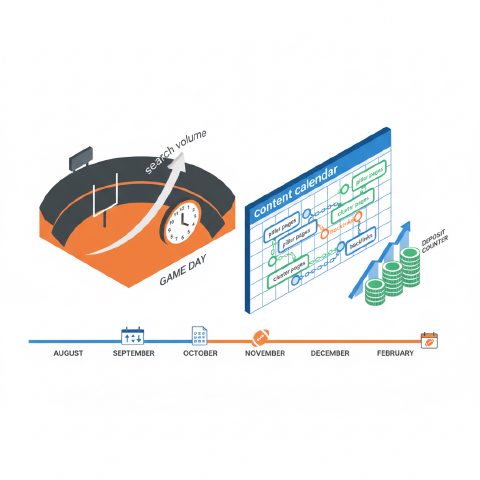
What actually works is a fixture-cluster model: every content asset is tagged to a date range on the schedule, built 10-21 days before that window opens, and either refreshed or retired on a fixed cadence afterward. I've used this exact structure to get prop pages indexed and ranking inside 48 hours of the Vegas line dropping, because the crawl and the content existed before the search spike, not after it.
How do you build a fixture-cluster calendar for NBA betting SEO?
A fixture cluster groups every page tied to one recurring event type, nightly slates, team hubs, prop hubs, futures, and assigns a publish-and-refresh date 10-21 days ahead of the real-world trigger: opening night, trade deadline, All-Star break, play-in, and each playoff round.
Start by pulling the NBA's official schedule release (usually mid-August) into a spreadsheet with four cluster types: daily slate pages (today's games, updated nightly), team hub pages (season-long, refreshed every 2-3 weeks), player prop hubs (refreshed per game, per injury news), and futures/outright pages (championship odds, MVP odds, refreshed after every meaningful line move).
For each cluster, set a lead time. Opening night content goes live by October 1 for an October 21 tip-off. Trade deadline content, 'odds after [player] trade' pages, needs a template built in January so you can populate it within hours of a deal, because that's a 48-72 hour search spike, not a slow burn. Playoff seeding content should publish the moment the play-in picture is mathematically plausible, roughly three weeks before the actual play-in games, because bettors start searching seeding scenarios well before the bracket locks.
I track this in Ahrefs' Content Explorer filtered by publish date on competitor domains, DraftKings and Action Network both show clear publish spikes 12-18 days ahead of major NBA calendar events, which tells you the lead time that's already winning rankings. Match or beat that lead time and you're competing on freshness instead of raw domain authority, which is the only lever a newer sportsbook domain actually has against entrenched affiliates.
What's the real difference between NBA betting SEO and college basketball betting SEO?
NBA betting SEO is a long, steady grind across 30 team hubs and 82 games each; college basketball betting SEO is a short, brutal sprint where 60-70% of annual organic value lands in the three weeks around March Madness. Keyword intent, content velocity and link opportunities differ sharply between the two.
NBA content rewards depth over a full season, team hub pages accumulate backlinks and engagement signals for seven months, so a page built in October is still earning in April. College basketball inverts that: a 'March Madness odds' page built too early looks stale by Selection Sunday, and one built too late never catches the search curve, because 'Sweet 16 odds' volume can 10x in 72 hours and collapse just as fast once the round ends.
Conference tournament coverage (early March) is the most underused NBA-adjacent opportunity in college hoops SEO, Big Ten, SEC and ACC tournament odds pages get a fraction of the competition that 'March Madness bracket odds' pages get, because every affiliate piles into the same five head terms. I've had more success building 15-20 conference-tournament pages with modest individual volume than fighting for one generic bracket page against ESPN, CBS Sports and ten entrenched affiliates.
| Factor | NBA betting SEO | College basketball betting SEO |
|---|---|---|
| Active search window | ~34 weeks (late Oct-mid June) | ~22 weeks, with 60-70% of volume in a 3-week March window |
| Primary content type | Team hubs, nightly slates, prop hubs | Bracket pages, conference tournament pages, team futures |
| Content velocity needed | Steady: refresh every 2-3 weeks per team | Burst: daily refresh during March, dormant May-October |
| Biggest link opportunity | Trade deadline data stories, All-Star content | Bracket prediction studies, upset-odds data journalism |
| Competitive intensity | High year-round from DraftKings, FanDuel, Action Network | Extreme for 3 weeks, nearly zero the rest of the year |
| Content lifespan | Full season if refreshed | Must be rebuilt most years, team rosters turn over fast |
How should basketball odds pages be structured so Google actually indexes the data?
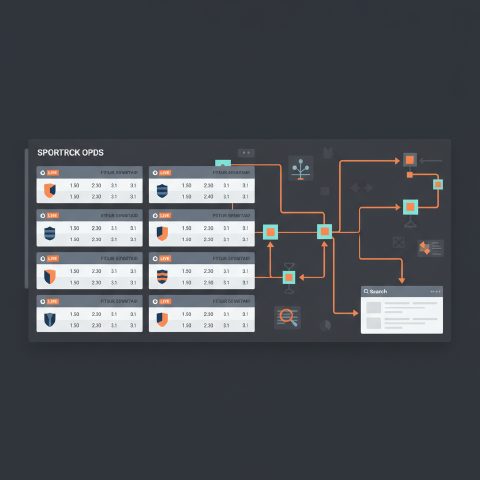
Odds pages need a server-rendered static shell with the game, teams, date and schema markup present in the raw HTML, with the live odds widget layered on top as JavaScript. If Googlebot's render queue hits the page before the widget loads, a JS-only page shows zero betting data to the crawler.
I've audited sportsbook sites where the entire 'NBA odds today' page returned an empty div in Screaming Frog's rendered HTML export, because the odds feed loaded client-side only. That page can rank for the URL slug and title tag, but it can't earn SportsEvent or BroadcastEvent rich result eligibility, and it loses the freshness signal Google needs from actual visible content changes.
The fix is a hybrid build: server-side render the core facts, matchup, tip-off time, venue, current spread/total as of last server sync, directly into HTML, then let the live widget update numbers client-side after that. This also protects Core Web Vitals, since odds widgets are frequently the single biggest cause of layout shift (CLS) and blocked main-thread time on sportsbook pages I've audited with PageSpeed Insights and Lighthouse.
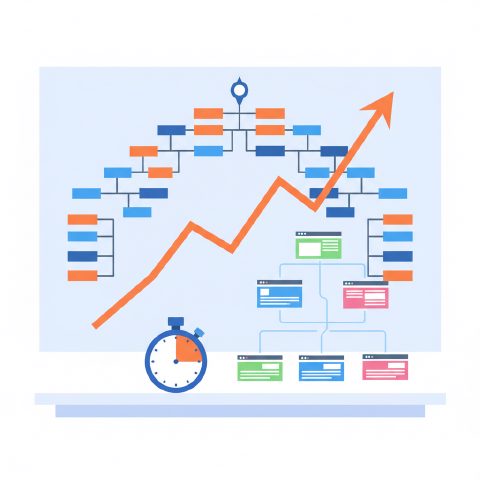
Internal linking matters more here than on most content types: team hub → nightly slate → individual game page → player prop page, with breadcrumb schema matching that hierarchy. I've seen prop pages jump from page 3 to top 5 purely from adding that internal link chain, because it gave Google a clear crawl path and topical context it didn't have when prop pages sat as orphaned leaf nodes.
What makes NBA props content rank instead of getting flagged as thin content?
NBA props content needs 600-900 words of matchup-specific analysis per featured player, recent hit-rate trends, pace-adjusted matchup notes, injury context, layered around the odds table, not just the line itself. Bare prop tables with no analysis are exactly what recent Helpful Content-style updates target.
A points-prop page for a single player that's just 'Over 24.5, -110' with no supporting analysis reads as programmatic thin content, and I've watched entire prop directories lose rankings across a core update when that's the whole template. What survives: a short analysis block covering the player's last 10-game hit rate against the specific prop line, pace and defensive rating context for the opponent, and any news-driven adjustment (back-to-back, minutes restriction, injury report status).
The data layer is the differentiator competitors can't easily copy. If you're tracking hit-rate history in a proprietary database, even a simple one pulling from a stats API, you can generate genuinely unique sentences like '[Player] has gone over this line in 7 of his last 10 home games against top-10 defenses,' which no aggregator template produces automatically. That's the content Google's helpful-content systems and AI Overviews actually want to surface, because it answers the implicit question behind the search.
Refresh cadence here is brutal but non-negotiable: props need updating pregame, every night there's a slate, because a stale line or an injured player still listed as active destroys trust signals and tanks click-through from search snippets fast. I run this on a template system so the analysis paragraph regenerates from the stats feed automatically, with a human editor spot-checking the top 20 player pages daily during the season.
When should operators publish March Madness and college basketball content for the biggest organic lift?
Core bracket and futures pages should go live by early February, conference tournament pages two weeks before each conference event in early March, and round-specific odds pages (Sweet 16, Elite Eight, Final Four) updated within hours of bracket reveals, not built from scratch after each round starts.
Selection Sunday (mid-March) is the single biggest organic spike in the entire college basketball calendar, and the pages that win it were built weeks earlier with placeholder structure ready to populate the moment the bracket drops. I've seen affiliate sites gain a full week's head start on competitors simply by having the Round of 64 page template, schema and internal links live before the bracket exists, they just swap in team names and odds within the hour.
Futures content, national championship odds, Final Four odds, needs to publish by early February and get refreshed weekly as conference play sorts out seeding. Waiting until March to launch a futures page means competing against pages that already have six weeks of indexing and backlink accumulation.
| Content type | Trigger event | Recommended publish lead time |
|---|---|---|
| National championship futures | Season start / conference play | Live by early February |
| Conference tournament odds | Each conference tournament | 2 weeks before tournament start |
| Bracket / Round of 64 template | Selection Sunday | Template ready 3 weeks early; populate within 1 hour of reveal |
| Sweet 16 / Elite Eight pages | Round completion | Updated within 2-4 hours of bracket advancement |
| Final Four & championship page | Final Four reveal | Live within 1 hour of the last Elite Eight game |
What link-building tactics actually move basketball betting pages without triggering a manual action?
Digital PR around original data, prop hit-rate studies, bracket upset models, trade-deadline betting-market reactions, earns the most durable links because sports media cites original numbers. Niche edits and crowd marketing on sports blogs work in moderation but need anchor-text discipline: keep exact-match anchors under 5% of the profile.
The highest-ROI tactic I've run for basketball clients is publishing an annual data study, something like 'NBA player props with the highest historical hit rate' or 'March Madness upset frequency by seed since 2010', timed to publish two weeks before the relevant event, then pitching it to sports data journalists and fantasy/betting podcasts. One such study for a client picked up 40+ referring domains in six weeks, including a few from ESPN-adjacent and local sports media sites, because the data was genuinely new, not scraped.
Below that tier, niche edits on established sports and betting blogs still move rankings, but I cap them at a disciplined anchor-text ratio: roughly 70% branded/naked URL, 25% partial-match ('NBA odds this week' style), and under 5% exact-match ('basketball betting seo' or 'nba props content' verbatim). Push exact-match higher on a money page and you're setting up for a Penguin-style devaluation or a manual action review, especially post-2023 spam updates where Google's systems got noticeably better at spotting unnatural velocity on gambling-adjacent anchors.
Expired-domain acquisition in the sports niche can work as a tier-1 asset if the domain has genuine topical history (an old college sports blog, a defunct fantasy site), but I'd flag this as medium-to-high risk for an operator's primary domain and only run it through a buffer site or a carefully vetted 301, never straight onto the money domain without months of content rebuild first. PBN links on basketball pages specifically are high risk right now; betting is one of the verticals Google's spam team watches most closely for link-scheme patterns, and I've seen entire PBN networks supporting gambling clients get devalued within a single core update cycle in the past two years.
How do you stop basketball content from decaying between seasons?
Set three refresh tiers: daily for in-season prop and slate pages, every 2-3 weeks for team hubs during the season, and a full rebuild every July-August for season-preview and futures pages before the new schedule drops. Pages left untouched for 6+ months during the offseason lose rankings fast as competitors refresh first.
Google Search Console impression data on basketball pages tells a clear story every June: impressions for team and player pages drop 60-80% within three weeks of the Finals ending, and stay flat until late August when the next season's schedule leaks. That doesn't mean abandon the pages, it means switch their job. Offseason, those same URLs should pivot toward free agency, draft and trade speculation content, which captures a smaller but real search audience that keeps the page's authority and internal links alive instead of letting it go cold for four months.
Player pages specifically need active maintenance for roster churn, a page still referencing a player's old team after a trade is a trust signal failure that shows up fast in bounce rate and can trigger a quiet ranking slide even without any obvious penalty. I run a quarterly audit in Ahrefs comparing current team rosters against a scrape of what each player page states, and it consistently catches 10-20 stale references per client roster that would otherwise sit wrong for weeks.
What technical SEO problems hit basketball odds pages the hardest?
The three recurring issues are JS-rendered odds widgets hiding content from crawlers, crawl-budget strain on high-volume nights (12+ NBA games plus dozens of college games simultaneously), and duplicate content across near-identical team and matchup pages. All three compound during peak weeks when fresh crawling matters most.
On nights with a full 12-15 game NBA slate plus a heavy college basketball schedule, a sportsbook site can generate hundreds of near-duplicate game and prop URLs in a single day. Without disciplined canonicalization and a clean XML sitemap split by content type (slates, props, futures), Googlebot's crawl budget gets spread thin exactly when freshness matters most. I pull log files through Screaming Frog's log analyzer during peak weeks specifically to check whether Googlebot is actually hitting new game pages within hours of publish, versus discovering them a day or two late, that lag is often the real reason a page misses its demand window, not a content quality issue at all.
Schema staleness is the other quiet killer: SportsEvent and BroadcastEvent markup needs the correct date, time and participant data, and if a page gets reused season-over-season without updating the schema's event date field, Google can drop the rich result entirely or, worse, show a stale date in search results that tanks click-through on the day it matters most.
How do you measure ROI on a season-long basketball betting SEO program?
Track organic sessions and bet-slip clicks segmented by content cluster and fixture date, then compare year-over-year performance during the identical calendar window, not month-over-month, which gets distorted by the sport's own seasonality. GA4 plus GSC query-level data, cross-referenced against publish/refresh dates, isolates what the SEO work actually drove.
The mistake I see most often is reporting basketball SEO performance as a flat monthly trend line, which makes every October look like a crash compared to April simply because that's the sport's natural curve, not a performance failure. Instead, I build year-over-year comparisons locked to the same fixture window, Selection Sunday week against Selection Sunday week last year, trade deadline week against trade deadline week, which isolates the actual lift from content and link work versus seasonal noise.
On the revenue side, tie organic landing pages to bet-slip or deposit-flow clicks through GA4 event tracking, then assign a rough revenue-per-session benchmark pulled from the client's own conversion data (this varies wildly by market and product, so I never use an industry-average number here, always the operator's real funnel data). A prop page driving 2,000 organic sessions during a playoff week is worth very different amounts depending on whether that traffic converts at 1% or 6%, and operators who only track rankings miss that gap entirely.



Comments
No comments yet, be the first.