Casino Domain Burned in 2026? Why I Rebuild Before I Try to Recover
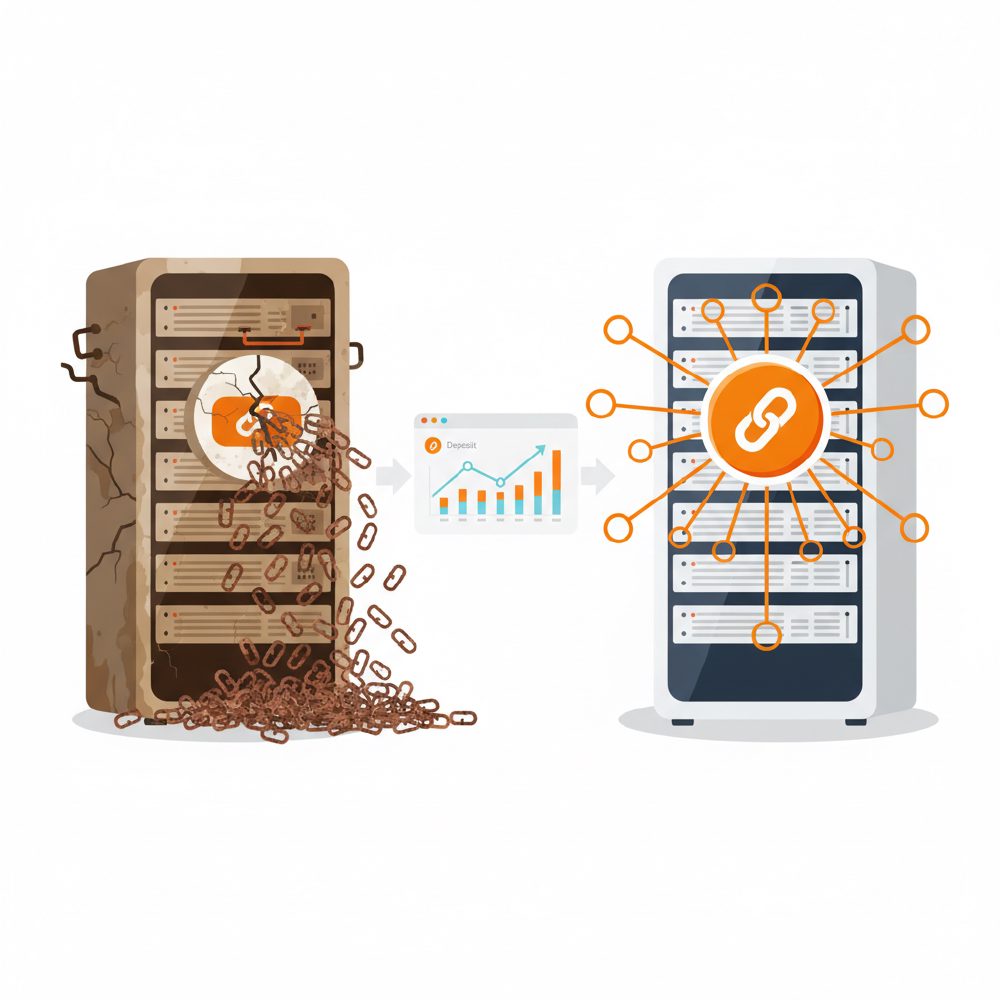
How Do You Know a Casino Domain Is Actually Burned, Not Just Penalized?
A domain is burned when the damage sits in trust signals Google can't un-see quickly: manual actions, blacklisted payment history, or a toxic backlink profile inherited from a prior owner. A simple ranking drop from a core update is a penalty, not a burn, and it's recoverable in weeks, not years.
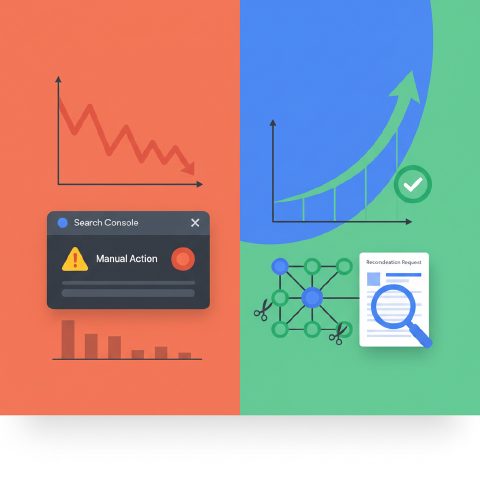
I separate these two states the moment traffic drops, because they dictate completely different budgets. Check Google Search Console first, if there's a manual action listed under Security & Manual Actions, you're dealing with a human reviewer flag, which is serious but fixable. If there's no manual action and traffic cratered after a confirmed core update (March, August, or the newer quarterly cycles Google's run since 2024), that's algorithmic suppression, usually tied to thin affiliate content, doorway pages, or unnatural link patterns picked up by the spam-detection systems that evolved out of Penguin.
Burned is different. Burned means the domain's history, sometimes from before you even owned it, includes a prior life as a PBN node, an adult redirect network, or a payday-loan spam site. Run the domain through Wayback Machine going back 5-10 years and pull the backlink history in Ahrefs. If you see link spikes of thousands of referring domains appearing in single months with zero organic growth to match, that's a signature of manufactured links, and Google's trust models have almost certainly fingerprinted it already.
The other burn signal operators miss: payment processor and affiliate network blacklisting. If your merchant account got shut down for chargebacks tied to that domain, or three affiliate networks independently rejected the domain during compliance review, you're not dealing with an SEO problem anymore, you're dealing with a reputation problem that Google's trust signals will eventually mirror. At that point, no amount of disavow filing fixes the underlying issue.
What's the Real Difference Between Domain Recovery and a Full Rebuild?
Recovery means cleaning the existing domain's link profile, filing a reconsideration request, and waiting for Google to restore trust on the same URL. Rebuild means abandoning that domain's equity entirely and launching fresh, new domain, new content, new link profile, accepting a slower start for a cleaner ceiling.
Recovery keeps everything you've built: the age, the existing backlinks (minus the toxic ones you disavow), any residual brand search volume, and your current rankings for long-tail terms that never tripped the penalty. The tradeoff is time and uncertainty, you're asking Google to re-trust a domain it's already flagged, and Google is slow to extend that trust back, especially for YMYL-adjacent verticals like gambling where the review bar is higher.
Rebuild sacrifices all of that history but removes the uncertainty. A new domain with a clean link profile, built on current on-page and E-E-A-T standards, doesn't carry baggage into Google's trust models. You're trading a known cost (full rebuild spend) for a known timeline (6-12 months to meaningful organic deposits) instead of gambling on reconsideration outcomes that can drag 9+ months and still fail.
The deciding factor I use with every operator: how much of the domain's current value is actually recoverable equity versus how much is liability. If 70%+ of referring domains are spam-pattern links from a prior niche, you're not recovering a domain, you're recovering someone else's mess, and that's rarely worth the legal and SEO cost combined.
| Factor | Recovery | Rebuild |
|---|---|---|
| Typical cost | $3,000-$15,000 | $25,000-$100,000+ |
| Timeline to stable deposits | 3-9 months, uncertain | 6-12 months, predictable |
| SEO equity retained | Partial (post-disavow) | None, starts at zero |
| Risk of repeat failure | Moderate-high if root cause unresolved | Low if link building is disciplined |
| Best suited for | Single manual action, clean niche history | Multiple actions, inherited spam history, blacklisted payments |
What Actually Burns a Casino Domain in the First Place?
Most burns trace back to aggressive link velocity, exact-match anchor over-optimization above roughly 8-10%, or a domain that had a toxic life before you acquired it. In this vertical, add payment processor blacklisting and negative SEO attacks from competitors as frequent, underestimated causes.
I've audited dozens of burned casino domains, and the pattern repeats: someone built 2,000+ links in a 60-day window to chase a competitive term like "online casino [state]" or "best crypto casino," using a tiered PBN structure with no diversification in anchor text. Google's unnatural link detection doesn't need a manual reviewer to catch that, the velocity and anchor concentration alone trip algorithmic filters. Once concentration on commercial anchors like "best online casino" or "casino bonus codes" crosses roughly 8-10% of total anchor text, you're in self-inflicted risk territory regardless of link quality.
Second cause: buying an expired or aged domain without proper vetting. Tools like SpamZilla, ExpiredDomains.net, and Ahrefs' batch analysis exist for a reason, skip them and you inherit whatever the previous owner did. I've seen operators buy a DR 45 domain for $4,000 assuming it was a clean win, only to discover six months later it had hosted a Japanese adult redirect network in 2019 and carries residual spam signals that never fully cleared.
Third, and increasingly common since 2023: negative SEO. Competitors in affiliate-heavy gambling niches will build thousands of spammy links to your domain deliberately, hoping it trips Google's unnatural link filters. If you see a sudden spike in referring domains from unrelated languages, gambling-adjacent spam networks, or link farms you never touched, that's not your fault, but Google doesn't always care about fault. Disavow immediately and document everything for a reconsideration request if a manual action follows.
How Long Does Casino Domain Recovery Actually Take in 2026?
Manual action recovery typically runs 4-12 weeks from reconsideration request to Google's response, but full ranking and deposit recovery stretches 3-6 months after that. Algorithmic suppression tied to spam-detection systems often doesn't lift until the next core update cycle, which can mean 4-9 months of flat or zero organic deposits.
Google states it reviews reconsideration requests within a few weeks, and in my experience that's roughly accurate, most operators get a response in 4-8 weeks. The catch is that approval of the request doesn't mean instant ranking restoration. I've seen domains get a manual action lifted and still sit flat for another 60-90 days before rankings and organic deposits climb back, because trust rebuilds gradually, not instantly, once Google's crawlers reassess the domain over several crawl cycles.
Algorithmic cases are worse for planning purposes because there's no reconsideration button, you're waiting for Google's systems to reassess the domain, and that reassessment is often tied to the next meaningful core update. With Google now running quarterly-ish core updates since 2024, that means a domain hit mid-cycle could sit suppressed for 4-9 months before any recovery signal shows up, and there's no guarantee the next update even helps, some domains need two full cycles.
This is exactly why I tell operators to set a hard decision deadline before starting a recovery attempt: if there's no measurable movement (even partial, 20%+ traffic recovery) within 90 days of filing reconsideration or within one full core update cycle for algorithmic cases, stop pouring budget into cleanup and redirect it into a rebuild. Sunk cost is the single biggest reason operators waste six figures chasing a domain that was never coming back.
| Penalty type | Google response window | Typical full recovery |
|---|---|---|
| Manual action (unnatural links) | 4-8 weeks post-reconsideration | 3-6 months |
| Manual action (thin/spam content) | 4-8 weeks post-reconsideration | 4-8 months |
| Algorithmic (spam detection systems) | No fixed window, tied to core updates | 4-9 months |
| Negative SEO triggered | Varies, disavow + monitoring | 2-5 months if caught early |
When Does Rebuilding Beat Recovering, Financially?
Rebuild wins financially when projected recovery spend plus 6+ months of lost deposit volume exceeds the cost of a clean build-out with a predictable ramp. For most mid-size operators losing $3,000-$8,000/day in organic deposits, that breakeven point hits around month 3-4 of a stalled recovery attempt.
Run the math the way I run it for operators: take your pre-penalty average daily organic deposit value, multiply by the number of days you'll likely stay suppressed under each path, then add direct costs. If a domain was driving $5,000/day in organic deposits and recovery drags 6 months with only a 50% chance of full restoration, you're looking at roughly $450,000 in opportunity cost against maybe $10,000 in cleanup fees, a brutal asymmetry that favors acting fast on a rebuild instead of hoping.
Rebuild costs scale with region and vertical competitiveness. A LATAM-facing crypto casino rebuild with moderate competition might run $25,000-$40,000 for content, technical SEO, and six months of disciplined link acquisition. A US state-regulated sportsbook rebuild, competing against DraftKings and FanDuel-level domain authority, can run $80,000-$150,000+ before you see meaningful organic deposit volume, because you're competing against DR 80+ incumbents with massive content libraries.
The financial case for rebuild gets stronger when you factor in parallel revenue. While an organic rebuild ramps over 6-12 months, paid acquisition (where regulators allow it) or affiliate partnerships can fill the gap. Recovery offers no such parallel path, you're stuck waiting on the same domain, same history, same risk of a second rejection, with your entire acquisition strategy hostage to Google's timeline instead of yours.
How Do You Migrate Deposits and Brand Equity to a New Domain Without Losing Players?
Migrate players through direct email, SMS, and affiliate network updates before the old domain goes dark, never rely on search traffic to carry the transition. Re-approve payment processors and licensing documentation for the new domain early, since that approval cycle often takes longer than the SEO rebuild itself.
The biggest mistake I see operators make on a domain switch is treating it as purely an SEO exercise. Your existing player base doesn't find you through Google, they bookmark you, they get emails, they click affiliate links. Get your CRM exporting every active and dormant player email 30-60 days before launch, and run a dedicated transition campaign with clear instructions and, ideally, a small deposit bonus to reward the switch and confirm the new domain in their mind.
Payment processors are the real bottleneck, not content or links. Re-underwriting with a new merchant account or getting an existing processor to approve a new domain can take 4-8 weeks on its own, sometimes longer if you're running high-risk card processing for gambling. Start this in parallel with content build-out, not after, I've seen rebuilds sit ready for launch for three extra weeks purely waiting on processor sign-off.
For affiliate networks, update every tracking link, postback URL, and creative asset simultaneously at launch, a staggered rollout creates attribution gaps that make it look like affiliate traffic dropped when it's really just misrouted. Notify your top 20 affiliates directly rather than relying on a network-wide announcement; your best earners deserve a heads-up and a reason to keep promoting through the switch.
What Does Recovery Cost vs. a Full Rebuild, Line Item by Line Item?
Recovery typically runs $3,000-$15,000 covering link audit, disavow filing, content cleanup, and reconsideration documentation. Rebuild runs $25,000-$100,000+ covering domain acquisition, full content build, technical SEO setup, and 6-12 months of link building at $5,000-$20,000/month in tier-one placements.
Recovery costs stay contained because the work is surgical: an Ahrefs or Majestic export of every referring domain, manual classification of toxic vs. clean links (budget 15-25 hours of analyst time for a domain with 1,000+ referring domains), a disavow file submission, and a detailed reconsideration request documenting what happened and what you've fixed. Add content cleanup if thin or duplicate pages triggered the issue, usually $1,000-$4,000 depending on page count. Total realistic range: $3,000 for a lean operator doing it mostly in-house, up to $15,000 with full agency support and legal documentation for a more complex case.
Rebuild costs front-load heavily. Acquiring a suitable aged or expired domain with relevant trust signals runs $800-$8,000 depending on DR and niche history, gambling-adjacent aged domains command a premium because they're scarce and scrutinized harder for prior spam. Full content build-out for a competitive casino or sportsbook vertical, covering landing pages, game/odds pages, responsible gambling content, and blog infrastructure, typically costs $150-$400 per page across 100-300+ pages at launch.
Link building is where rebuild budgets diverge most. A disciplined tier-one campaign, niche edits on genuinely relevant sites, selective PBN use where risk tolerance allows, crowd marketing for diversity, runs $5,000-$20,000/month, sustained for 6-12 months before a new domain earns enough trust to rank for money terms. That puts total rebuild spend realistically between $25,000 for a lean regional operator and $100,000+ for a brand competing in a saturated US or UK market.
| Cost item | Recovery | Rebuild |
|---|---|---|
| Link/backlink audit | $800-$3,000 | N/A |
| Domain acquisition | $0 (existing) | $800-$8,000 (aged domain) |
| Content cleanup/build | $1,000-$4,000 | $15,000-$60,000 |
| Reconsideration documentation | $500-$2,000 | N/A |
| Link building (6-12 months) | Minimal/optional | $30,000-$120,000 |
| Total realistic range | $3,000-$15,000 | $25,000-$100,000+ |
What Happens to Your Backlink Profile When You Burn a Domain?
A burned domain's backlink profile becomes largely unusable, you disavow the toxic majority, salvage the small clean percentage if any, and accept that the overall link equity won't transfer meaningfully to a new domain. Rebuilding means starting the link profile from near zero, deliberately and slowly.
Run a full export through Ahrefs or Majestic and classify every referring domain into three buckets: clearly toxic (link farms, PBN footprints, irrelevant foreign-language spam), genuinely editorial (real sites, real context, real traffic), and ambiguous. On a burned gambling domain, I typically find 60-80% falls into toxic or ambiguous, which tells you immediately how little real equity exists to protect.
Disavowing doesn't restore lost trust instantly, it stops further damage and signals cleanup to Google, but the trust deficit built up over months of spam signals doesn't reverse on the same timeline it accumulated. That asymmetry is exactly why recovery takes longer than the original burn: damage compounds fast, trust rebuilds slowly.
If you rebuild, don't try to transfer the "clean" 20-40% of links from the old domain to the new one through outreach requests, it's rarely worth the effort for the volume involved, and reaching out to webmasters asking them to update a link to a domain tied to a penalized history can itself raise flags. Treat the new domain's link profile as a genuinely fresh build: start with 10-20 high-relevance niche edits in month one, scale velocity gradually, and keep anchor text under 5% exact-match and under 15% partial-match through the first six months.
Should You 301-Redirect the Burned Domain or Let It Die?
Don't 301-redirect a penalized gambling domain to your new one, Google's systems can carry penalty signals through the redirect, undermining the new domain before it earns independent trust. Let the old domain sit inactive or repurpose it for something unrelated to gambling instead.
This is the single most common mistake I see operators make under pressure to "save" their SEO investment. A 301 redirect tells Google these are the same entity continuing under a new URL, which is exactly the signal you don't want when the old entity is flagged for spam or manual action. Google has gotten noticeably better since 2019-2020 at tracing penalty signals through redirect chains, particularly for sites with manual actions on file.
I've tested this directly with operator clients: redirecting a manually-actioned casino domain to a fresh build delayed the new domain's indexing and initial ranking by an additional 6-10 weeks compared to a clean, unconnected launch, based on crawl-rate and indexing patterns observed in Search Console. The new domain effectively inherited suspicion it hadn't earned yet.
The safer move: let the old domain expire naturally or redirect it to something entirely unrelated to gambling, a holding page, a different business line, or simply a 410 (Gone) status if you want to tell Google explicitly the content no longer exists. Keep zero technical connection between old and new beyond your own internal records. If players need bridging, handle that through email and direct communication, not through server-side redirects that search engines also crawl.
How Do You Vet a Replacement Domain for a Casino Rebuild?
Vet any replacement domain through full Wayback Machine history, a complete Ahrefs/Majestic backlink export, and a spam-score check before purchase, never buy an aged gambling-adjacent domain without this three-step process. Budget $800-$8,000 for a genuinely clean DR 20-40 domain in this vertical.
Pull the full Wayback Machine snapshot history going back as far as it exists. I look specifically for prior niche, adult, pharma, payday loans, and unrelated gambling brands in jurisdictions with reputational issues are all red flags. A domain that sat parked or hosted genuinely relevant content (even unrelated business content, as long as it's clean) is a far safer bet than one with gaps suggesting it changed hands repeatedly for spam purposes.
Run the backlink profile through both Ahrefs and Majestic, don't rely on one tool, since neither indexes the entire web and gambling-adjacent spam networks sometimes show up more clearly in one than the other. Check referring domain count, TLD diversity, anchor text distribution, and look for suspicious spikes. SpamZilla and similar aged-domain marketplaces now build spam scoring directly into their listings, which speeds this up, but I still cross-check manually before any purchase over $1,000.
Finally, check registrar and WHOIS history for ownership changes and confirm there's no existing trademark conflict or prior use by a competing or sanctioned operator, this matters more in gambling than almost any other vertical given licensing scrutiny. A domain previously associated with an unlicensed or blacklisted operator in your target jurisdiction can create regulatory friction even if the SEO signals look clean.
| Check | Tool/method | Red flag to walk away from |
|---|---|---|
| Historical content | Wayback Machine | Adult, pharma, payday, unrelated gambling brand history |
| Backlink profile | Ahrefs + Majestic cross-check | Spam-pattern link spikes, irrelevant TLD concentration |
| Spam score | SpamZilla / Moz Spam Score | Score above 30-40% on gambling-relevant domains |
| Ownership history | WHOIS history lookup | Frequent ownership changes, sanctioned prior operator |
| Indexing status | Google site: search + GSC | Manual action history still visible in legacy reports |
What Are the Red Flags That Mean You Should Rebuild Immediately, No Recovery Attempt?
Rebuild immediately, skip recovery, if you've had two or more manual actions on the same domain, the domain's pre-acquisition history includes adult or payday spam, or payment processors have independently blacklisted it. These signals mean the trust deficit sits structurally too deep for a reconsideration request to meaningfully fix.
A second manual action on the same domain within 12-18 months tells Google's reviewers the operator hasn't actually fixed the root cause, reconsideration requests after a repeat offense get reviewed with far more skepticism, and approval rates drop noticeably based on patterns I've tracked across client accounts. At that point you're spending cleanup budget to confirm what's already obvious.
Inherited spam history is the other immediate disqualifier. If the domain hosted adult content, payday loan spam, or pharma redirects for any meaningful period before you acquired it, that history doesn't fully erase just because ownership and content changed. Google's trust models weight long-term domain history, and a few months of clean operation rarely outweighs years of flagged prior use.
Payment and compliance blacklisting is the signal operators underweight most. If two or more payment processors or affiliate networks have independently rejected the domain during underwriting or compliance review, that's an external, non-SEO confirmation that something structural is wrong with the domain's reputation, and reputation problems rarely stay confined to just the payments side. Treat that as a hard stop on recovery and move straight to rebuild planning.
How Do You Keep the New Domain From Getting Burned Again?
Cap link velocity at a sustainable pace, keep exact-match anchors under 3-5% of total anchor text, diversify link sources across niche edits, guest content, and digital PR rather than a single tactic, and run quarterly disavow audits from day one. Prevention costs a fraction of recovery or a second rebuild.
Link velocity is the single most controllable risk factor, and it's the one operators blow past fastest when they're impatient to recover lost deposit volume. I set hard monthly caps for new client domains, typically 15-40 new referring domains per month depending on the domain's age and existing authority, and scale up only after 90 days of clean, stable growth with no manual action flags in Search Console.
Anchor text discipline matters more in gambling than almost any other vertical because competitive money terms create constant temptation to over-optimize. I keep exact-match commercial anchors ("best online casino," "[brand] bonus code") under 3-5% of total anchor distribution, with the rest split across branded, naked URL, partial-match, and generic anchors. This mirrors what naturally-earned link profiles look like and keeps the domain below the threshold that trips unnatural-link detection.
Run a disavow audit every quarter, not just when something breaks. Export fresh backlink data from Ahrefs or SEMrush, flag anything new that looks like negative SEO or low-quality auto-generated spam, and disavow proactively rather than waiting for a traffic drop to force your hand. Combine that with Google Search Console alerts and a monthly Screaming Frog crawl to catch technical issues (duplicate content, thin pages, broken canonical tags) before they compound into the kind of problem that burns a domain a second time.




Comments
No comments yet, be the first.