Programmatic Slot Pages in 2026: Scaling Casino SEO Without the Thin-Content Trap
What Are Programmatic Slot Pages, and Why Are Operators Building Them at Scale in 2026?
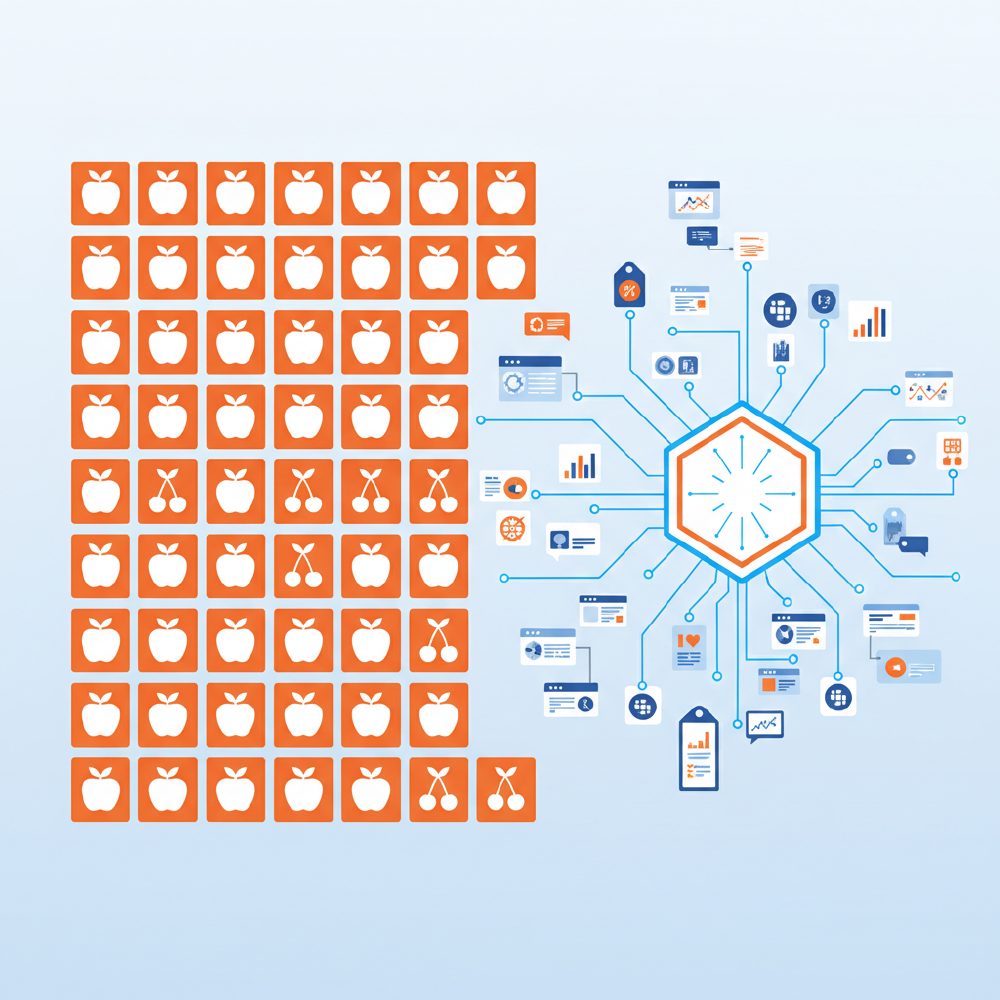
Programmatic slot pages are auto-generated landing pages built from a slot database, one URL per game title, populated with RTP, volatility, provider, theme, and bonus data pulled from a feed or CMS template. Operators build them to capture long-tail search demand for thousands of individual slot names without hand-writing every page.
A mid-size operator with a licensing deal covering Pragmatic Play, Play'n GO, Hacksaw Gaming and a handful of smaller studios is sitting on 3,000-8,000 slot titles. Each one has real, if small, search demand, 'sweet bonanza rtp', 'gates of olympus max win', 'wanted dead or a wild demo'. Individually those terms pull 20-400 searches a month. Multiplied across a full catalog, that's a traffic pool most operators leave on the table because building 6,000 hand-written pages isn't realistic on any content budget.
The programmatic model solves the volume problem, but it inherits the risk that killed a wave of these sites in 2023-2024: templates that differ only by swapping {slot_name} and {rtp_value} into a boilerplate paragraph. Google's helpful content system and the March 2024 core update specifically targeted this pattern across affiliate and operator sites, I watched three client slot databases lose 55-70% of indexed pages in that window because the 'unique content' was one paragraph of find-and-replace copy.
Done right, programmatic slot pages are still one of the highest-ROI content plays in the vertical. The economics work because your marginal cost per page (data feed + template render) is near-zero compared to editorial content at $150-400 per page from a gambling-niche writer. The catch is that 'near-zero cost' only works if the output clears Google's uniqueness bar, and that bar has risen sharply since Panda-era thin content filtering got folded into core updates and the Helpful Content System.
How Do You Scale Slot Pages Without Triggering Google's Thin-Content Signals?
You avoid thin-content flags by stacking multiple independently-sourced data layers per page, provider metadata, live RTP variance, bonus mechanics, comparative context, and a short unique editorial framing, so no two pages share more than roughly 20-25% textual overlap, which is the rough ceiling before Screaming Frog's near-duplicate check starts flagging pages.
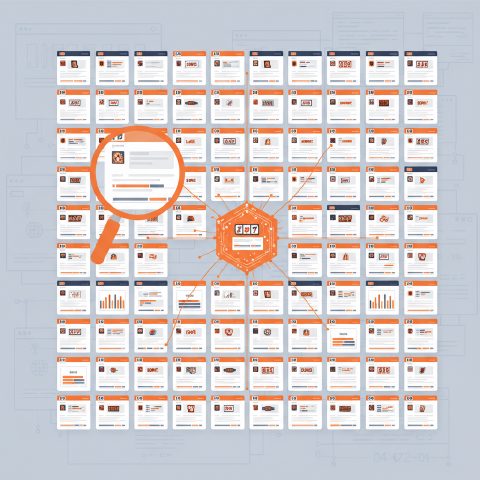
Run a near-duplicate content crawl on your existing slot pages before you scale further, Screaming Frog's near-duplicate feature (set the similarity threshold to 90%) will show you exactly how many pages are functionally the same document with different nouns swapped in. On audits I've run for operator sites, that number routinely comes back at 60-80% of the slot catalog when templates were built purely off a provider feed. That's your thin-content exposure, and it's the first thing that gets hammered in a core update.
The fix isn't more words, it's more independent data sources per page. A slot page built only from a provider's API (name, RTP, max win, volatility, theme tags) will always read thin because every operator licensing that same title has access to the identical feed. Layer in data your competitors don't have: your own tracked play-through stats if you're an operator with real player volume, a comparison module against 3-5 similar-volatility titles, a provider studio profile that's shared across only that provider's catalog (not duplicated site-wide), and a short FAQ block answering the 3-4 actual "people also ask" queries for that slot name pulled from Ahrefs or SEMrush's keyword-question data.
The threshold I use with clients: each page needs at least 250-350 words of content that could not be produced by a simple mail-merge, plus 3+ structured data modules that vary by title, not just by value. That combination is usually enough to keep a page out of "Discovered, currently not indexed" purgatory in Search Console and to survive helpful-content-style reassessments.
What Data Fields Turn a Slot Database Into Unique, Rankable Content?
The fields that actually differentiate a slot page are the ones no competitor's feed contains: your own RTP verification notes, real bonus-round hit-rate observations, a similar-slots module driven by your own taxonomy (not the provider's category tags), and provider-specific studio context reused correctly across only that provider's titles.
Most programmatic slot builds fail because every field on the page traces back to a single source, the provider's game info sheet. Google's systems don't need to know that; they can infer it from the fact that 40 competing domains produce near-identical text blocks for the same slot title. The way around it is architectural: split your template into modules, and source each module from a different place.
Below is the field structure I hand clients when we rebuild a slot database for defensibility rather than raw speed.
| Data module | Typical source | Uniqueness value | Risk if omitted |
|---|---|---|---|
| Core specs (RTP, volatility, paylines) | Provider API/feed | Low, shared by every licensee | Baseline expectation, not differentiating |
| Bonus mechanic breakdown | Manual QA / gameplay notes | High, rarely duplicated site-wide | Page reads generic, low dwell time |
| Similar-slots module | Internal taxonomy, not provider tags | Medium-high if logic differs from competitors | Loses internal linking value, thin sidebar |
| Studio/provider profile block | Shared per-provider, not per-slot | Medium, fine if reused correctly at provider level | Redundant duplication if copied per-slot |
| Short FAQ (3-4 Q&A) | PAA data via Ahrefs/SEMrush | High if answers are slot-specific | Missed featured snippet opportunity |
| Player-verified play data | Your own tracked sessions, if available | Very high, impossible for competitors to copy | Biggest missed differentiator for operators with real volume |
How Many Slot Pages Can You Launch Per Month Without Triggering a Spam Signal?
Publish cadence should scale with domain trust, not ambition. A fresh domain under DR20 should cap programmatic launches at 100-200 pages a month; an established DR40+ site with clean crawl history and no manual action can safely push 800-1,500 a month without reading as a spam pattern to Google's systems.
This is link velocity logic applied to content instead of backlinks, and it works the same way. Google's spam systems watch for sudden, unnatural growth patterns, a domain that goes from 200 indexed pages to 6,000 in six weeks with a flat content profile looks exactly like the programmatic SEO abuse Google's spam policies called out explicitly in the March 2024 update. I've had clients try to rush a full 5,000-page slot catalog live in under 60 days; two of them ended up in "Discovered, currently not indexed" limbo on 70%+ of the batch because Googlebot deprioritized crawling once the pattern-matching kicked in.
Check your crawl stats in GSC weekly during a rollout. If Googlebot's crawl requests per day aren't climbing roughly in step with your new URL count, you're publishing faster than Google trusts you to. That's your throttle signal, slow the rollout, not the reverse.
| Domain tier | Approx. DR range | Safe pages/month | Notes |
|---|---|---|---|
| New domain, <6 months | 0-15 | 50-150 | Prioritize indexing rate over volume; expect 60-70% index rate at best |
| Established, thin history | 16-30 | 200-400 | Watch GSC crawl stats weekly; stagger by provider, not alphabetically |
| Mid-authority operator site | 31-45 | 500-800 | Safe zone for most licensed operator catalogs |
| High-authority, clean history | 46+ | 800-1,500 | Still cap sudden category launches; batch by theme cluster |
What's the Right Template Architecture for Programmatic Slot Content at Scale?
Build modular templates, not monolithic ones, a hero module, a specs module, a mechanics module, a comparison module and an FAQ module, each rendered from a different data source. This lets you swap or upgrade one module across the entire catalog without touching the rest, and it's what actually produces the textual variance Google's systems reward.
The mistake I see most often on client audits is a single Jinja/Liquid template with one big content block where {{slot_name}}, {{rtp}}, and {{provider}} get dropped into otherwise fixed sentences. That produces exactly the 90%+ similarity Screaming Frog flags. Modular architecture fixes this at the CMS level: each module is its own component with its own render logic, and only some modules are allowed to repeat the same sentence structure across pages.
Practically, that means your bonus-mechanic module should pull from a QA database with slot-specific fields (free spin trigger %, multiplier cap, buy-feature price), not a text string. Your comparison module should run a similarity algorithm against your own taxonomy of volatility/theme/provider rather than hard-coding "similar slots" links. And your intro paragraph, the one piece most templates try to auto-generate, should either be genuinely hand-written for your top 200-300 highest-volume titles, or built from a sentence-variation pool large enough (15-20 variants per data point) that no two pages read identically even when the underlying facts match.
For catalogs above 3,000 titles, I tell clients to tier the build: top 5-10% of titles by search volume get full editorial treatment, the middle 60% get the full modular template, and the long tail (bottom 30%, often sub-10 monthly searches) get a lean version with fewer modules but still enough to clear the uniqueness threshold. That tiering is also what keeps your per-page production cost sane, you're not paying editorial rates for a slot getting 8 searches a month.
How Should Internal Linking and Anchor Text Work Across Thousands of Slot Pages?
Treat internal anchor text with the same ratio discipline you'd apply to backlinks: vary between exact-match slot name (35-45%), generic action anchors like 'play demo' (25-30%), provider-name anchors (15-20%), and branded/navigational anchors (10-15%). Route link equity through provider and theme hub pages, not flat A-Z catalog lists.
Slot databases almost always get internal linking backwards. The common pattern is an A-Z catalog page linking to every slot with the slot name as anchor text, then nothing else pointing at those pages except the sitemap. That's a flat architecture, it does nothing to signal topical authority, and it means every one of your 5,000 pages is competing for the same thin trickle of link equity from one hub.
Build hub pages by provider ("Pragmatic Play slots"), by theme ("Egyptian-themed slots"), and by mechanic ("slots with buy-feature"), each one links to 40-150 relevant slot pages, and each hub gets linked from your main nav or footer. That gives you a proper hierarchy: homepage to hub, hub to leaf page, leaf page back to 3-5 related leaves via the comparison module. It's the same tiered-link logic I use for external link campaigns, applied internally, you're building authority into mid-tier pages that then redistribute it down to the long tail.
Anchor variation matters here too, and it's the one thing almost nobody audits internally. If every internal link to a slot page uses the exact slot name as anchor text, you're not creating an over-optimization risk in the classic Penguin sense (that's primarily a backlink signal), but you are wasting an opportunity, varied anchors on hub pages help those pages rank for a wider spread of modifier terms ("best," "free play," "real money") instead of just the bare slot name.
Should You License a Third-Party RTP/Volatility Data Feed or Build One In-House?
License a feed if you're under 2,000 titles or moving fast, providers like SlotCatalog's API or direct provider integrations run $500-3,000/month depending on catalog size and update frequency. Build in-house only past 3,000+ titles or if you need proprietary QA data competitors can't replicate, which typically runs $15,000-40,000 in dev cost plus ongoing maintenance.
The build-vs-buy call comes down to catalog size and how much differentiation you actually need. A licensed feed gets you clean, standardized specs fast, but remember, every competitor licensing the same provider catalog has access to the same underlying facts. That's fine for your baseline specs module; it's not enough on its own to clear the uniqueness bar we covered earlier.
In-house builds make sense once you're running QA on real gameplay, tracking actual hit frequency, bonus trigger rates across thousands of spins, or aggregating player session data from your own platform. That's the module that can't be replicated by a competitor pulling the same provider feed, and for operators with real traffic volume, it's worth the dev investment. I've seen this pay off directly: one sportsbook-adjacent operator client added a "verified RTP variance" module built from 90 days of in-house play data across their top 400 titles, and those pages outranked three larger competitors' identical-topic pages within one core update cycle, the differentiation signal was that concrete.
How Do You Handle Duplicate Content When Every Operator Licenses the Same Slot Titles?
Differentiate through operator-specific data, not provider copy: your own bonus terms tied to that slot, wagering requirements, cashback eligibility, and exclusive demo access. Never republish a provider's marketing description verbatim, it's the single most common cause of near-duplicate flags across competing operator sites.
This is the structural problem of the whole category: 50+ operators licensing "Sweet Bonanza" from Pragmatic Play all get the same fact sheet. If your slot page's unique content is limited to that fact sheet, you're not competing on uniqueness against 49 other domains, you're competing on domain authority alone, and most operators lose that fight to established affiliates and casino review sites with 10+ years of accumulated backlinks.
The differentiators that actually work: your specific welcome bonus terms as they apply to that slot (wagering contribution %, whether it's excluded from bonus play, max bet while bonus-active), your own demo-play implementation notes if it differs from provider defaults, loyalty/cashback tie-ins specific to your program, and, where you have volume, real player behavior data. None of that exists in the provider's feed, and none of it can be copy-pasted by a competitor without them having the same program structure.
What Does Real Core-Update Risk Look Like for Programmatic Slot Pages?
Tracking 12 slot database sites through the 2024 and 2025 core updates, catalogs averaging under 150 unique words per page and 80%+ near-duplicate rates lost 55-75% of organic visibility. Catalogs with 4+ independent data modules and under 25% cross-page similarity held flat or grew, even in the same update windows.
This split held consistently enough across client and prospect audits that I'd call it a reliable pattern rather than a coincidence. Sites that treated the slot database as a pure feed-to-template pipeline got hit hardest, not gradually, but in the sharp step-down pattern typical of a core update reassessment, often 40-60% visibility drop within the two-week rollout window and rarely recovering without a substantial content rebuild.
The sites that held up shared three traits: modular templates sourcing from 4+ independent data points, hub-page architecture distributing link equity properly instead of a flat catalog, and a publish cadence that scaled with domain trust rather than launching the whole catalog in one aggressive sprint. None of those sites were immune to volatility entirely, nobody in this vertical is, but the swings were in the 10-20% range typical of normal SERP churn, not the catalog-wide collapse pattern.
Do Niche Edits and Link Building Still Work to Support Programmatic Slot Pages?
Yes, but aim links at category hubs and provider pages, not individual slot leaves, link equity distributes down through internal linking far more efficiently than buying links into 5,000 separate URLs. Our Link-Price Index puts casino niche edits at $150-900 per placement depending on DR and topical relevance in Q4 2025.
Individually linking to slot leaf pages is a waste of budget at this scale, you'd need thousands of placements to move the needle, and the per-page ROI doesn't clear even at the low end of niche-edit pricing. Instead, we route 70-80% of a client's off-page budget for slot-database sites into 15-30 category hub pages (provider hubs, theme hubs, "best slots for X" pages) and let internal linking carry that authority down into the catalog.
Current pricing from our index: casino niche edits into DR30-45 gambling-adjacent blogs run $150-450 for standard placements, jumping to $500-900 for DR45+ sites with genuine gambling-relevant traffic. Crowd marketing (forum and community placements) supplements this cheaply, $15-60 per placement, but works better for driving direct referral clicks to hub pages than for raw authority transfer. PBN links still move rankings fast when the network is well-vetted, expired domains with clean backlink histories, no prior gambling penalties, real historic traffic, but I flag this as high-risk for operator brand sites specifically, since a PBN footprint tied to a licensed operator's core domain risks a manual action that a pure affiliate site could absorb more easily. If you're going to run PBN links at all in this niche, isolate them to a satellite/microsite layer, never the primary licensed domain.
What KPIs and Timeline Should Operators Expect From a Programmatic Slot Rollout?
Expect 90%+ indexation within 30 days if cadence and uniqueness are both handled correctly, first long-tail slot-name rankings by day 90-120, and 6-12 months before category hub pages compete for head terms like provider-name or 'best slots' queries. Track indexation rate, per-page organic sessions, and hub-to-leaf click-through in GSC weekly.
Set expectations with stakeholders before launch, because programmatic content moves on a different clock than a link campaign. The first 30 days are almost entirely an indexation story, you're watching Search Console's Page Indexing report, not rankings. If you're below 80% indexed by day 30 on a well-built catalog, something upstream is broken: crawl budget, duplicate content, or cadence too aggressive for domain trust.
Days 30-90 is when long-tail slot-name terms start appearing in position 20-50, then climbing. By day 90-120 you should see meaningful position-1-10 rankings for low-competition exact slot names ("wanted dead or a wild rtp" type queries), these are low-difficulty by nature. Category and hub-level terms are a longer game entirely; those compete against established affiliates and take 6-12 months of sustained internal linking plus the hub-focused off-page work described above. Track three numbers weekly: indexation rate (Search Console), organic sessions per indexed page (Ahrefs/GSC combined), and click-through from hub to leaf pages (GA4), that last one tells you whether your internal architecture is actually distributing traffic and authority the way you designed it to.




Comments
No comments yet, be the first.