Slots SEO in 2026: How We Rank Slot Review and Real Money Slots Pages
What Makes Slots SEO Different From General Casino SEO?
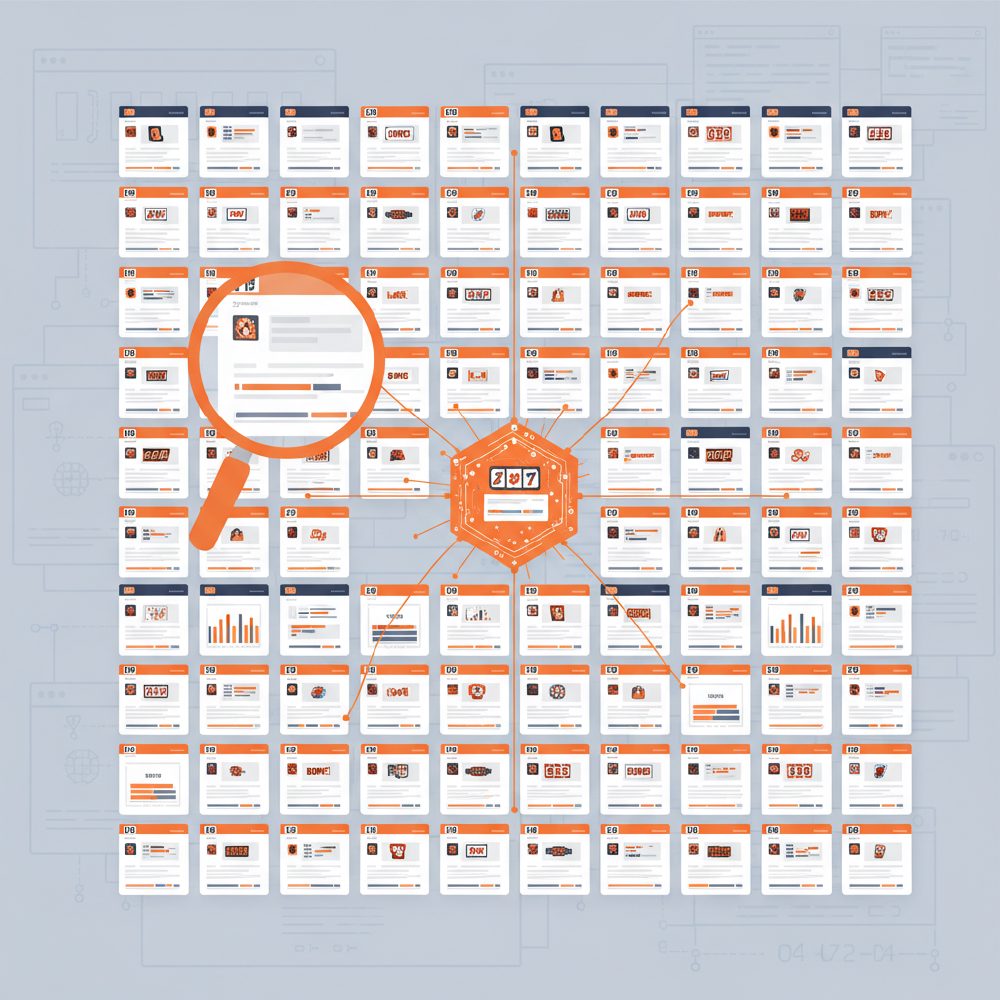
Slots SEO is a volume game: you're ranking hundreds or thousands of near-duplicate pages (one per slot title, provider, or theme) against affiliate giants and provider microsites, which forces a programmatic content architecture and link velocity that standard casino-brand SEO never needs.
A casino brand SEO campaign usually targets 50-150 core pages, homepage, banking, bonuses, a handful of game category pages. A slots-focused campaign targets every individual title an operator carries: Sweet Bonanza, Gates of Olympus, Big Bass Bonanza, Book of Dead, plus every "real money slots," "free slots," and "slot review" variant around them. That's easily 500-3,000 URLs for a mid-sized operator, and each one is competing against AskGamblers, Casino.org, LCB.org and provider-owned pages that already have DR 70+ and years of link equity.
The other structural difference is content duplication risk. Slot RTP, volatility and max-win data come from the same provider feeds every competitor uses, so if you publish it verbatim you're fighting Google's duplicate-content filters on day one. I've audited operator sites where 80% of their slot pages were functionally identical to three other domains, no wonder they sat on page 4 for a year.
Because of that scale and duplication problem, slots SEO leans harder on architecture (hub-and-spoke category structures, internal link distribution) and on link velocity than a typical casino campaign does. You're not writing ten great pages, you're engineering a system that can produce hundreds of pages that don't trip thin-content or duplicate-content filters, then feeding links into the 30-50 pages that actually drive deposits.
How Do You Actually Rank a Real Money Slots Page in 2026?
Ranking a real money slots page requires three layers working together: a content depth of 1,200+ words with unique gameplay data and screenshots, a hub-and-spoke internal linking structure feeding authority from category pages down, and a sustained link acquisition campaign of 10-25 relevant links per month targeting that specific URL.
Start with the page's job. "Real money slots" pages are commercial-investigation intent, the searcher wants to know where they can legally deposit and play for cash, not learn slot mechanics. That means the page needs above-the-fold trust signals: licensing badge, payment method icons, a real deposit CTA, and a short list of the top 5-10 slots available on that real-money platform, each linking to its own review page.
Below the fold, I want unique commentary, not provider boilerplate. Actual gameplay notes ('this title hits its bonus round roughly once per 120-150 spins in our test sessions'), a comparison of 3-4 similar real money slots, and a payments/withdrawal section specific to that operator's banking stack. Schema matters here too: Review or Product schema with aggregateRating, plus FAQPage schema for the questions searchers actually ask, gives you a shot at rich snippets and AI Overview citation, which is increasingly where top-of-funnel slots traffic gets siphoned in 2026.
Internal linking is the part most operators skip. Your real money slots category page should pass link equity down to individual slot review pages through contextual links in body copy, not just a sidebar widget. I typically see a 25-40% ranking lift on individual slot pages within 60 days just from restructuring internal linking before a single external link is built.
What Should a Slot Review Page Include to Satisfy Google's E-E-A-T Bar?
A slot review page needs a named author with gambling-industry credentials, first-hand gameplay screenshots or video, sourced RTP and volatility data with a citation to the provider, a visible last-updated date, and a clear disclosure of any affiliate or operator relationship, the same bar Google applies to YMYL health and finance content.
Google treats gambling content as YMYL-adjacent because real money is changing hands. That means the algorithmic scrutiny on author expertise and trust signals is closer to what a finance site faces than a lifestyle blog. I put a named author bio on every review page, not a generic 'Editorial Team' byline, with a one-line credential ('5 years reviewing slot RTP and volatility data for licensed operators') and a link to an author page with their other published work.
First-hand evidence is the single biggest differentiator I've seen move rankings. A page with three original screenshots of the actual bonus round, or a 20-second embedded clip of a real spin session, consistently outranks a competitor running only provider-supplied promotional art. It signals to Google, and to the reader, that someone actually played the game rather than scraping a press kit.
Cite your RTP and volatility numbers to the provider (Pragmatic Play, Play'n GO, NetEnt, whoever built the title) rather than presenting them as your own testing unless you've genuinely run simulation data. Add a last-updated date and revisit pages when a provider patches RTP or adds a feature, stale slot data is an easy manual reviewer flag and a trust killer for players who catch the discrepancy.
Which Link Building Tactics Actually Move Slot Pages, and Which Ones Burn the Domain?
Niche edits on aged iGaming or lifestyle sites and guest posts on affiliate blogs are the safest volume plays, running 10-25 links a month per money page. Expired-domain PBNs move rankings faster but carry real de-index risk within 6-12 months if anchor text isn't diluted and velocity isn't staggered.
I rank slot money pages with a tiered structure: Tier 1 links go direct to the URL from niche edits and guest posts on real, indexed iGaming and affiliate sites with organic traffic, I want to see actual search visibility in Ahrefs, not just a high DR score with zero traffic, which is the classic sign of a PBN node. Tier 2 is crowd marketing, forum signatures, comment links, low-quality directories, pointed at Tier 1 pages to reinforce them without touching the money page's own anchor profile directly.
Anchor text ratio is where most in-house teams get sloppy and trigger a Penguin-style devaluation. My working ratio for slot pages: 40% branded/naked URL, 30% partial-match ('best real money slots at [brand]'), 20% generic ('play here', 'read more'), and no more than 10% exact-match ('real money slots'). Push exact-match past 15% on a page with under 20 total referring domains and you're gambling with a manual action.
Expired-domain acquisition and PBN content revival still work, I've used them to push new operator domains from zero visibility to page 2 in 90 days, but they're the highest-risk tactic on this list. Google's spam systems have gotten materially better at footprint detection since the 2023-2024 core updates: shared hosting IPs, identical CMS templates, and unnatural link velocity spikes get caught. I only recommend PBN tactics for operators who've accepted the domain is disposable or who have a portfolio strategy where losing one property doesn't sink the business.
| Tactic | Typical Cost per Link | Safe Monthly Velocity | Domain Risk | Best Use Case |
|---|---|---|---|---|
| Niche edits on aged iGaming/lifestyle sites | $150-$400 | 10-25 links | Medium | Direct links to money pages |
| Expired domain PBN / content revival | $500-$2,000 setup per domain | 3-8 new domains | High | Fast lift for new or thin domains |
| Guest posts on affiliate/iGaming blogs | $200-$600 | 8-20 links | Low-Medium | Sustainable authority building |
| Crowd marketing (forums, comments, profiles) | $50-$150 per batch | 20-50 links | Medium | Tier-2 reinforcement, anchor dilution |
| Digital PR / editorial placements | $800-$3,000 | 2-5 links | Low | Brand-level trust, avoid on EMDs |
Can You Rank Hundreds of Slot Pages Programmatically Without Getting Filtered as Thin Content?
Yes, but only with a hybrid model: a templated shell for structure and speed, combined with unique variable data blocks per page, real screenshots, distinct gameplay notes, and a comparison table against 3-4 similar titles. Pure templated pages with provider-feed data alone rarely clear page 3 for competitive slot names.
Programmatic SEO gets a bad reputation in this vertical because most operators do it wrong: they take a provider's game feed, wrap it in a template, and publish 800 pages that all read the same with the slot name swapped out. Google's helpful content system, refined across the 2024-2025 updates, is specifically tuned to catch this pattern, I've seen entire slot page sections deindexed within a single core update cycle when the templated-to-unique-content ratio got too thin.
The model that actually holds up: build the template for structural elements (RTP table, volatility badge, provider info, paytable) but require a human or a carefully prompted content process to add 200-400 words of genuinely differentiated commentary per page, plus at least one original screenshot. That pushes per-page cost up, I budget roughly $25-$60 per page depending on market, but it's the difference between a page that ranks and one that sits unindexed.
Canonical strategy matters too. If you're running the same slot across multiple skin domains or locales, use canonical tags pointing to the primary version rather than letting Google pick, I've fixed six-figure traffic drops for operators who let duplicate slot pages across regional domains cannibalize each other. Set up a clear indexation policy in GSC before you scale past 200 pages, or you'll spend more time cleaning up crawl budget waste than building new content.
| Approach | Best For | Word Count Range | Realistic Ranking Ceiling | Thin-Content Risk |
|---|---|---|---|---|
| Thin templated (provider feed only) | Long-tail branded slots at scale | 150-400 words | Page 3-4 for competitive terms | High |
| Deep manual review | Top 30-50 flagship slots | 1,200-2,500 words | Page 1 achievable | Low |
| Hybrid programmatic + unique data blocks | Scaling 500+ slot pages | 600-1,000 words | Page 1-2 depending on DR | Medium |
| Video-enhanced review | Flagship titles, brand hub pages | 1,500+ words with embedded video | Page 1, AI Overview/snippet eligible | Low |
How Do You Differentiate Slot Content When Every Competitor Uses the Same Provider Data?
You differentiate by adding data competitors don't have: your own simulated spin session notes, a direct comparison table against 3-4 similar slots by theme or volatility, original screenshots, and operator-specific context like which of your bonuses actually apply to that title's wagering requirements.
RTP, volatility tier, max win multiplier, and paylines come from the provider, Pragmatic Play, Hacksaw Gaming, Push Gaming, Relax Gaming, and every affiliate site republishes the identical numbers. Competing on that data alone is a dead end. What you can own is the framing around it: how that RTP compares to the operator's other slots, whether a specific bonus's wagering requirement actually makes this slot worth playing with bonus funds versus a competitor's similar title, and what the actual bonus feature frequency looked like across your own test sessions.
I push clients to build a comparison layer into every slot page, a small table stacking the reviewed title against 3-4 close competitors on RTP, volatility, max win and theme. This does two things: it adds genuinely unique content Google hasn't seen elsewhere, and it increases session depth because readers click through to the compared titles, which are your other slot pages. That internal click path is worth more to your overall domain authority than most external link building in month one.
Original photography or screen capture is the cheapest differentiation move operators skip. A junior content hand can capture 20-30 unique gameplay screenshots in an afternoon session across your top titles. That single asset class, unique images with descriptive alt text, routinely separates page 1 slot reviews from page 3 ones in my post-campaign audits.
How Should You Map Slot Keywords by Intent to Avoid Wasting Content Budget?
Map every slot keyword into one of four buckets, branded/individual slot, category/hub, informational, and comparative/roundup, and build a distinct page type for each. Mixing intents on a single URL, like trying to rank a hub page for both "real money slots" and a specific slot name, dilutes relevance signals and caps your ceiling in both.
Branded and individual slot queries ('gates of olympus real money', 'sweet bonanza rtp') are commercial and deserve their own review page tied directly to a deposit CTA. Category and hub queries ('real money slots online', 'best real money slots') need a broader landing page that curates and internally links to 10-20 individual reviews rather than trying to cram every slot's detail into one page, that's the single most common architecture mistake I see on operator sites.
Informational queries ('how does slot volatility work', 'what is RTP in slots') don't convert directly but they're link magnets and AI Overview bait, a well-built pillar piece on volatility mechanics earns natural backlinks from forums and finance-adjacent content sites that would never link to a commercial money page. I treat these as top-of-funnel assets that funnel internal links down to the money pages, not standalone revenue drivers.
Comparative queries ('best real money slots sites 2026', 'top slot sites compared') are commercial-investigation and increasingly where operators lose traffic to third-party affiliate roundups. If you're an operator rather than an affiliate, you generally can't rank your own roundup competitively, that space belongs to AskGamblers-type sites. Your play there is affiliate partnership and PR placement, not direct SEO competition.
| Query Type | Example | Intent | Page Type |
|---|---|---|---|
| Branded/individual slot | "gates of olympus real money" | Commercial | Individual slot review + deposit CTA |
| Category/hub | "real money slots online" | Commercial | Hub/category page linking to reviews |
| Informational | "how does slot volatility work" | Informational | Pillar/blog support content |
| Free-to-play | "sweet bonanza free play" | Mixed | Demo page with real-money upsell |
| Comparative/roundup | "best real money slots sites 2026" | Commercial investigation | Roundup page (affiliate-owned space) |
How Long Does It Take to Rank Slot Pages, and What Should You Budget?
Expect 60-90 days to see branded slot long-tails move into page 1-2, and 6-9 months for competitive real money category terms against established affiliates. Realistic monthly budget runs $3,000-$8,000 for a mid-scale campaign (200-500 pages) up to $15,000+ for a full-catalog, multi-market program.
The first 30-60 days go to architecture and technical foundation, fixing crawl budget waste, canonicals, internal linking, and publishing the first batch of high-priority slot review pages. You'll usually see indexation and some long-tail branded slot terms start moving in this window, which is a good early signal but not yet revenue.
Months 3-6 is where link building compounds and real money category pages start climbing. This is also where I see operators panic and pull budget because deposit attribution hasn't caught up to ranking movement yet, organic slots traffic typically takes 4-8 weeks after ranking to convert into a measurable deposit lift, since players often research across multiple sessions before depositing.
By month 7-9, a well-run campaign against moderate competition should have 15-30% of target slot pages ranking page 1-2, with the flagship real money category page competing on page 1 for its primary market. Budget-wise, I don't run effective slots campaigns below $3,000/month, that's the floor for meaningful link velocity plus content production at the volume this vertical demands. Operators trying to do it for $1,000/month end up with either thin content that gets filtered or link velocity too low to move competitive terms, and both outcomes waste the spend entirely.
Is SEO or PPC Better for Driving Real Money Slots Deposits?
SEO wins by default in most markets because Google Ads' gambling policy blocks direct advertising for unlicensed or offshore operators in the majority of jurisdictions, leaving organic as the primary scalable acquisition channel. Where PPC is available (regulated US states, UK, select EU markets), it's still 3-5x more expensive per deposit than mature organic once a campaign is 12+ months old.
Google's gambling and games advertising policy requires certification per country, and that certification is only available to operators holding a recognized license in that specific market. If you're running an offshore or crypto casino targeting players outside regulated corridors, PPC on Google simply isn't an option, Bing and social ads have their own restrictions and much smaller reach. That structural reality is why slots SEO isn't optional for most of the operators I work with; it's the only scalable channel that exists.
Even in fully regulated markets where PPC is legal, New Jersey, Ontario, the UK, cost per click on head terms like "real money slots" or "online casino real money" regularly runs $8-$25 depending on market and season. Cost per acquired depositing player through PPC in those markets often lands between $150-$400, while a mature organic slots program (12+ months in) drives comparable deposits at effective costs of $30-$80 once you amortize the ongoing content and link spend across sustained traffic.
The right answer for most operators is sequencing, not either/or: use PPC where licensed to generate immediate deposit volume and paid-search data on which slot terms actually convert, then reinvest that intent data into your SEO content and link priorities. I've run this exact model for regulated-state clients, PPC data told us which five slot titles converted best, and we built the deepest review content and heaviest link pushes around exactly those five.
What Should You Look for When Hiring Online Slots SEO Services?
Vet any agency on deliverables tied to indexed page count, ranking velocity on a defined keyword set, and referred deposits from organic, not generic keyword rank reports. Ask for a sample slot review page, their anchor text ratio policy, and whether they disclose PBN or expired-domain use before you sign a retainer.
Most agencies pitching online slots SEO services will show you a rank tracker screenshot and call it a report. That tells you nothing about deposits. I structure every client report around three numbers: indexed pages this month, page 1-3 keyword count against a fixed target list, and organic-attributed deposits or signups pulled from GA4 and the operator's own tracking stack. If an agency can't tie their work to that third number within two reporting cycles, they're either not tracking it or hiding a lack of results behind vanity metrics.
Ask directly about link sourcing. A legitimate agency will tell you plainly whether they're using niche edits on real traffic sites, guest posts, or expired-domain PBNs, and what the risk profile of each is for your specific domain. If they dodge the question or insist everything they do is '100% white-hat and Google-approved,' that's a red flag in a vertical where genuinely competitive rankings almost always require some grey-hat link acquisition, anyone telling you otherwise either doesn't understand the space or isn't being straight with you.
Get a sample slot review page before signing. It should show a named author, original screenshots, a comparison table against similar titles, and schema markup, not a 300-word rewrite of provider promotional copy. And check their client retention: a slots SEO program worth running is a 9-18 month commitment minimum, so an agency with a pattern of 3-4 month client churn is a signal something isn't delivering.





Comments
No comments yet, be the first.