The Casino Anchor Text Ratio Formula That Keeps Sites Ranking in 2026
What is the ideal casino anchor text ratio in 2026?
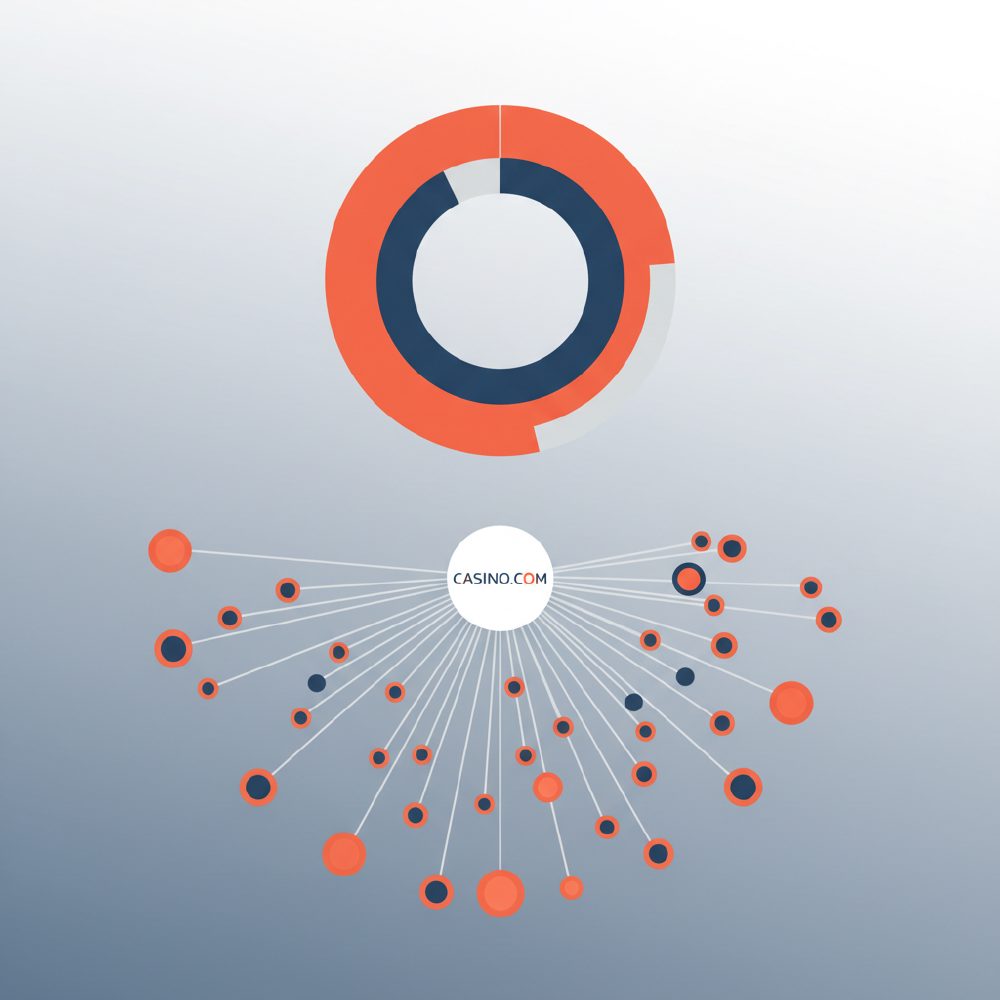
The safest working ratio I run across casino and sportsbook money sites is roughly 55% branded/naked-URL, 18% generic, 12% partial-match, 8% topical/LSI, and 2-5% exact-match. That mix mirrors what a genuinely popular brand accumulates naturally, which is exactly what Google's classifiers are trained to detect deviation from.
I've pulled anchor profiles on hundreds of operator domains over the past decade, and the pattern holds across niches: casino, sportsbook, crypto casino, doesn't matter. Sites that keep exact-match anchors under 5% of total referring domains survive core updates. Sites north of 10% get hit, usually within two to three algorithm cycles. That's not superstition, it's what Ahrefs' anchor distribution reports show when you pull before/after snapshots around Google's quarterly core updates.
The 55/18/12/8/5 split isn't arbitrary. It's reverse-engineered from anchor profiles of casino brands that rank without ever running a link-building campaign, brands with organic press mentions, forum chatter, affiliate coverage, and directory listings. Those profiles are branded-anchor-heavy because that's how people actually link to things they didn't get paid to mention. When your paid link profile deviates hard from that baseline, you're not fooling anyone, least of all a spam classifier trained on millions of manipulated gambling link patterns.
Where operators get this wrong is treating the ratio as a one-time setup instead of a rolling target. I check anchor distribution monthly on every money site we manage, because a single aggressive niche-edit campaign with 40 exact-match placements can flip a healthy 3% exact-match ratio to 9% in a matter of weeks if the rest of the profile is thin. Ratio is a moving average, not a set-and-forget spreadsheet cell.
Why do gambling sites get flagged for anchor manipulation faster than other verticals?
Casino and sportsbook keywords sit in one of the most heavily gamed link categories Google has ever dealt with, alongside payday loans and CBD. Google's spam systems have years of training data on exactly what manipulated gambling anchor profiles look like, so the tolerance threshold for exact-match density is lower here than in, say, SaaS or ecommerce.</p>
Google's Penguin architecture went real-time and integrated into core ranking back in 2016, but the classifiers behind it kept training on new data every year. Gambling, loans, and adult content generated a disproportionate share of the link-spam patterns Google used to train those systems, because those verticals had the CPA economics to justify aggressive link buying at scale for over a decade. The practical result: a casino site running a 9% exact-match ratio gets treated with more suspicion than an ecommerce site at the same ratio, because the model has seen thousands more examples of casinos gaming that exact metric.
I've seen this play out directly. We took over an offshore sportsbook account in 2023 that had a previous agency running heavy exact-match niche edits, 'best online sportsbook,' 'top sportsbook bonus,' that kind of thing, at close to 14% of the total anchor profile. Traffic had been sliding for four months before we got the account, and Search Console showed a manual action notice within weeks of a spam update rolling through. A comparable SaaS client with a similar ratio at the time never got touched. Vertical matters.
The other factor is topical link neighborhoods. Casino backlinks tend to cluster on PBNs, expired domains, and link networks that Google's web spam team actively hunts for, because those networks get built specifically to serve gambling and adult clients. When your exact-match anchors sit on domains that already look thin, recently repurposed, or thematically inconsistent, the anchor text becomes the tell that confirms what the domain footprint already suggested.
How much exact-match anchor text is safe for casino backlinks?
Keep exact-match anchors, think 'best online casino,' 'top sportsbook bonus,' or your target money keyword verbatim, between 2% and 5% of total referring domains. Above 8%, you're in penalty territory on any competitive casino SERP. Below 1%, you're leaving ranking power on the table unnecessarily.
Exact-match anchor text still moves rankings, that part hasn't changed since 2012. What's changed is how much you can get away with before it flips from a ranking signal into a spam signal. On low-competition long-tail casino terms I've pushed exact-match to 6-7% without issues, because the overall link volume is small and the profile still looks proportionate. On head terms like 'online casino real money' or anything in a competitive market like the UK or Ontario, I hold the line at 3-4% and lean on partial-match and topical anchors to carry the rest of the relevance signal.
The mechanism worth understanding: Google isn't counting your exact-match percentage in isolation, it's comparing your anchor distribution shape against what it expects for a domain with your link velocity, domain age, and topical authority. A three-month-old .com with 40 referring domains and 12% exact-match looks manufactured. A five-year-old domain with 2,000 referring domains and 4% exact-match looks like natural accumulation with some deliberate optimization mixed in, which is exactly what it is, and exactly what survives.
Different anchor sub-types carry different risk even within 'exact match.' A bare exact-match anchor on a fresh expired-domain PBN link is higher risk than the same anchor text appearing inside a longer natural-sounding sentence on a niche edit, 'I switched to [Casino X] after trying half a dozen sites' reads completely differently to a classifier than a bare hyperlink reading 'Casino X.' We build that sentence-context layer into every tier 1 placement now specifically to soften the exact-match signal.
| Anchor category | Example | Target % of profile |
|---|---|---|
| Branded / naked URL | "CasinoX", casinox.com | 50-65% |
| Generic | "click here", "this site", "read more" | 15-20% |
| Partial match | "CasinoX bonus review", "best casino like CasinoX" | 10-15% |
| Topical / LSI | "slots and table games platform", "licensed sportsbook operator" | 5-10% |
| Exact match | "best online casino", "top sportsbook bonus" | 2-5% |
What anchor text categories should operators actually track in their backlink profile?
Track five buckets: branded/naked URL, generic, partial-match, topical/LSI, and exact-match, plus a sixth bucket for image and no-anchor links, which Google treats as a neutral signal but which affiliates and press coverage generate naturally at 5-10% of most healthy profiles.
Most operators I onboard track two categories, if any: 'money anchors' and 'everything else.' That's not granular enough to manage risk. I run every client's anchor profile through Ahrefs' Anchors report filtered to referring domains (not raw backlinks, because ten links from one PBN skew a raw-link count badly), then bucket everything into the six categories above in a live spreadsheet tied to Google Sheets via the Ahrefs API.
The image/no-anchor bucket gets ignored constantly and it shouldn't. When an affiliate or a press site links to your casino with a logo image and empty alt text, or links bare with no anchor at all, that's a strong trust signal precisely because it's unoptimized. A profile with zero image links and zero naked mentions, all clean keyword-rich anchors, is a red flag on its own regardless of what the exact-match percentage says. I want to see at least 5% of a healthy casino link profile sitting in that unoptimized bucket.
Partial-match is the bucket that does the most quiet work and gets the least attention. Anchors like 'CasinoX no deposit bonus review' or 'is CasinoX legit' carry keyword relevance without tripping the same classifiers as bare exact-match, because they read as descriptive rather than manufactured. I've shifted several client campaigns from a 6% exact-match / 8% partial split to a 3% exact-match / 14% partial split and watched rankings hold or improve within two to three months, with materially lower manual-action risk on the account.
How does anchor ratio change across tiered link structures?
Tier 1 links pointing directly at your money site should stay conservative, near-natural ratios with exact-match under 5%. Tier 2 links pointing at your tier 1 assets can run hotter, 8-15% exact-match, because they're insulated from the money domain and their job is passing authority, not surviving direct scrutiny.
Tiered link building exists precisely because anchor risk isn't evenly distributed across a link structure. Your tier 1 backlinks, the ones Google's crawlers see attached directly to your casino domain, need to look like organic accumulation. Your tier 2 links, the ones boosting your tier 1 placements (guest posts, PBN pages, aged niche edits), have more room to run aggressive anchor text because a penalty or devaluation at that layer doesn't directly tank your money site, it just weakens the boost.
In practice I run tier 1 at the 55/18/12/8/5 split from earlier, tier 2 at something closer to 40/15/15/15/15, and tier 3, the layer boosting tier 2, often built on cheap expired-domain PBNs or automated tools, can go as high as 25-30% exact-match because it's three hops removed from the money site and disposable if it burns. That said, tier 3 abuse is exactly where I see agencies torch client budgets: burning through hundreds of PBN placements a month on domains that get deindexed within weeks because the exact-match density combined with thin content triggers automated spam detection almost immediately.
The trade-off operators need to understand: aggressive tiering buys you ranking velocity, but it's a maintenance cost, not a one-time build. Tier 2 and tier 3 assets decay, PBN domains get caught, guest post sites get deindexed, expired domains lose their residual trust. Budget for rebuilding 15-20% of your tier 2/3 footprint every quarter if you're running this structure seriously, or you'll watch your tier 1 rankings slowly lose their support and slide six months later with no obvious single cause.
| Tier | Purpose | Exact-match ceiling | Risk if flagged |
|---|---|---|---|
| Tier 1 | Direct links to money site | 5% | High, direct ranking damage or manual action |
| Tier 2 | Boosts tier 1 assets | 15% | Medium, weakens link juice, doesn't hit money site directly |
| Tier 3 | Boosts tier 2 assets | 30% | Low, disposable layer, rebuild and move on |
How do you audit an existing casino backlink profile's anchor distribution?
Pull the full referring-domains list from Ahrefs and Google Search Console's Links report, categorize every anchor into the five buckets, then compare the resulting percentages against the 55/18/12/8/5 baseline. Flag anything over 8% exact-match or under 40% branded for immediate remediation.
Step one is always reconciling two data sources, not one. Ahrefs gives you the fullest crawl-based picture of your link profile, but Search Console shows you what Google itself has actually indexed and is weighting, and those two lists diverge more than most operators expect, sometimes by 20-30% of total referring domains. A link Ahrefs sees that Google hasn't crawled or has deindexed isn't contributing to your risk profile at all, so auditing off Ahrefs alone can overstate your exposure.
Step two is exporting the anchor text column and running it through a categorization script or a manually tagged spreadsheet, I use a simple regex-based Google Sheets setup that flags exact keyword matches, then hand-review the partial-match and generic buckets because automated categorization gets those wrong constantly. For a site with 500+ referring domains this takes two to three hours the first time and about 45 minutes on a monthly refresh once the taxonomy is set up.
Step three is comparing the resulting ratio against both the baseline and your own historical trend line. A single audit snapshot tells you where you stand today; a trend line tells you whether you're drifting toward risk. I've caught two client accounts drifting from a safe 4% exact-match toward 9% over a six-month stretch purely because a well-meaning in-house team kept ordering the same 'best casino' anchor from cheap link marketplaces without checking the cumulative effect. Nobody decided to over-optimize; it happened one order at a time.
What anchor ratio should a brand-new casino or sportsbook domain start with?
For the first 90 days, run almost entirely branded and naked-URL anchors, 70%+, with generic anchors filling most of the remainder. Hold exact-match under 1% until you have at least 50 referring domains and some organic mentions accumulating naturally, then step it up gradually to the 2-5% target range.
New domains have zero link history for Google to compare against, which makes them the most exposed profile type in the entire anchor risk model. A brand-new casino domain that shows up with 30 referring domains and 15% exact-match in its first sixty days is showing a pattern no organic brand ever produces, because organic mentions take time to accumulate and they're overwhelmingly branded when they do show up. That mismatch gets caught fast, often before the site has generated meaningful ranking to lose.
My standard build sequence for a new operator client: months one and two, almost entirely branded/naked-URL and generic anchors from a mix of niche edits, directory listings, and a handful of guest posts, no exact-match at all. Month three, introduce partial-match anchors at low volume. Months four through six, start layering in exact-match at 2-3%, timed to coincide with the site accumulating enough organic branded mentions (forum posts, Reddit threads, affiliate reviews picked up independently) that the exact-match doesn't stand alone as the dominant optimized signal.
This slower build frustrates operators who want to rank for 'best online casino' in month one, and I understand the pressure, every month not ranking is CPA revenue not captured. But I've run the aggressive version too, back when clients insisted on it, and the failure mode is consistent: fast initial ranking gains in weeks 2-6, followed by a drop below page one by week 10-14 when the anchor pattern gets flagged, followed by months of remediation work that costs more in agency hours than the patient build would have cost in delayed revenue. PPC exists specifically to cover that early-months gap while your organic profile matures properly, that's the actual argument for running paid alongside SEO on a new domain, not running paid instead of SEO.
Does anchor text strategy differ between US, LATAM, EU and offshore markets?
Yes, regulated US and UK/EU markets need tighter, more conservative ratios because those SERPs get more scrutiny and more competitor spam reports. LATAM and offshore markets tolerate slightly higher exact-match density because competition-driven link spam is lower and Google's enforcement attention on those SERPs is thinner.
I run casino SEO across four distinct market types now, and treating them identically is a mistake I made early in my career that cost a client a ranking drop across an entire market launch. Regulated US states, New Jersey, Pennsylvania, Michigan, Ontario in Canada, have SERPs that get watched closely, both by Google's own quality teams and by competitors who file spam reports against each other constantly. I keep exact-match under 3% in these markets and lean hard on branded and topical anchors instead.
LATAM markets, Brazil, Mexico, Colombia especially since Brazil's regulated market opened up in 2025, have less mature link-spam enforcement history relative to link volume, so I've run exact-match as high as 6% on Portuguese and Spanish-language casino sites without triggering issues, though I still don't recommend pushing past that even where you can get away with it, because Google's enforcement typically catches up to markets a year or two after tooling and competition mature. Building for what's tolerated today versus what will still be tolerated in eighteen months is the difference between a durable asset and a rebuild project.
Fully offshore, unregulated markets, Curaçao-licensed brands targeting global traffic outside any regulated jurisdiction, get the least scrutiny in practice, but they also tend to run the thinnest, most aggressive link profiles historically, which means the SERP itself is often full of exact-match-heavy competitors. Matching that competitive baseline instead of the theoretical 'safe' ratio sometimes makes sense here, but I still recommend capping at 6-7% exact-match even in the most permissive offshore niches, because when Google does run a targeted sweep on an offshore vertical, and it has, repeatedly, going back to Panda-era updates through 2023's spam updates, it tends to hit hard and fast across an entire market segment at once.
| Market type | Example jurisdictions | Exact-match ceiling | Enforcement intensity |
|---|---|---|---|
| Regulated US/EU/UK | NJ, PA, Ontario, UK | 3% | High |
| LATAM regulated/emerging | Brazil, Mexico, Colombia | 5-6% | Medium, rising |
| Offshore unregulated | Curaçao-licensed global brands | 6-7% | Low but volatile |
| Crypto casino / global | Multi-currency, no fiat licensing | 5% | Medium, heavy affiliate scrutiny |
What tools and workflows keep anchor ratios in check at scale?
Run Ahrefs for anchor distribution monitoring, Google Search Console for what's actually indexed, and a shared tracking sheet that logs every link order's anchor text before it goes live, not after. Reviewing ratios after a campaign runs is reactive; the ratio needs to be a gate in the ordering process itself.
At the volume we operate, some client accounts run 60-100+ new links a month across tiers, checking anchor ratio after the fact is too slow. By the time a monthly Ahrefs pull shows a problem, you've already placed the links that caused it, and undoing a live backlink means either a disavow (which Google explicitly says weakens the site if overused) or waiting for natural decay, neither of which is fast. The fix is building the anchor gate into the link ordering workflow itself: every link order specifies the exact anchor text and category before the writer or outreach team executes it, and that anchor gets logged against the running ratio target before it's approved.
Practically this means a shared Google Sheet or Airtable base with a formula column that recalculates the projected ratio including the pending order, so whoever's approving link orders can see in real time whether adding five more exact-match niche edits pushes the profile over 5%. It's not sophisticated tooling, but almost no agency actually runs it this disciplined, because it slows down the sales-friendly narrative of 'we build X links a month' with the more accurate, and more valuable, 'we build the right mix of X links a month.'
For accounts above 200 referring domains I also run a quarterly Screaming Frog crawl combined with a GSC coverage export to catch any tier 1 links that got deindexed or nofollowed after placement, since a dead or devalued link doesn't just stop contributing authority, it also silently shifts your live ratio if it happened to be sitting in your generic or branded bucket, leaving the remaining live links more exact-match-skewed than your last audit assumed.
How do you recover a casino site hit by an anchor-based manual action or ranking drop?
First, confirm the cause via Search Console's manual action report or a before/after anchor audit around the drop date. Then disavow the worst offenders, thin PBN links with bare exact-match anchors, request reconsideration if it's a manual action, and immediately shift new link building toward branded/generic anchors to dilute the historical ratio while you wait out the recovery window.
Recovery timelines vary more than most guides admit, and I'd rather give you an honest range than a false precise number. A manual action tied specifically to unnatural links, once you've disavowed the offending links and filed reconsideration, typically clears in 2-6 weeks if Google's reviewer agrees the cleanup was thorough, but reconsideration requests get rejected on the first attempt more often than not, usually because the disavow file was incomplete. Algorithmic devaluation with no manual action, which is actually the more common outcome for over-optimized anchor profiles, doesn't have a formal recovery process at all, you dilute the ratio with clean links and wait for the next core update or spam update to reassess your site, which can mean a 2-4 month wait with no guaranteed outcome.
The disavow file itself needs precision. I've seen operators panic and disavow their entire link profile after a drop, which is close to the worst response possible, you're telling Google to ignore links that might be the only thing holding remaining rankings up. I build disavow files by cross-referencing Ahrefs' spam score, domain-level thin-content indicators, and the specific anchor text, targeting only domains that combine low quality with exact-match or over-optimized partial-match anchors. A disavow file for a mid-sized casino site typically ends up covering 8-15% of total referring domains, not the 50%+ I've seen panicked in-house teams submit.
The part operators hate hearing: while you're in recovery, new link building keeps running, just rebalanced hard toward the branded/generic/naked-URL end of the spectrum. This does two things, it dilutes the historical ratio going forward, and it signals continued natural-looking growth rather than the site going dark, which itself can read as a quality signal in the wrong direction. I've never had a full recovery from a genuine anchor-driven algorithmic hit happen faster than 90 days, and I tell every client that upfront so the CPA math on the recovery period is planned for rather than a surprise.
What's the actual revenue impact of getting casino anchor ratio wrong?
An anchor-driven ranking drop on a money keyword doing 5,000 monthly searches at a realistic 8-12% organic CTR and a $150 average CPA for casino signups can mean $40,000-$90,000 in lost monthly deposits-driving traffic value, depending on conversion rate, and that's before counting the agency hours spent on remediation instead of growth.</p>
I frame every SEO decision in terms of deposits because that's the metric operators actually pay for, and anchor ratio discipline is one of the clearest places where the connection between an SEO detail and revenue is direct and measurable. A casino site ranking position 3-5 for a competitive money keyword loses that position when an over-optimized anchor profile trips a spam signal, typically dropping to page two or three within one to two update cycles. Page two organic CTR is close to zero for commercial casino terms, the traffic doesn't gradually decline, it falls off a cliff.
I ran the numbers on one client account that lost a top-5 position for a competitive casino bonus term after an aggressive niche-edit campaign pushed exact-match to 11% over four months. Pre-drop, that keyword alone was driving roughly 1,800 monthly organic clicks at a measured 4.2% deposit conversion rate and a $180 average first deposit value, call it $13,000+ in monthly deposit-attributable value from a single ranking position. Post-drop, that fell to near zero within three weeks, and recovery took eleven weeks of disavow, reconsideration, and rebalanced link building before rankings returned to page one, though not fully back to the original position.
The math that matters here isn't abstract SEO theory, it's opportunity cost against your CPA budget. If your affiliate or paid channels are running a $150-250 CPA for casino signups, every organic deposit that a stable ranking position generates is margin you don't get from paid channels, and every anchor-driven penalty is margin you're paying to rebuild instead of banking. I've had operators tell me they don't have time to manage anchor ratios carefully because they're focused on growth. I'd argue disciplined anchor management is the growth strategy, because it's the difference between compounding organic revenue and repeatedly paying to rebuild the same rankings from zero.




Comments
No comments yet, be the first.