Prediction Market SEO in 2026: Claiming the Event-Contract Category Before It's Crowded
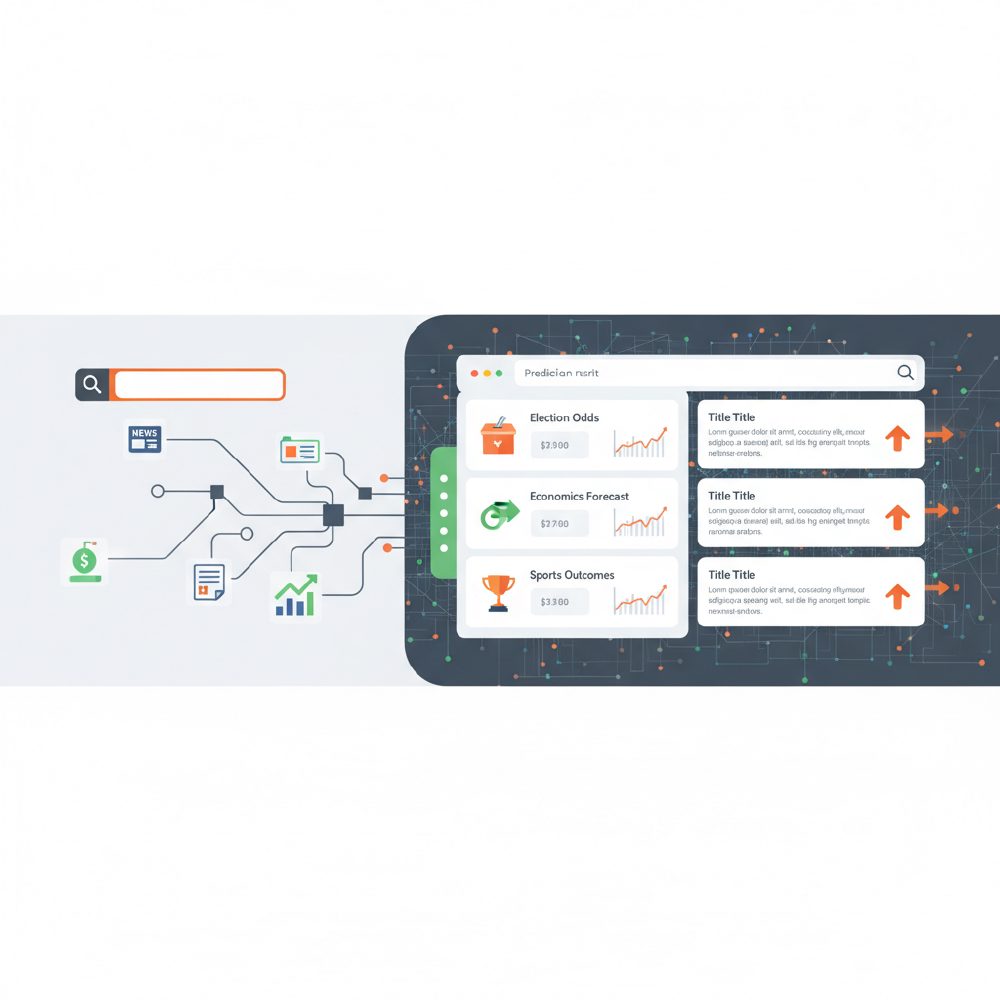
What Is Prediction Market SEO and Why Does It Matter in 2026?
Prediction market SEO means ranking event-contract platforms, Kalshi, Polymarket, Robinhood's new contracts, and the state-level copycats launching through 2026, for searches tied to real-world outcomes like elections, Fed decisions and Super Bowl props. It matters now because paid acquisition is restricted and organic search is still wide open.
I've spent six years ranking sites Google Ads won't touch. Crypto casinos, no-KYC operators, offshore sportsbooks, the pattern is always the same. A category gets gambling-adjacent treatment from ad platforms, legitimate players can't buy traffic, and whoever owns organic search owns the category for 18-24 months before anyone catches up. Prediction markets are hitting that exact window right now.
Kalshi is CFTC-regulated and still gets inconsistent ad treatment across Google and Meta depending on the contract type. Polymarket operates in a regulatory grey zone in the US that should feel familiar to anyone who's run crypto casino campaigns, it's the same risk profile, just dressed in finance language instead of casino language. DraftKings and Robinhood pushing into this space in 2025 tells you the TAM is real, but neither has built out the long-tail content hub that actually captures search demand.
The query volume is already there. Ahrefs shows steady month-over-month growth on terms like "kalshi fed rate cut," "polymarket vs kalshi," and "is kalshi legal in [state]" since late 2024, and I'd expect that curve to steepen through every major news cycle in 2026, midterms, Fed meetings, any contested sporting event. Nobody has a real content moat yet. That's the opportunity.
How Is Prediction Market SEO Different From Sportsbook or Casino SEO?
Prediction market SEO leans financial, not entertainment, content needs to explain contracts, settlement, and regulatory status rather than bonuses and RTP. The audience searches with finance and political intent, competitors include CFTC filings and news sites, not just other operators, and Google treats the content as YMYL.
In casino SEO your biggest competitors are other affiliates and other operators. In prediction market SEO your competitors include Reuters, Politico, CoinDesk, and the CFTC's own site. That changes everything about what ranks. A thin "best prediction markets 2026" listicle that would survive in casino affiliate SEO gets buried under news coverage and regulatory primary sources here.
The intent mix is different too. Sportsbook searchers want odds and a sign-up bonus. Prediction market searchers are split between traders wanting contract mechanics ("how does kalshi settlement work"), news-driven curiosity ("what are the odds trump wins [contract]" phrased as a political question, not a betting one), and comparison shoppers ("kalshi vs polymarket fees"). You're writing for people who think they're reading finance content, even when they're really placing a wager on an outcome.
E-E-A-T expectations are harder here. Google's quality raters treat financial-outcome content as YMYL regardless of the regulatory wrapper, so author credentials, cited data sources, and factual accuracy on settlement mechanics matter more than they ever did for a slot review. I run this the way I'd run content for a fintech client, not a casino affiliate, named authors, sourced numbers, visible update dates.
Why Are Prediction Markets Becoming an SEO Opportunity Right Now?
Prediction markets sit in the same ad-restricted zone crypto casinos occupied in 2019-2021: real demand, inconsistent paid ad approval, and almost no established organic competitors. Legacy sportsbook and finance affiliates haven't pivoted content teams yet, leaving a 12-24 month window before the category fills up.
Three things are converging. First, Kalshi's user growth and Polymarket's trading volume through 2024-2025 created genuine consumer search demand, people are googling these brands by name before they've ever placed a contract. Second, Google and Meta ad policy on prediction markets stays unsettled; approvals vary by account, contract category and geography, which pushes acquisition budget toward organic and content partnerships the same way it pushed crypto casino budgets toward SEO five years ago. Third, nobody's built the content infrastructure yet, I've pulled Ahrefs data on the major platforms and their domain content depth looks like a crypto casino site circa 2020: product pages, no educational hub, thin blog.
Compare that to sports betting SEO in 2026, where DraftKings, FanDuel, BetMGM and a dozen affiliate networks have spent a decade building topical depth on every team, player and prop market imaginable. You cannot out-publish them on "NFL odds" anymore. You absolutely can out-publish Kalshi and Polymarket on "how prediction markets work," "event contract tax treatment," or state-by-state legality right now, because those pages barely exist.
The window won't stay open. Affiliate networks that currently cover sports betting and crypto are already testing prediction market content, I've seen a handful of established gambling SEO shops spin up coverage since mid-2025. My read: you have through most of 2026 before this looks as crowded as sportsbook SEO does today.
What Keywords Should Prediction Market Platforms Target First?
Start with low-competition, high-intent clusters: platform comparisons, legality-by-state queries, and mechanics explainers. These have real search volume, almost no entrenched ranking pages, and convert visitors who are already evaluating whether to trade, not just curious browsers.
I run these the same way I'd scope a new crypto casino account in Ahrefs, pull the category's seed terms, check keyword difficulty against the actual ranking domains (not the metric alone, because Ahrefs KD underestimates YMYL financial competition), and prioritize by commercial intent over raw volume.
The comparison cluster converts best because it's bottom-of-funnel: someone searching "kalshi vs polymarket" has already decided to trade somewhere. The legality cluster is underrated, state-by-state regulatory status pages get cited by journalists and other sites, which doubles as a link-building asset. Mechanics content is your volume play and your E-E-A-T foundation simultaneously.
| Cluster | Example Queries | Intent | Priority |
|---|---|---|---|
| Platform comparison | kalshi vs polymarket, best prediction market app | Commercial, bottom-funnel | High |
| Legality & regulation | is kalshi legal in texas, prediction markets cftc status | Informational, trust-building | High |
| Mechanics/education | how do event contracts work, how does market settlement work | Informational, top-funnel | Medium-High |
| Topic-specific markets | fed rate decision prediction market, election prediction market odds | News-driven, seasonal spikes | Medium |
| Tax & payments | are prediction market winnings taxable, kalshi 1099 | Informational, YMYL-sensitive | Medium |
| Brand + feature | kalshi app review, polymarket fees explained | Navigational/commercial | Medium-Low |
How Do You Build Topical Authority for Event Contracts and Market Categories?
Build category hubs the way I'd structure a casino game-guide silo, politics, economics, sports, crypto and weather/entertainment each get a pillar page linking to live-market and explainer content. The difference here is content velocity: markets resolve in days or hours, so hubs need a fresh-content cadence, not a set-and-forget structure.
Topical authority in this vertical isn't built by publishing once per category and walking away. A politics hub needs weekly or even daily updates during election season because that's exactly when search volume and journalist attention spike. I'd structure it as one evergreen pillar per vertical ("Political Prediction Markets: How They Work") supported by a rolling set of timely spoke pages tied to specific contracts, refreshed or archived as markets resolve.
This mirrors how I handle live-odds content for sportsbook clients, except the resolution cycle is often shorter and the subject matter is higher-stakes from a compliance standpoint. A Fed rate contract resolves in a day; an election contract runs for months. Your internal linking needs to route authority from the evergreen pillar down to whatever's currently live, then redirect or noindex the page once it resolves rather than leaving a graveyard of dead market pages diluting crawl budget.
Don't skip the explainer layer to chase trending contracts. I've seen operators in adjacent verticals over-index on timely content and under-build the foundational "how this works" and "is this legal" pages, exactly the content Google's raters check for topical depth and trust. Build the foundation first, then layer timely spokes on top.
What Link-Building Tactics Work for Prediction Market SEO Without Burning the Domain?
Digital PR and data journalism outreach work unusually well here because reporters already cite prediction market odds as data points, pitch them your platform's numbers directly. Niche edits and expired-domain links still move rankings but carry the same Penguin/spam-update risk they do in any gambling-adjacent vertical.
This is where prediction markets genuinely beat casino and sportsbook SEO: you have a legitimate, repeatable PR angle. Journalists covering elections, Fed decisions, and major sporting events already cite Polymarket and Kalshi odds as data in their reporting. If you're not actively pitching your platform's live numbers to political and finance reporters, you're leaving earned links on the table that a casino affiliate would kill for.
Below the earned-link layer, I still run the standard toolkit, tiered link structures to absorb risk on the money pages, carefully vetted niche edits on finance and political blogs (not gambling blogs, the relevance signal matters more here), and expired-domain acquisitions in the fintech or political-commentary space rather than generic PBN gambling networks. Crowd marketing in finance and trading forums (Reddit's r/wallstreetbets-adjacent communities, trading Discords) drives referral traffic and branded search lift, which indirectly supports rankings even when the links themselves are nofollow.
What I wouldn't do: treat this like a casino affiliate build and blast low-quality PBN links at volume. The YMYL classification means a toxic backlink profile gets you a manual action or algorithmic suppression faster than it would on a slots review site. Keep velocity controlled, I target 15-25 net new referring domains per month in the first six months, weighted heavily toward editorial and PR links over pure link-building placements.
| Tactic | Risk Level | Timeline to Results | Notes |
|---|---|---|---|
| Digital PR / data journalism pitches | Low | 2-4 weeks per placement | Highest ROI in this vertical, reporters want your odds data |
| Niche edits on finance/political blogs | Medium | 4-8 weeks | Prioritize topical relevance over raw DR |
| Expired-domain builds (fintech/political niche) | Medium-High | 8-12 weeks | Vet trust history carefully; avoid prior gambling penalties |
| Crowd marketing (Reddit, trading Discords) | Low | Immediate traffic, slow SEO lift | Brand signal + referral traffic, not a direct ranking lever |
| PBN / low-quality bulk links | High | Fast but fragile | Avoid on YMYL money pages, not worth the manual action risk |
How Should Prediction Platforms Handle Regulatory and Compliance Content for SEO?
Publish jurisdiction-specific legality pages with clear, sourced regulatory status, CFTC designation, state carve-outs, and any pending litigation, updated whenever the status changes. This content ranks well because demand outpaces supply, and it doubles as the trust signal Google's raters look for on YMYL financial topics.
Legality content is both an SEO asset and a compliance necessity, which is rare, most of the time those two priorities fight each other. "Is Kalshi legal in Nevada" and similar queries get searched constantly because the regulatory picture genuinely shifts state by state and month by month as state gaming commissions push back on CFTC-designated contract markets encroaching on what they consider betting.
I build these as a structured hub: one page per state or jurisdiction, each citing primary sources (CFTC filings, state gaming commission statements, court filings where litigation exists), with a visible last-updated date and a named compliance or legal contributor if you have one. This is exactly the kind of page that earns citations from journalists covering the regulatory fight, which loops back into the link-building motion.
Resist the temptation to write vague, evergreen "it depends on your state" copy. Thin, non-committal compliance pages rank poorly against actual news coverage and get flagged by quality raters as low-effort YMYL content. Specific, sourced, regularly updated beats generic every time here.
What Technical SEO Issues Are Unique to Prediction Market Sites?
Prediction market sites generate thousands of dynamic, time-limited market pages that create crawl budget waste, duplicate-content risk, and indexing churn as contracts resolve. Fixing this requires strict canonicalization, a defined archive/noindex policy for resolved markets, and render-testing for JS-heavy SPAs like Polymarket's.
This is the technical problem nobody on these platforms' product teams is thinking about, because they're building for traders, not for Googlebot. Every new contract spins up a new URL. Multiply that across politics, sports, economics and crypto categories and you've got a site generating hundreds of new pages a week, most of which will be dead weight within 30-90 days when the contract resolves.
I run a Screaming Frog crawl on any prediction market site the same way I'd audit a sportsbook's live-odds pages: check for orphaned resolved-market URLs still indexed and competing with evergreen content, confirm canonical tags point correctly when similar contracts get re-listed for a new cycle, and verify the resolution flow, does a settled market 301 to a category hub, get noindexed with a clear "market closed" state, or just sit there as crawlable dead weight? Most platforms I've audited in this space do the third option by default, which is the worst one.
Render testing matters more here than in casino SEO because these platforms lean heavily on React/Next.js SPAs. Polymarket's market pages, for instance, need proper server-side rendering or dynamic rendering for Googlebot to see contract details and pricing data at all, I've seen JS-dependent prediction and trading platforms fail to get core market content indexed simply because Googlebot's rendering budget timed out on a client-side data fetch.
How Do You Structure URLs and Site Architecture for Thousands of Event Markets?
Organize by evergreen category and sub-category (/politics/elections/, /economics/fed-rates/) rather than by individual contract ID, and treat each live market as a child page that inherits authority from its category pillar. Archive or redirect resolved markets into a searchable history page instead of leaving dead URLs indexed.
Think of this as faceted navigation the way ecommerce sites handle product variants, because structurally that's what it is. A flat URL structure dumping every contract at the root (/market/12345/) wastes the category-level relevance signal Google needs to understand what the page is actually about.
I push clients toward a hierarchy: category > sub-category > live market, with a parallel /resolved/ or /history/ archive that keeps historical markets crawlable (useful for long-tail "how did the [event] market resolve" searches) without letting them compete for ranking real estate against the live, commercially relevant pages. Internal linking should flow from the category pillar down into currently-live markets and sideways into relevant explainer content, not just chronologically by listing date.
Pagination and infinite scroll on market-listing pages need the same fix I apply to sportsbook odds pages, proper paginated URL structures or load-more patterns that still expose crawlable links, because infinite-scroll-only implementations routinely hide 80%+ of a site's market inventory from Googlebot entirely.
Prediction Market SEO vs Sportsbook SEO vs Casino SEO: Which Playbook Applies?
Prediction market SEO borrows casino/sportsbook SEO's link-building aggression but needs a financial-content E-E-A-T standard and a faster content refresh cycle than either. It's closer to fintech SEO with a gambling-grade link profile than to a traditional gambling vertical.
Operators ask me which existing playbook to copy. The honest answer is none of them cleanly, you're blending three disciplines. Casino SEO gives you the link-building risk tolerance and the understanding of ad-restricted acquisition. Sportsbook SEO gives you the live-content, fast-refresh infrastructure. Neither gives you the YMYL financial content rigor this vertical actually needs.
The biggest trap is applying casino affiliate content patterns, thin reviews, bonus-chasing listicles, aggressive exact-match anchor text, to a space Google and its raters treat as financial advice territory. That mismatch is exactly why the current platforms' content underperforms relative to their brand recognition.
| Dimension | Casino SEO | Sportsbook SEO | Prediction Market SEO |
|---|---|---|---|
| Content classification | Entertainment/gambling | Gambling, live-odds heavy | YMYL financial/political |
| Competition level (2026) | Saturated, PBN-era domains dominate | Saturated, brand-heavy SERPs | Low-medium, open window |
| Link profile risk tolerance | High | High | Medium, YMYL penalties hit harder |
| Content refresh cadence | Monthly/quarterly | Daily (odds, lines) | Daily to weekly (resolution cycles) |
| Best link source | Niche edits, expired domains | Affiliate partnerships | Digital PR / journalist citations |
| Primary ranking competitor | Other affiliates/operators | Legacy sportsbooks, affiliates | News outlets, regulators, finance media |
What's a Realistic Timeline and Budget for Prediction Market SEO in 2026?
Expect 4-7 months to rank for low-competition comparison and legality terms, and 9-12 months to compete seriously on head terms as more operators enter the space. Budget $4,000-$12,000/month for a mid-stage campaign, comparable to what I'd quote an early-stage crypto casino client with no existing domain authority.
I'm basing this on pattern-matching against crypto casino launches, since there's no mature prediction-market SEO case study to point to yet, the vertical is that new. A brand-new domain with zero backlink history, launching a proper content hub plus a PR-driven link program, should see its first page-one rankings on legality and comparison long-tail terms within four to seven months. That's faster than casino SEO because competition is thinner, but slower than you'd hope because YMYL content takes longer to earn trust signals.
Budget-wise, a serious campaign needs a content team that can write credibly about regulatory and financial mechanics (not generic gambling copywriters), a technical SEO pass on the SPA rendering and URL architecture issues, and an active PR/outreach motion targeting finance and political journalists. That combination runs $4,000-$12,000/month depending on content volume and outreach intensity, in line with what established crypto casino brands spend in their first year of serious organic investment.
Flag this honestly: nobody has run this playbook at scale for more than a year, so timelines could compress or extend as more entrants pile in through 2026. First-mover platforms that start now will have a real head start by Q3.
What Mistakes Are Operators Already Making in This Emerging Vertical?
The most common mistake is importing casino-affiliate content patterns, thin listicles, bonus-style anchor text, no named authorship, onto a YMYL financial topic Google scrutinizes much harder. The second is ignoring technical debt on resolved-market pages, letting thousands of dead URLs choke crawl budget before the content program even gets a fair chance.
I've audited a handful of early prediction-market content builds and the pattern repeats: someone on the growth team treats this like a sportsbook affiliate project, ships generic "top prediction markets 2026" content with no sourcing, no named author, and aggressive commercial anchor text pointed at the homepage. That content gets outranked by a Reuters explainer within weeks because Google's YMYL signals are working exactly as designed.
The second mistake is technical neglect. Teams building the trading product don't loop in SEO until after thousands of market pages are already live and indexed with no canonical or archive strategy. By the time an SEO team gets access, you're untangling years of crawl-budget waste instead of launching clean.
The third mistake is underusing the PR angle. This vertical has a genuinely rare advantage, financial and political journalists want your data. Operators sitting on live market pricing and not pitching it to reporters covering the exact event their contract tracks are leaving the cheapest, highest-authority links in the vertical completely unclaimed.




Comments
No comments yet, be the first.