Live Dealer Casino SEO 2026: Rank the Live Vertical on a Fixture Calendar
What Is Live Dealer Casino SEO and How Is It Different From Regular Casino SEO?
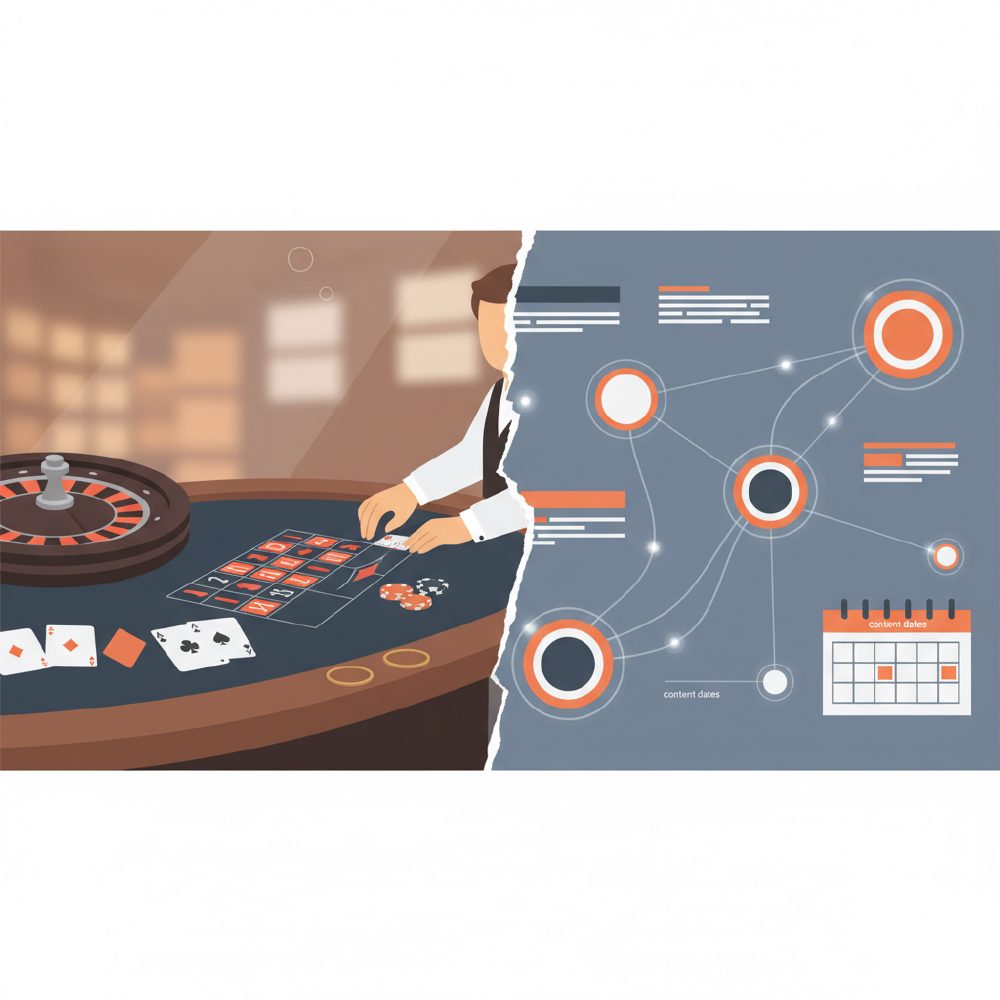
Live dealer casino SEO targets search demand for human-dealt, real-time streamed games, live blackjack, live roulette, live baccarat, game shows like Crazy Time, treating each studio provider and game variant as its own ranking asset rather than folding everything into one generic 'online casino' page.
RNG slot SEO and live dealer SEO look similar on the surface, both sit under an operator's casino vertical, but the SERPs behave differently. Search 'live roulette' and you get lobby pages, operator reviews, and provider explainer content. Search 'online slots' and you get a mix of demo-play aggregators, RTP databases, and game guides. Google has effectively split these into separate topical clusters, which means your internal architecture should split them too.
The intent gap matters more than the content gap. In my tracking across sportsbook-casino hybrid clients, live casino landing pages convert 20-30% better than RNG lobby pages for the same traffic volume, directional, not universal, but consistent enough that I weight live dealer pages higher in the content roadmap every quarter. Someone typing 'live blackjack real money' or 'best live roulette sites' is closer to depositing than someone browsing slot themes.
The other difference is that your biggest ranking assets aren't generic, they're studio and game-specific. Evolution's Lightning Roulette, Pragmatic Play Live's Mega Wheel, Ezugi's Bet on Numbers all carry their own search volume. Treat each as a page, not a lobby tile, and you capture demand competitors are leaving on the table because they only built one 'live casino' page and called it done.
Which Keywords Actually Convert for Live Blackjack SEO and Live Roulette SEO?
Live casino keywords split into four tiers: broad head terms (live roulette), commercial mid-tail (live blackjack real money, live roulette minimum bet), provider/game long-tail (Evolution lightning roulette review), and geo-modified terms for regulated states or countries, each needs a distinct page type.
I run keyword clustering in Ahrefs or SEMrush by SERP overlap, not just volume. If 'live roulette' and 'live roulette online' return the same top 10 results, they're one cluster and one page, don't split them into separate URLs or you'll cannibalize. If 'live roulette minimum bet' pulls different results (forum threads, FAQ snippets), it earns its own section or page.
Cannibalization is the single most common mistake I see when agencies rush a live casino build-out: a hub page targeting 'live roulette' competing against a category page targeting 'live roulette games' and a provider page targeting 'Evolution live roulette.' Run a Screaming Frog crawl monthly, cross-reference against GSC query data, and merge or canonicalize anything that's splitting authority across near-duplicate intents.
| Tier | Example Keywords | Search Intent | Content Type |
|---|---|---|---|
| Head terms | live casino, live blackjack, live roulette | Broad commercial, high competition | Vertical hub page |
| Mid-tail | live blackjack real money, live roulette minimum bet, best live dealer casino [region] | Commercial, comparison-driven | Category/landing page |
| Long-tail / provider | Evolution lightning roulette review, Pragmatic Play mega wheel RTP, live blackjack side bets explained | Informational-commercial | Game/provider page |
| Geo-modified | live roulette online Pennsylvania, live dealer casino Ontario | Local commercial, regulated market | State/region landing page |
How Should You Structure a Live Casino Site Architecture That Ranks?
Build a /live-casino/ hub with dedicated sub-folders for /live-casino/blackjack/, /live-casino/roulette/, /live-casino/game-shows/, and provider sub-pages like /live-casino/evolution/, then cross-link from sportsbook sections during fixture weeks so you harvest crossover search demand instead of leaving it to the lobby algorithm.
Silo the vertical the same way you'd silo a sportsbook section by sport. Hub page at /live-casino/ covers the category broadly and links down to blackjack, roulette, baccarat, and game-show sub-folders. Each of those links down again to provider or variant pages. Breadcrumb schema on every tier reinforces the hierarchy to Google and gives you breadcrumb rich results in the SERP, which bump CTR 1-3 points in my experience on competitive casino terms.
Where this gets interesting is the cross-sell link from your sportsbook side. During Super Bowl week or a World Cup knockout round, bettors move between the in-play betting page and the casino lobby during breaks, halftime, between periods, rain delays. I build a temporary internal link block on the sportsbook's in-play hub pointing to a 'halftime live roulette' or 'live blackjack while you wait' landing page, live for the 10-14 days around the fixture, then archived or redirected. That link alone has driven double-digit percentage lifts in live casino sessions during the exact windows when sportsbook traffic peaks, you're not creating new demand, you're routing existing demand you'd otherwise lose to a slower internal search path.
Don't bury provider pages four clicks deep. Evolution, Pragmatic Play Live, and Ezugi pages should sit no more than two clicks from the hub, with reciprocal links from the game-type pages they belong to (a roulette variant links up to /live-casino/roulette/ and across to the provider page).
What Technical SEO Problems Kill Live Dealer Casino Pages?
The biggest killers are SPA lobby frameworks (React/Vue) that never render content for crawlers, iframe-sandboxed game streams that block indexation, and autoplay video thumbnails that tank Core Web Vitals. Fix with server-side rendering, editorial content outside the iframe, and lazy-loaded poster images instead of autoplay.
Most live casino lobbies are built as single-page applications because the UX team wants instant game switching. Great for players, terrible for crawlers if you're not rendering server-side. Run Screaming Frog in JS rendering mode against your live casino folder and compare it to a raw-HTML crawl, if the rendered version shows ten times the content of the raw version, Googlebot is likely seeing a thin shell on first pass and depending on a render queue that can lag days on lower-authority domains.
Fix it with dynamic rendering (Rendertron, Prerender.io) or genuine SSR on the content layer, even if the live game lobby itself stays client-side. The editorial content, game rules, RTP tables, provider breakdowns, needs to live in server-rendered HTML outside the game iframe, not inside it. Iframes from Evolution, Pragmatic Play, or Ezugi are sandboxed by the provider and Google can't index anything inside them, so if your unique content is embedded in the iframe wrapper, it's invisible.
Core Web Vitals take a hit from autoplay stream previews on category pages. A live-loading video thumbnail for every table on a roulette listing page is an LCP and CLS disaster. Swap to a static poster image with lazy-loaded video on click or scroll-into-view, and check your field data in GSC's Core Web Vitals report monthly, gambling SERPs are competitive enough that a page stuck in "needs improvement" loses rank position to a cleaner competitor page targeting the same term.
How Do You Build Links to Live Casino Pages Without Getting Hit by a Spam Update?
Use a mix of niche edits, guest posts, and crowd marketing for the money site, keeping exact-match anchors like 'live blackjack SEO' under 2-3% of total anchor text. PBNs and expired-domain redirects still work but carry real Penguin and spam-update risk, insulate the money site with a tier-1/tier-2 buffer if you use them.
Anchor text ratio is where most in-house teams blow themselves up. I audit every live casino client's existing profile in Ahrefs before writing a single new link, and if exact-match anchors like 'live roulette' or 'best live blackjack' exceed roughly 3% of the total, I stop building and spend the next month diluting with branded and naked-URL anchors before adding anything new. Google's spam updates since 2023 have specifically targeted unnatural anchor clustering on gambling and finance sites, it's one of the fastest ways to trigger a manual action in this vertical.
Niche edits on aged, casino-adjacent blogs remain the safest scalable tactic, medium risk, good authority transfer, and they look like natural editorial mentions if placed in relevant context rather than bolted onto an unrelated post. Expired-domain acquisition can inject authority fast, but only after you've pulled the domain's full backlink history in Ahrefs and ruled out prior PBN or spam penalties, a domain with a clean history in an adjacent niche (iGaming affiliate, sports betting blog) is worth paying a premium for over a cheap domain with an unverified past.
Tiered structures, money site backed by tier-1 niche edits and guest posts, those backed by tier-2 crowd links and forum seeding, buffer the anchor text risk away from your primary domain. It's the highest-effort approach but the one I trust most for competitive live roulette and live blackjack terms where a direct PBN hit to the money site isn't worth the exposure.
| Tactic | Risk Level | Best Use Case |
|---|---|---|
| Niche edits on aged iGaming-adjacent blogs | Medium | Scalable authority for category and provider pages |
| Expired domain 301s (verified clean history) | Medium-High | Fast authority injection for a new live casino sub-folder |
| Tiered link structures (money site insulated by tier-1/tier-2) | High | Buffering anchor risk on competitive head terms |
| Guest posts on igaming affiliate sites | Low-Medium | Branded and contextual anchors, slow steady build |
| Crowd marketing (forum, Reddit, Quora seeding) | Low | Trust signals and referral diversity, not raw authority |
How Does the Sports Calendar Drive Live Casino Search Spikes?
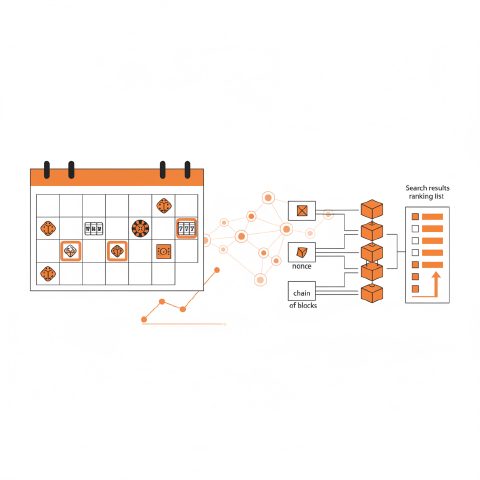
Major sports fixtures push live casino traffic up 30-50% during the event window as bettors cross over during halftime, rain delays, or between matches. Super Bowl Sunday, World Cup knockout rounds, and March Madness are the three biggest windows, content needs to publish 6-8 weeks ahead, not the week of.
This is the piece of live dealer SEO most casino-only teams miss because they're not watching a fixture calendar. I've run event-driven content through two Super Bowls and a World Cup, and the pattern repeats every time: search volume for live casino terms climbs steadily in the 10 days before a major fixture, spikes hardest during the event itself (especially halftime and intermission windows), and tapers over the following week. If your live roulette or live blackjack content isn't indexed and ranking before that climb starts, you're capturing the tail, not the spike.
My rule is 6-8 weeks lead time minimum for any fixture-tied live casino page, enough runway for Google to crawl, index, and start ranking the page before demand peaks. For the World Cup final, I built a crossover page targeting 'live roulette world cup final betting' three weeks out, which was tight even by my own standard, and it still caught enough of the pre-event search climb to outrank two established competitors who published the week of the match.
Build a recurring content calendar: Super Bowl (late January/early February), March Madness (March), major European football windows (August-May, with knockout-stage spikes), and the World Cup or Euros in their respective years. Treat each like a fixture cluster, hub page live year-round, seasonal crossover pages refreshed and re-promoted ahead of each window rather than rebuilt from scratch.
How Do You Rank for Studio and Provider Brand Terms (Evolution, Pragmatic Play Live, Ezugi)?
Build a dedicated page per provider with original editorial, RTP data, table limits, unique screenshots or clips, instead of reusing the marketing copy the provider supplies to every operator. Add Game and VideoObject schema, and treat high-volume game-show titles like Crazy Time or Lightning Roulette as standalone pages, not lobby entries.
Providers hand every operator the same promotional blurb for their studios and flagship titles. If you paste it in verbatim, you're competing against hundreds of other operator sites running identical copy for 'Evolution live blackjack' or 'Pragmatic Play mega wheel', Google collapses near-duplicate content across domains and only one or two versions rank. The fix is tedious but effective: write your own RTP breakdown, side-bet explainer, table limit comparison, and dealer-experience description for each provider page, sourced from your own testing where the provider allows it.
Schema matters more here than almost anywhere else in the casino vertical. Game schema for the title, VideoObject for any recorded trailer or gameplay clip (not the live stream itself, which can't be marked up this way), and BroadcastEvent schema if you're promoting a scheduled tournament or special stream window. These markup types are still underused across operator sites, which makes them a reliable differentiator in rich-result eligibility right now, I'd expect that gap to close within 12-18 months as more operators catch on.
What E-E-A-T and Trust Signals Does Google Expect on Live Dealer Pages?
Live casino sits squarely in YMYL territory, so Google expects visible licensing badges (UKGC, MGA, or the relevant state regulator), responsible gambling links, accurate RTP disclosure, and author bios with real gaming industry credentials. Thin, unverifiable claims or missing compliance signals are the fastest route to a manual action.
Every live dealer page I build carries the license number and regulator badge above the fold, not buried in a footer. It's a trust signal for the user and a quality signal Google's raters are trained to look for under the YMYL guidelines, gambling content gets evaluated against the same rigor as financial and medical content, and reviewers explicitly check for regulatory legitimacy.
RTP figures need to match what the provider actually publishes, Evolution, Pragmatic Play, and Ezugi all list official RTP ranges, and inventing or rounding favorably is the kind of error that gets a page flagged in a manual review, not just a ranking drop. Author bios matter more in this vertical than most: a byline with real gaming-industry experience (compliance background, game design, licensed operator SEO work) outperforms an anonymous "staff writer" credit on competitive terms, and it's one of the few E-E-A-T levers you fully control.
How Long Does It Take to Rank Live Dealer Casino Pages, and What KPIs Matter?
Budget 4-6 months to rank mid-tail terms like 'live blackjack real money' in a regulated state market, and 9-12 months for head terms like 'live roulette' in mature, competitive markets like the UK. Track organic sessions to the live lobby, CTR by query, and deposit-attributed conversions via UTM or affiliate code, not just rank position.
Rank position alone is a vanity metric in this vertical. I tie every live casino SEO report to deposit-attributed sessions pulled through UTM parameters or affiliate tracking codes, because a page ranking #3 for 'live roulette' that sends zero qualified sessions to the lobby is worth less than a page ranking #7 that's converting at 4%. GSC gives you impressions and CTR by query, watch for queries where impressions are climbing but CTR is flat, which usually means your title tag or meta description needs a rewrite before the ranking work pays off.
Timelines vary hard by market maturity. A newly regulated US state with lower domain competition can see mid-tail live blackjack and live roulette terms crack page one in 4-6 months with consistent content and link velocity of 15-25 new referring domains a month on a mid-authority site. The UK, Ontario, and other mature regulated markets are a different fight, head terms there routinely take 9-12 months even with aggressive linking, because the top 10 is held by operators with a decade of accumulated authority.
Use fixture windows as your proof points, not just monthly averages. If a live casino page built for a World Cup or Super Bowl crossover shows a clear traffic spike during that exact window year over year, that's stronger evidence of SEO working than a smooth upward trend line that could just be seasonal noise.
Live Dealer SEO vs RNG Slot SEO: What Actually Changes?
Live dealer SEO leans on video-first editorial, studio and provider pages, and Game/VideoObject schema, while RNG slot SEO leans on static RTP and volatility tables with Review/AggregateRating schema. The technical priority flips too, live pages fight Core Web Vitals issues from video embeds, slots fight image-heavy lobby load times.
The content format forces different production workflows. A live roulette or live blackjack page needs editorial depth on table limits, side bets, dealer interaction, and studio quality, things you can only describe accurately by actually watching the stream. A slot page needs RTP, volatility, max win multiplier, and bonus feature breakdowns, which you can pull from provider spec sheets without ever loading the game.
Link anchor strategy shifts slightly too. Live dealer anchors cluster around the game-variant name plus branded terms, "live roulette," "[Operator] live blackjack", while slot anchors cluster around the specific title and provider, "Gates of Olympus," "Pragmatic Play slots." Mixing these anchor pools across the wrong page type is a subtle cannibalization risk that shows up in Ahrefs' anchor text report if you're not segmenting link campaigns by vertical from the start.
| Factor | Live Dealer Casino SEO | RNG Slot SEO |
|---|---|---|
| Content type | Video-first editorial, provider/studio focus | Static game guides, RTP/volatility tables |
| Search intent | Closer to deposit, high commercial intent | Mixed informational and commercial (demo-play searches) |
| Technical priority | Video/iframe rendering, CWV from live stream previews | Image-heavy lobby load, faster CWV fixes |
| Schema focus | Game, VideoObject, BroadcastEvent for tournaments | Game, Review, AggregateRating |
| Anchor text focus | Branded + game-variant anchors (live roulette, live blackjack) | Game title + provider anchors |




Comments
No comments yet, be the first.