Casino Link Reclamation in 2026: Recovering Lost and Unlinked Mentions
What Is Casino Link Reclamation and Why Does It Matter for Operator Domains?
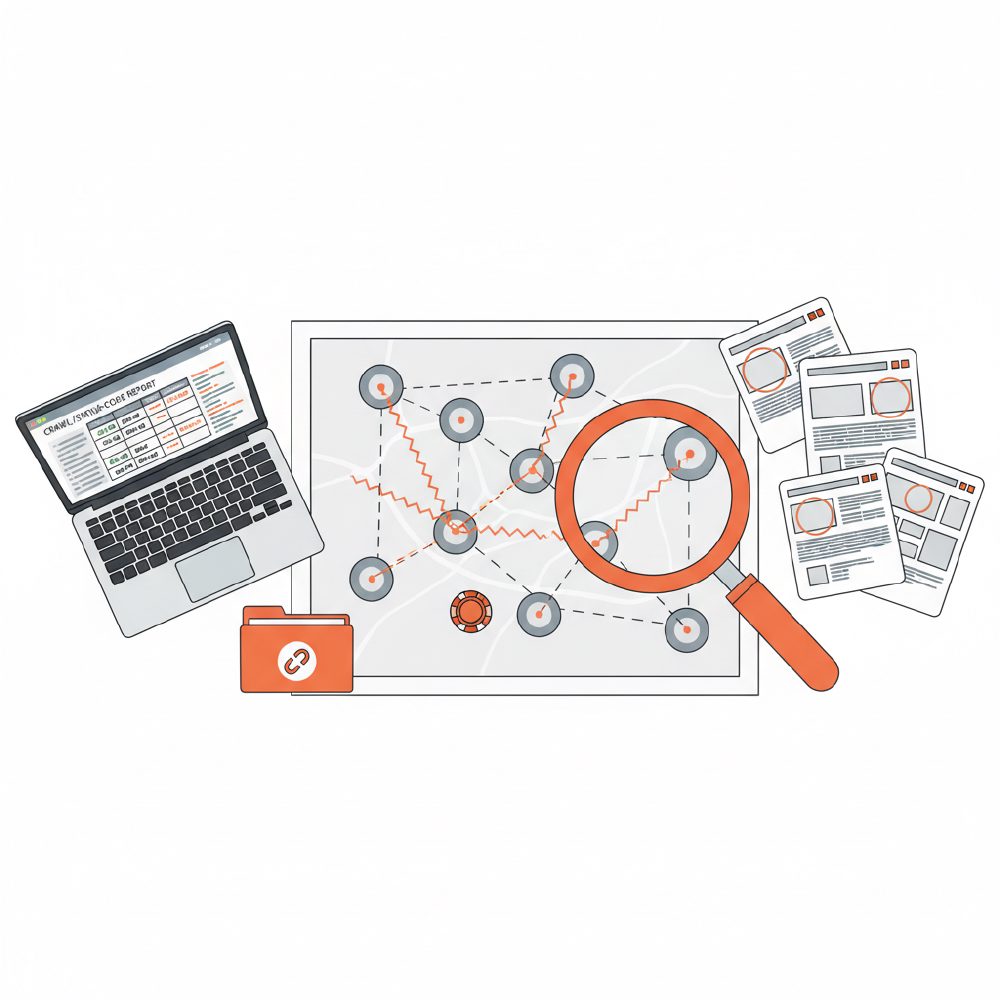
Casino link reclamation is the process of identifying unlinked brand mentions and previously earned backlinks that have gone dead, redirected, or been stripped of their hyperlink, then recovering that lost equity through outreach or technical fixes. On gambling domains, where new link acquisition is expensive and risky, it's usually the cheapest link equity you'll ever recover.
Every operator site I audit has a graveyard of link equity it doesn't know it lost. A sportsbook gets covered in an SBC News roundup, a press release goes out through PR Newswire, an affiliate reviews a new slot title, and six months to two years later, the site redesigns, the CMS migrates, or the journalist's editor swaps a brand name for a competitor's without updating the anchor. The mention survives. The link doesn't. Multiply that across 300+ referring domains on a five-year-old brand and you're sitting on real, recoverable PageRank that nobody is working.
This matters more in gambling than almost any other vertical because new link acquisition is already constrained, Google Ads won't run your campaigns, guest posting on real estate or lifestyle blogs gets you a thin relevance signal at best, and most high-authority iGaming publications charge $800-$3,000 per placement with no guarantee of a dofollow. Reclamation sidesteps all of that. You're not asking a site to write about you; they already did. You're asking them to fix a link that's already earned, already contextually relevant, and already sitting on a domain Google trusts enough to have covered you in the first place.
I run reclamation as a standing workflow on every recovery engagement, not a one-off project. After a core update hit or manual action, a domain's link graph has usually degraded in two directions at once, toxic links accumulating and legitimate links breaking, and most agencies only look at the first half. The second half is where I find traffic you can get back in 60-90 days without building a single new link.
How Do You Find Unlinked Brand Mentions Across Gambling Media and Affiliate Sites?
I pull unlinked mentions three ways: Ahrefs Content Explorer and Mentions search filtered by brand name minus site:yourdomain.com, Google Alerts and Talkwalker Alerts for ongoing monitoring, and manual SERP scraping for brand+bonus or brand+review queries where affiliates cite odds without linking. Expect 200-600 mentions on an established operator brand.
Ahrefs Content Explorer is my first stop, search your exact brand name, exclude your own domain, exclude subdomains, and sort by Domain Rating. On a mid-market sportsbook or casino brand that's been live three-plus years, I'll typically surface 200-600 unlinked mentions in that single pull, concentrated in three clusters: affiliate review sites that cite you in a comparison table without linking, news/press coverage where the brand name appears in body text but the hyperlink only lives in a sidebar widget, and forum or Reddit threads where users name-drop you in a thread about payout speed.
SEMrush's Brand Monitoring tool does a similar job and is worth cross-referencing because the two tools' web crawlers don't index identically, I've recovered mentions in Ahrefs that never surfaced in SEMrush and vice versa, roughly a 15-20% non-overlap rate on every audit I've run. For live, ongoing detection rather than historical, Google Alerts and Talkwalker Alerts (free and better at catching smaller regional gambling news sites that Ahrefs' crawler visits less frequently) catch new mentions within 24-72 hours of publication, which matters for time-sensitive PR and sponsorship coverage.
Don't skip manual SERP work. Search your brand name plus terms like "review," "bonus code," "vs," and your biggest competitor's name. Affiliates running comparison content frequently cite your bonus terms or RTP figures without any hyperlink at all, because the content was built from a feed or a manually updated spreadsheet rather than a live partnership link. Those are often your highest-value targets because the affiliate already has commercial intent to send traffic, they just haven't wired the link.
| Method/Tool | Best for | Typical cost | Limitation |
|---|---|---|---|
| Ahrefs Content Explorer | Historical mentions across indexed web | $129-$399/mo | Crawl gaps on smaller regional sites |
| SEMrush Brand Monitoring | Cross-check against Ahrefs, sentiment data | $139-$249/mo add-on | Different index, 15-20% non-overlap |
| Google Alerts | Free real-time new mention flagging | Free | Noisy, misses non-indexed or slow-crawled pages |
| Talkwalker Alerts | Real-time, better regional/niche coverage | Free | Less granular filtering than paid tools |
| Manual SERP scraping | Affiliate comparison/review content | Analyst time | Labor-intensive, not scalable past ~50 queries |
What Causes Backlinks to Casino Sites to Break or Disappear?
Four causes account for most lost backlinks on operator domains: site migrations that change URL structure without 301 mapping, affiliate or publisher site redesigns that drop old content, press release syndication pages expiring after 30-180 days, and link removal requests tied to Google manual actions or negative-SEO disputes. Each needs a different fix.
Migration damage is the one I see most often and it's entirely self-inflicted. An operator rebrands, moves from a .net to a .com, or switches CMS platforms, and the dev team either skips 301 redirects or maps them incorrectly, redirecting everything to the homepage instead of the equivalent new URL. I've audited domains where 40% of a 2,000-link profile pointed at URLs that now 404 or soft-404 to a generic landing page, which Google treats as a dead link for equity purposes even though the status code technically resolves. Screaming Frog's list mode crawl against your full backlink export from Ahrefs is the fastest way to catch this, feed it every target URL from your Best by Links report and flag anything that isn't a clean 200.
Third-party decay is the second cause and it's outside your control but not outside your influence. Affiliate sites redesign constantly in this vertical, comparison tables get rebuilt, old review pages get merged or pruned during a content audit, and in the process the outbound link to you either disappears or gets swapped to a competitor who paid for a fresher placement. Press release syndication is worse: PR Newswire, Business Wire, and most syndication networks only guarantee the live link for a contracted window, often 30-180 days, after which the release either goes behind a paywall or the link gets nofollowed retroactively.
The fourth cause is the one that gets missed in recovery work: links removed because of a disavow dispute or because the linking site itself got a manual action and proactively stripped outbound gambling links to clean up before their own audit. If you're mid-recovery from your own penalty, cross-reference every dead link against your disavow file before you waste outreach hours trying to reclaim something you (correctly) asked Google to ignore.
| Cause | Typical % of dead links | Fix | Priority |
|---|---|---|---|
| Site migration / missing 301s | 30-45% | 301 redirect mapping, update internal + external where possible | High, pure technical fix |
| Affiliate/publisher redesign | 20-30% | Outreach to re-insert or update link | Medium, outreach-dependent |
| Press release syndication expiry | 10-20% | Negotiate republish or accept natural decay | Low, often unrecoverable |
| Manual action / voluntary strip by linking site | 5-15% | Verify against your disavow file, do not pursue | N/A, leave alone |
How Do You Audit a Lost Backlink Profile After a Core Update or Manual Action?
Pull the full historical backlink export from Ahrefs and GSC, cross-reference against current live crawl data in Screaming Frog, and classify every lost link into one of four buckets: technically broken on your side, removed by the linking site, toxic and correctly lost, or disavowed. Only the first two buckets get reclamation effort.
I start every recovery audit with Ahrefs' "Lost" backlinks report filtered to the last 24 months, exported alongside Google Search Console's own Links report, the two rarely match exactly, and GSC data is what Google's algorithm is actually weighing, so discrepancies matter. Any link showing as lost in Ahrefs but still live in a manual browser check usually means a nofollow attribute got added, not a full removal; that's a different conversation with the webmaster than asking them to reinstate a stripped link entirely.
Next I run the full list of former linking URLs through Screaming Frog in list mode to get live HTTP status codes at scale, 404, 410, 301/302 redirect chains, or soft-404s disguised as 200s. Anything redirecting through three or more hops before landing (common after multiple CMS migrations on older affiliate sites) is losing a meaningful chunk of link equity at each hop even if it technically still resolves; Google's crawler budget for passing PageRank through redirect chains degrades noticeably past two hops in my experience, though Google has never published an exact decay figure.
The classification step is where most agencies get sloppy and end up wasting outreach on links that deserved to die. A backlink from a site that itself took a manual action for link schemes, or from a PBN node that's since been deindexed, isn't a reclamation target, it's confirmation your disavow file is working. I build a simple four-column tracker: URL, loss reason, DR/authority of the linking domain, and recommended action (fix technical / outreach / disavow-confirm / ignore). On a 90-day recovery engagement this classification pass alone usually takes 15-25 analyst hours for a domain with 1,000+ historical referring domains.
What's the Outreach Process for Converting Unlinked Mentions Into Links?
Outreach for unlinked mentions converts at 8-20% on gambling domains, well below standard niches, because many publishers run strict no-follow or no-link policies on casino and sportsbook content. Personalize every email, lead with the page-level benefit to the publisher (fixing a dead citation, updating stale odds), and never offer payment.
Gambling vertical outreach underperforms general SEO benchmarks and you should plan around that reality rather than against it. Where ecommerce or SaaS unlinked-mention campaigns often see 25-35% conversion, I budget 8-20% on casino and sportsbook brands because a meaningful share of your mentions sit on affiliate and media sites with explicit editorial policies against linking to gambling operators without a commercial agreement, some outright ban it to avoid looking like paid placement to their own readers or regulators.
The pitch that works isn't "please link to us." It's pointing out that their content is factually stale or broken in a way that affects their reader, with the link fix as the incidental benefit to you. If an affiliate cites your bonus terms from 2023 and you've since changed the wagering requirement, lead with "your readers are seeing outdated terms that could get them a declined bonus", not "you mentioned us, please add a link." For press coverage where the mention exists in body copy but the link lives only in an unrelated CTA box, I ask specifically for an inline contextual link on the brand's first mention, which both converts better and passes more relevant anchor-text signal than a generic "visit site" button link.
Tooling matters at volume. Pitchbox and BuzzStream both handle sequencing and reply tracking well; Respona is faster to personalize at scale because it pulls contact and content context automatically. On a 400-mention campaign I'll typically see open rates of 35-45%, reply rates of 12-18%, and final conversion of 8-20% within a 60-day outreach window, meaning a realistic yield of 30-80 new links reclaimed from a single campaign, which on most domains outperforms what you'd get from an equivalent spend on fresh guest-post or niche-edit link building.
How Do You Recover Links Lost to 404s, Redirects, and Domain Migrations?
For internal migration damage, fix it with correct 301 redirects mapped URL-to-URL rather than blanket homepage redirects, update your XML sitemap, and request re-indexing via GSC. For external links pointing at your old 404'd URLs, redirect the destination so the existing external link resolves instead of chasing re-outreach.
This is the fastest-recovering category in the entire reclamation workflow because it doesn't require anyone else's cooperation. If an old URL on your domain accumulated 40 referring domains before a migration broke it, fixing the 301 target recovers that entire link's equity in one technical change, no outreach, no waiting on a webmaster's reply. I prioritize these fixes first in every recovery sprint precisely because the ROI-per-hour dwarfs outreach work.
The mistake I see constantly on gambling domains is blanket redirecting everything to the homepage during a rebrand. It's faster for the dev team and it technically resolves the 404, but Google's documented guidance and my own recovery data both point the same direction: redirecting a specific review or game-page URL to an unrelated homepage passes materially weaker relevance signal than a 1:1 content-match redirect, and on large-scale migrations (500+ redirects) I've measured 20-35% weaker link equity retention when mapping is done as blanket homepage redirects versus proper 1:1 mapping, based on before/after organic visibility in GSC for the affected URL clusters.
Once redirects are corrected, submit the updated URL set through GSC's URL inspection tool for priority re-crawling rather than waiting on natural recrawl cadence, which on established gambling domains with reasonable crawl budget runs anywhere from 3 days to 6 weeks depending on domain trust and recent penalty history. If the domain is still under a manual action or recent algorithmic suppression, expect the lower end of that range to stretch significantly, Google deprioritizes crawl budget on sites it's actively treating as lower quality, which is one more reason technical cleanup has to precede, not follow, reclamation outreach.
Should You Reclaim Links From Toxic or Low-Quality Domains?
No. Reclaiming a dead link from a PBN, a deindexed scraper site, or a domain with clear link-scheme fingerprints just resurrects equity Google already discounted or penalized. Spend reclamation effort only on domains with genuine editorial content, real traffic, and no history of manual action, everything else belongs in your disavow file, not your outreach queue.
I run every lost-link list through a toxicity filter before a single outreach email goes out. Ahrefs' DR combined with organic traffic trend and a manual spot-check of the linking page's content is usually enough to sort the list in under an hour per 100 domains. A dead link from a site with DR 35, steady organic traffic, and genuine editorial content about sports betting strategy is worth pursuing. A dead link from a DR 22 domain with a thin, auto-generated "best online casinos in [random US city]" page and zero organic traffic is a link that should have been disavowed already, not reclaimed.
This distinction matters more in gambling than most verticals because so much of the historical link profile on older casino and sportsbook domains was built during a period, roughly 2012-2017, when PBNs, exact-match-domain networks, and aggressive link buying were standard practice across the industry, penalty or not. Recovery audits on 8-10-year-old operator domains routinely surface 15-30% of the total historical referring domain count sitting on networks that have since been partially or fully deindexed. Reclaiming a link from a node that's already lost most of its own index footprint doesn't restore meaningful equity; it just adds noise to a profile you're trying to clean up.
The decision framework I use is simple: if a domain would survive its own Ahrefs/manual toxicity audit and you'd be comfortable if Google's spam team reviewed it individually, pursue reclamation. If you'd wince explaining that link to a reviewer in a reconsideration request, it belongs in the disavow file, full stop, reclaiming it doesn't help your recovery, it actively works against it.
How Does Link Reclamation Fit Into Disavow and Toxic Link Cleanup Work?
Reclamation and disavow work run on the same master link audit but move in opposite directions, one rebuilds equity from legitimate lost links, the other strips equity from toxic ones. Run them concurrently from a single classified dataset; doing them separately means duplicating audit work and risking overlap errors.
Every recovery engagement I take on starts with one master spreadsheet, not two separate projects. The same crawl of historical and current referring domains that identifies reclamation targets also identifies disavow candidates, they're two outputs of the same classification pass, split by quality score rather than by separate workflows. Running them as disconnected projects is how I've seen other agencies accidentally submit a disavow entry for a domain that a different team member was simultaneously emailing for relink outreach, which wastes time on both sides and occasionally confuses the webmaster when they get a reinstatement request after already receiving signals the link was flagged.
For sites actively under a manual action for unnatural links, I don't submit the disavow file until the reclamation-worthy links have been separated out and, where relevant, the outreach has at least started, not because disavow timing is urgent (Google doesn't process it instantly regardless), but because once you've told Google via the reconsideration request that you've "cleaned up" a link profile, flip-flopping by later removing disavow entries for links you decide to reclaim looks inconsistent in your paper trail. Decide the full classification before you submit anything to Google.
Post-reconsideration, I keep the disavow file as a living document, reviewed quarterly, with reclamation treated as the growth-side counterpart. The goal isn't just getting out of a penalty, it's coming out the other side with a link profile that's measurably cleaner and has recovered the legitimate equity that got buried in the mess, which is usually 20-40% of total historical referring domains on a domain that's been live five-plus years without disciplined link hygiene.
What Tools and Workflow Stack Actually Work for Casino Link Reclamation at Scale?
My standard stack is Ahrefs for discovery and lost-link tracking, Screaming Frog for bulk status-code auditing, Google Search Console for Google's own link data, and BuzzStream or Pitchbox for outreach sequencing. For brands running 1,000+ referring domains, add a custom script or Python/Pandas layer to merge exports, manual spreadsheet work breaks down past that volume.
Ahrefs does the heavy lifting on discovery, Lost Backlinks report, Content Explorer for unlinked mentions, and Batch Analysis for scoring hundreds of linking domains by DR and traffic in one pass. SEMrush's Backlink Audit tool runs a parallel toxicity score that's worth cross-referencing, since the two platforms' toxicity algorithms disagree often enough (I'd estimate 10-15% of flagged domains) that relying on only one risks both false positives on reclamation targets and false negatives on disavow candidates.
Screaming Frog in list mode is non-negotiable for the technical layer, feeding it every historical destination URL and getting live status codes back at scale is the only realistic way to separate "dead because of our own 404" from "dead because the external site removed us." GSC's Links report, while less granular than Ahrefs, is the one dataset that reflects what Google's algorithm is actually seeing right now rather than what a third-party crawler last indexed, and I treat discrepancies between GSC and Ahrefs as a signal worth investigating rather than noise to ignore.
On outreach, BuzzStream and Pitchbox both handle sequencing, reply detection, and link-verification follow-up well enough for most agency workflows; Respona's AI-assisted personalization shaves meaningful time off campaigns running 300+ contacts. For domains with genuinely large historical footprints, 2,000+ referring domains, common on operator brands live eight-plus years, I build a lightweight Python/Pandas merge script to reconcile Ahrefs, SEMrush, and GSC exports into one deduplicated master list, because past a few thousand rows, manual spreadsheet reconciliation introduces enough human error to materially skew the classification pass.
| Function | Primary tool | Secondary/cross-check | Approx. cost tier |
|---|---|---|---|
| Lost/unlinked discovery | Ahrefs | SEMrush Backlink Audit | $129-$399/mo |
| Technical status auditing | Screaming Frog (list mode) | Sitebulb | Free-$259/yr |
| Google's own link data | Google Search Console | - | Free |
| Outreach sequencing | BuzzStream / Pitchbox | Respona | $24-$450/mo |
| Large-scale data merge | Python/Pandas custom script | Google Sheets + Supermetrics | Analyst time |
How Long Does It Take to Recover Lost Link Equity and See Ranking Movement?
Technical fixes (redirects, 404 resolution) show measurable crawl and index recovery in 2-8 weeks. Outreach-based reclamation runs 60-90 days from first email to final link count, with most replies landing in the first 21 days. Ranking movement attributable to reclaimed links typically shows up 4-12 weeks after the links go live and get recrawled.
I set client expectations in three distinct timelines because conflating them leads to premature "it's not working" conclusions. Technical fixes move fastest: once redirects are corrected and resubmitted through GSC, I generally see the affected URLs recrawled and reflecting updated status within 2-8 weeks on domains without an active manual action, faster on high-crawl-budget operator sites, slower on domains Google has deprioritized following a core update hit.
Outreach-based reclamation is slower and more variable because it depends on someone else's inbox and editorial calendar. Across campaigns I've run, roughly 60% of eventual positive replies land within the first three weeks, with a long tail of slower responses, some publishers batch content updates monthly or quarterly, stretching the full campaign to 60-90 days before you can call a final conversion number. Anything still unresponded after 90 days with no reply to two follow-ups is realistically dead; I don't recommend more than two follow-up emails per contact on gambling outreach, since third follow-ups measurably hurt sender reputation and reply rates on subsequent campaigns to the same publisher.
Ranking impact lags the link recovery itself. Once a reclaimed or redirect-fixed link is live, Google needs to recrawl both the linking page and your target page, then allow that signal to factor into the next relevant ranking recalculation, in my recovery work I generally see measurable keyword movement 4-12 weeks after links go live, with faster movement on pages that were previously ranking page 1-2 and lost position specifically due to link equity loss, versus slower, less certain movement on pages where the ranking drop was driven primarily by content quality or E-E-A-T signals rather than links.
What Are the Risks of Aggressive Reclamation Tactics on Gambling Domains?
The main risks are paying for reinstated links (which converts a legitimate past mention into a purchased-link violation under Google's guidelines), mass-automated outreach that gets flagged as spam and damages sender domain reputation, and reclaiming links from already-toxic domains that resurrect equity Google correctly suppressed. All three are avoidable with disciplined process.
Paying for link reinstatement is the single biggest risk I flag to every operator client. It feels low-risk because the mention already existed organically, you're "just" asking someone to add a link that arguably should have been there anyway. But the moment money changes hands specifically to add or restore a hyperlink, it falls under Google's paid-links guidelines regardless of the mention's original organic context, and if that payment trail ever surfaces during a manual action review, it undermines your entire defense that the link profile was earned rather than bought. I've seen domains that were otherwise close to a successful reconsideration request get rejected because a reviewer spotted a pattern of "reinstatement fee" transactions in outreach records subpoenaed informally through public affiliate forum posts bragging about the arrangement.
Mass-automated outreach is the second risk, and it's more about domain and sender reputation than Google penalties directly. Blasting the same templated email to 500 unlinked-mention contacts with minimal personalization gets flagged as spam at a meaningfully higher rate on gambling brand names specifically, publishers already field heavy affiliate-link-request volume from the vertical and pattern-match fast. Low reply rates aren't just a wasted campaign; repeated spam flags on your outreach domain's sending reputation bleed into deliverability for your other legitimate email, including PR and partnership outreach.
The third risk is reclaiming links indiscriminately without the toxicity filter covered earlier. On a domain recovering from a recent core update or manual action, resurrecting even 20-30 links from previously discounted or penalized domains can read as renewed manipulative link building rather than genuine reclamation if Google's systems reassess the profile during a subsequent core update, the safest approach is conservative classification every time, erring toward disavow over reclamation on any domain you're not fully confident in.



Comments
No comments yet, be the first.