How Many Backlinks Does a Casino Need to Rank in 2026?
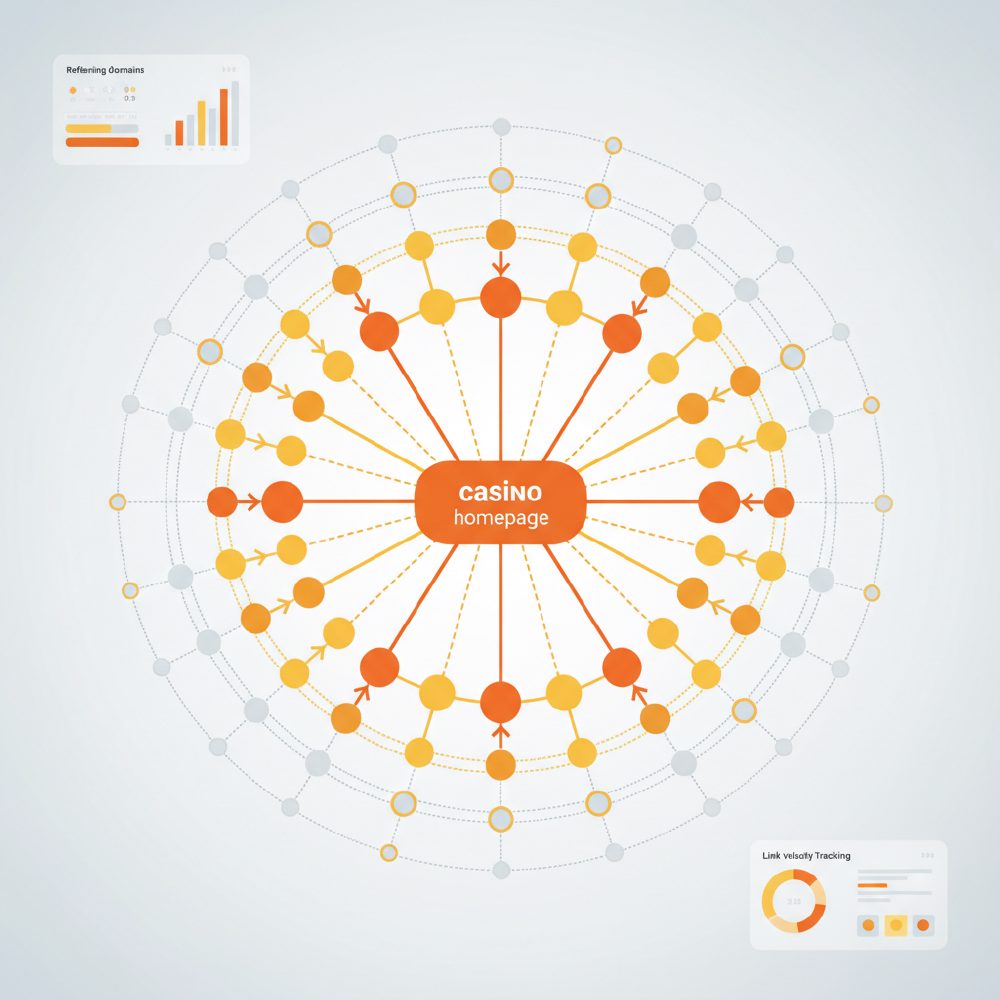
How many backlinks does a casino site actually need to rank in 2026?
There's no fixed number. I've pushed crypto-casino landing pages into the top 3 with 40-60 quality referring domains, while I've watched licensed .com brands stall at 3,000+ backlinks because the profile was low-quality volume. The right number is competitive, not absolute, it's set by what's already ranking above you.
Every operator who asks me this wants a single number they can hand to a link vendor. I don't give them one, because the SERP tells you the number, not some industry rule of thumb. For a long-tail term like "best bitcoin casino no KYC 2026," I've seen page-one results sitting on 30-80 referring domains with average DR in the 20-35 range. For a head term like "online casino real money," you're competing against operators with 50,000+ backlinks and DR 80+ homepages, no realistic link campaign closes that gap through volume alone, you win through content depth, brand signals, and highly targeted tier-1 links instead.
The ranges I actually work with: 50-150 referring domains for low-competition crypto/no-KYC long-tails, 300-800 for mid-tier commercial terms ("best bitcoin casino," "provably fair casino," state-specific sweepstakes terms), and 1,500+ for saturated head terms in regulated markets. These are referring domains, not total backlinks, a single high-authority site linking to you three times still counts as one referring domain in Ahrefs and Google's own graph weights it similarly.
What most operators get wrong is benchmarking against total backlink count pulled from a random SEMrush overview rather than the actual top-10 competitor set for their exact target keyword. I run this analysis fresh for every new client engagement because casino SERPs shift fast, a core update can reshuffle the competitive backlink threshold by 20-30% inside a single quarter.
Why do backlink counts vary so wildly between casino keywords?
Because the competitive set changes completely depending on niche and geography. A no-KYC crypto casino term competes against thin affiliate pages and forum threads, while "online casino" in the US competes against DraftKings, BetMGM and FanDuel-level domains with hundreds of thousands of links built over a decade.
Casino SEO isn't one market, it's a dozen overlapping micro-markets stacked by regulation, currency, and player intent. Licensed US sportsbook-adjacent casino terms sit inside a SERP dominated by publicly traded operators spending seven figures a year on PR and digital coverage that generates natural links. Crypto and offshore casino terms sit inside a much thinner SERP where most competitors are affiliate blogs, review sites, and smaller operators who've never run a structured link campaign at all.
Geography compounds this. LATAM crypto-casino terms in Spanish or Portuguese often have backlink thresholds 60-70% lower than the English equivalent, simply because fewer operators are competing for organic visibility there yet. I've taken Brazilian real-money crypto casino pages to page one with under 50 referring domains, the same keyword pattern in English against US-facing competitors would need 5-10x that.
Search intent shape matters too. Informational terms ("is Bitcoin casino gambling legal," "how does provably fair work") pull in gambling news sites, Reddit threads, and Wikipedia-adjacent authority sources, you need fewer but more topically relevant links to compete. Transactional terms ("best crypto casino bonus," "no verification casino real money") pull in aggressive affiliate competition where link count and anchor optimization matter far more.
How do I calculate the exact backlink target for my casino page?
Pull the top 10 ranking pages for your exact target keyword in Ahrefs or SEMrush, export their referring domain counts, strip the outliers (usually one or two aggregator sites skew the average), then aim to beat the trimmed median by 20-30%. This competitive-gap method replaces guesswork with a defensible target.
My actual workflow: run the target keyword through Ahrefs' Keyword Explorer to pull the SERP overview, then jump into Site Explorer for each of the top 10 URLs (not domains, page-level referring domains matter more for casino landers than domain-wide numbers). I export referring domains, average DR of those referring domains, and total organic traffic to that URL. Then I trim the highest and lowest outlier before averaging, because casino SERPs almost always have one legacy domain with an inflated backlink count from a decade of link decay that doesn't reflect current ranking power.
From there I set the target at 120-130% of the trimmed median referring domain count, matched to a similar or better average DR distribution. Beating competitors on count while losing on DR distribution is a losing strategy, I've seen campaigns hit the target number and still not move because every new link sat at DR 10-20 while competitors averaged DR 40+.
Screaming Frog comes in during content mapping, not link counting, I use it to confirm internal link equity is actually flowing to the target page before I spend budget on external links. A page buried five clicks deep in a casino site's architecture won't convert new backlinks into rankings efficiently regardless of the external number you hit.
What backlink benchmarks should I use by casino keyword competition tier?
I bucket casino keywords into four competition tiers based on live SERP data: micro-niche crypto/no-KYC long-tails, mid-competition commercial terms, regulated state or country head terms, and global brand-level head terms. Each tier has a distinct referring domain range and realistic timeline.
The table below reflects ranges I've pulled from actual client campaigns and competitor audits across 2024-2026, not theoretical industry averages. Treat these as starting benchmarks, always verify against your specific SERP before committing budget.
| Tier | Example keyword pattern | Referring domains needed | Typical avg. DR | Realistic timeline |
|---|---|---|---|---|
| Micro-niche crypto/no-KYC | "best no verification crypto casino" | 40-150 | 20-35 | 3-5 months |
| Mid-competition commercial | "best bitcoin casino bonus" | 300-800 | 30-45 | 6-9 months |
| Regulated state/country head term | "online casino [state] real money" | 800-2,000 | 40-55 | 9-14 months |
| Global brand-level head term | "online casino" | 2,000-10,000+ | 50-70+ | 18+ months, often unrealistic without brand equity |
What's a safe link velocity for gambling sites without triggering a spam flag?
On a fresh gambling domain I cap acquisition at 15-25 new referring domains a month for the first 90 days, scaling to 40-60/month once the domain has aged 6+ months and shows organic traffic growth. Velocity that spikes faster than that is the single fastest way to trip manual action review post-spam-update.
Google's spam systems, especially since the 2022-2024 spam update cycles, weight the shape of your link acquisition curve almost as heavily as the links themselves. A brand-new .io crypto-casino domain that goes from zero to 200 referring domains in six weeks looks exactly like the PBN-heavy link schemes Google's systems were retrained to catch. I've had this confirmed the hard way, a client's affiliate-adjacent casino domain lost 70% of organic traffic after a velocity spike from an outsourced link vendor who front-loaded 180 links in 30 days.
Natural velocity curves look different depending on domain age and content publishing cadence. In month one to three I typically run a 60/40 split of niche edits and guest posts to editorial gambling and crypto sites, layered with a handful of quality directory listings (CasinoMeister-tier, not spam directories). Once the domain clears the six-month mark and Google Search Console shows consistent impression growth, I open up velocity and start layering in expired-domain acquisitions and tier-1 PBN placements to compound authority faster.
The other velocity mistake I see constantly: matching competitor link velocity instead of your own domain's earned trust level. A competitor with a decade-old domain and steady press coverage can absorb 100 new links a month without raising flags, the same rate on a six-week-old domain is a red flag regardless of link quality.
Do crypto and no-KYC casinos need fewer backlinks than licensed operators?
Usually, yes. Crypto and no-KYC casino SERPs remain under-optimized compared to UKGC, MGA, or state-licensed markets, so I've ranked pages top 5 with 60-90 referring domains where a comparable licensed-market competitor needed 2,000+. That gap is closing every year as more offshore operators invest in organic.
This is the arbitrage I've built most of my agency work around. Licensed operators in the US, UK, and EU compete in SERPs shaped by decades of affiliate consolidation, publisher partnerships, and PR-driven natural link acquisition from finance and sports media. Crypto and no-KYC operators compete in a SERP that, as of 2026, still has real gaps, plenty of ranking pages are thin affiliate content with weak backlink profiles because most offshore operators still lean on paid traffic arbitrage or Telegram/Twitter growth rather than organic.
I took a provably-fair Bitcoin casino brand from a fresh domain to five-figure monthly organic sessions inside eight months, and the entire link budget was under 400 referring domains total across all target pages. A licensed competitor targeting the same commercial intent in a regulated state would need that many links just for a single money page.
This won't last indefinitely. I'm already seeing DR40+ crypto-casino competitors in LATAM and parts of Europe running structured tiered link campaigns that didn't exist two years ago. The operators moving now, while the backlink bar is still low, get to lock in rankings before that competitive gap closes, waiting another 18 months means competing at licensed-market backlink volumes for the same crypto keywords.
How much does domain rating matter compared to raw backlink count?
More than count, in nearly every test I've run. Ten links from DR 60+ gambling-relevant sites consistently outperform 100 links from DR 10-20 directories or spun blog networks. I target an average referring-domain DR of 35+ for tier-1 links on any competitive casino page.
I ran an internal test across three crypto-casino clients in 2024: one campaign focused purely on hitting a referring-domain count target using cheap PBN and directory links, the other focused on fewer but higher-DR niche edits and guest posts on established crypto/gambling media. The high-DR-lower-volume campaign moved the target page from position 34 to position 6 in 11 weeks with just 22 referring domains. The volume-first campaign, with 140 referring domains averaging DR 12, moved the equivalent page from position 41 to position 19 and then stalled, likely hitting an algorithmic ceiling tied to link quality signals rather than count.
DR isn't a perfect proxy for Google's actual internal authority metrics, but it correlates well enough to use as a planning tool in Ahrefs. What matters more granularly is topical relevance layered on top of DR, a DR 45 iGaming news site linking to your casino review carries more weight per link than a DR 55 general lifestyle blog that has nothing to do with gambling or crypto.
My rule of thumb for casino link building budgets: allocate at least 60% of spend to links from sites with DR 30+ and clear topical relevance (gambling, crypto, sports betting, finance), and treat the remaining 40% as supporting tier-2 volume that boosts those tier-1 assets rather than linking directly to money pages.
What's the right tier-1 to tier-2 link ratio, and which tactics belong where?
I run roughly one tier-2 link for every three to five tier-1 links. Tier-1 links point directly at money pages and need to be clean, relevant, and editorially placed. Tier-2 links exist purely to boost the authority of those tier-1 assets, PBN posts, expired-domain redirects, and crowd marketing never point straight at the casino site itself.
Tiered link structures exist because Google weighs the authority of the linking page, not just the linking domain. A guest post on a DR 40 gambling blog passes more equity to your money page if that guest post URL itself has inbound links pointing to it. So tier-2 work, PBN placements, expired-domain 301s, forum and comment crowd marketing, gets aimed at the tier-1 asset (the guest post, the niche edit, the review placement), never directly at the casino domain.
This structure also isolates risk. If a tier-2 PBN network gets deindexed or flagged in a Google spam sweep, the damage stays contained to that intermediate layer, your money site never had a direct footprint connecting it to the burned network. I've seen operators skip this isolation and link PBN networks straight at their casino domain to save a step; when that network got hit in a 2023 spam update sweep, three client domains lost rankings within the same 48-hour window because the direct link pattern was traceable.
Parasite SEO, publishing on high-authority third-party platforms (Medium, LinkedIn Pulse, industry directories with DA passthrough), sits somewhere between tiers. I use it as a fast-ranking supplement for brand-new crypto-casino domains that can't yet compete on-domain, while the primary domain's link profile builds in parallel underneath it.
| Tier | Common tactics | Points directly at money page? | Risk level |
|---|---|---|---|
| Tier 1 | Niche edits, guest posts, digital PR, editorial reviews | Yes | Low, if placements are relevant and manually vetted |
| Tier 2 | PBN posts, expired-domain 301 redirects, curated crowd marketing | No, supports tier-1 assets only | Medium, contained if isolated correctly |
| Tier 3 | Mass forum/blog comments, low-quality bookmarking, GSA-style automation | No, supports tier-2 only | High, treat as disposable and disconnected from brand domain |
How long does it take to rank once you hit your backlink target?
Even after hitting the referring domain target, expect a 4-12 week lag before rankings reflect the new authority, Google needs to crawl, index, and pass PageRank through the new links, and gambling niches get an extra layer of trust evaluation post-spam-update. Fresh domains lag longer than aged ones with existing trust signals.
Clients frequently panic at week six when they've hit 80% of the target referring domain count and rankings haven't moved. This is normal, link equity doesn't transfer instantly, and Google's crawl frequency for smaller or newer gambling-adjacent sites can lag weeks behind a mainstream news domain. I check GSC's crawl stats report before promising any timeline; if Googlebot is hitting the new linking pages within days, equity transfer happens faster. If crawl frequency is sparse, I'll sometimes ping via a secondary internal link from a frequently-crawled page on the target site to accelerate discovery.
Domain age and existing trust matter more than most operators want to admit. A six-month-old crypto-casino domain hitting its 100-referring-domain target ranks noticeably slower than an 18-month-old domain hitting the same target, even with identical link quality, Google's trust evaluation for a domain compounds over time, and gambling verticals get extra scrutiny given the historical spam association with the niche.
My honest timeline guidance: micro-niche crypto terms move in 8-14 weeks after target links land, mid-competition commercial terms take 3-5 months, and regulated head terms take 6-12 months minimum, often longer if you're competing against operators with a decade of accumulated trust. Anyone promising faster on a head term is either lying or about to burn your domain with an unnatural velocity spike.
What anchor text distribution keeps a casino backlink profile safe?
I keep exact-match commercial anchors ("best bitcoin casino," "no KYC casino bonus") under 5-8% of the total profile. The bulk sits in branded, naked URL, and generic anchors, with a smaller slice of partial-match and topical anchors rounding it out, mirroring how links accrue naturally rather than through deliberate optimization.
Anchor text is still one of the clearest fingerprints Google's spam systems use to flag manipulated link profiles, and gambling niches get extra scrutiny because exact-match anchor abuse was rampant pre-Penguin and the algorithm's successors still carry that institutional memory. I run every client's anchor profile through Ahrefs' anchor report monthly and flag anything drifting past single-digit percentages on commercial exact-match terms.
My working distribution across a mature casino link profile: 45-55% branded ("[Brand Name]," "[Brand Name] review"), 20-25% naked URL or generic ("click here," "this site," bare domain), 10-15% partial match ("Bitcoin casino guide," "crypto gambling review"), 5-8% exact match commercial, and the remainder topical/co-occurrence anchors that mention related terms without targeting the money keyword directly. This mirrors how a genuinely popular casino site would accrue links if journalists and bloggers were linking to it organically, most people link with the brand name or a generic phrase, not your target keyword.
The mistake I still see from cheaper link vendors: delivering 100% exact-match anchors because that's what the client requested, thinking it'll accelerate rankings. It does the opposite past a certain threshold, I've seen a client's own vendor-built profile trigger a manual action for unnatural links specifically citing anchor text patterns, six weeks after a batch of exact-match guest posts landed.





Comments
No comments yet, be the first.