Casino Digital PR in 2026: Earning Links Without Buying Them
What Is Casino Digital PR and Why Does It Matter for Link Building in 2026?
Casino digital PR earns backlinks and media mentions through newsworthy campaigns, original data and journalist relationships, instead of paying for placements. It matters now because Google's spam systems have made paid gambling links riskier and shorter-lived, while earned coverage from authoritative outlets keeps compounding long after the campaign ends.
I run event-driven SEO for sportsbooks, but the mechanics behind a good casino digital PR campaign are identical to what I use for championship betting content: find the moment, find the data, get there before the search demand curve peaks. The difference with PR is the output isn't a landing page, it's a link you didn't pay for, sitting on a domain Google already trusts.
That trust gap is widening. After the March 2024 core and spam updates, I watched casino affiliate sites lose 40-60% of organic visibility almost overnight because their link profiles leaned on expired-domain PBNs and guest-post networks that got devalued in bulk. Earned links from outlets like local business journals, industry trades (iGaming Business, CDC Gaming Reports) or mainstream sports media didn't move. They're not tied to a footprint Google can flag in one sweep.
On a pure authority-transfer basis, one link from a DR70+ news domain with genuine editorial context typically outperforms 15-20 average paid niche edits sitting around DR20-35. I've tracked this directly in Ahrefs on client domains, a single Forbes or ESPN pickup moved a money page from position 11 to position 4 within six weeks, something no volume of niche edits achieved for the same client over a full quarter.
The other shift is that Google's helpful content signals increasingly reward topical authority built on original research, which is exactly what PR campaigns produce as a byproduct. You're not just earning a link, you're building the data asset that makes your whole casino content cluster look more credible to both Google and AI answer engines pulling citations.
How Does Digital PR Differ From Traditional Casino Link Building Tactics?
Digital PR earns links through editorial coverage of newsworthy content, while traditional casino link building buys or negotiates placements directly, niche edits, guest posts, PBN insertions. PR links come from higher-authority, more diverse domains and carry almost no manual-action risk, but take longer to land and can't be scheduled with certainty.
Operators ask me constantly why they should bother with PR when a niche edit vendor can guarantee 20 links in a week. The honest answer: guaranteed links are the problem, not the feature. Anything guaranteed at scale on a fixed timeline is, by definition, a paid placement, and Google's algorithms have gotten very good at detecting the footprint of scheduled, templated link insertion across gambling-adjacent domains.
PR links come from a messier, slower process, pitching, follow-up, embargo negotiation, but the domains you land on tend to be genuinely diverse in IP range, hosting, and content type, which is exactly the organic signal Google's Penguin-descended systems look for. I've never seen a client take a manual action for an earned Associated Press syndication pickup. I've seen plenty take one for a 200-link PBN network that looked clean in Ahrefs but shared C-block hosting patterns.
| Tactic | Typical domain authority | Manual action risk | Link durability |
|---|---|---|---|
| Digital PR / earned coverage | DR 50-90 | Very low | High, rarely removed, compounds with syndication |
| Niche edits (paid) | DR 20-45 | Moderate | Medium, vendors swap/remove on renewal lapse |
| PBN placements | DR 15-40 (often inflated) | High | Low, mass de-indexed in spam updates |
| Guest post networks | DR 10-35 | Moderate-High | Low-Medium, footprints flagged by Penguin signals |
| Directory/aggregator submissions | DR 5-30 | Low-Moderate | Low, minimal ranking impact, filler only |
What Makes a Casino Campaign Newsworthy Enough to Earn Links?
A casino campaign earns coverage when it has proprietary data, a clear news hook tied to a cultural or seasonal moment, and a usable angle a journalist can run without compliance headaches. Opinion pieces and generic brand news almost never get picked up, data journalists need numbers they can cite.
I've pitched and killed enough campaigns to know the pattern. 'Our casino app now offers live dealer blackjack' is not news. 'We analyzed three years of jackpot payout data across 40 states and found Nevada slot machines pay out 2.3 percentage points higher RTP on average than Ohio's' is news, it has a number, a comparison, and a reason to exist right now.
The campaigns that consistently earn links fall into a few buckets: state-by-state spending or search-interest studies (which gambling regulators' own public disclosure data makes possible), RTP or payout transparency audits, survey-based behavioral studies on player habits, and historical trend reports tied to a live event, biggest jackpot wins of the decade timed to a current record-breaking payout, for instance.
Timing the release matters as much as the data. I ran a slot RTP comparison study for a client two weeks before a major state's online casino launch anniversary; local business press picked it up specifically because it tied regulatory performance to a date readers already cared about. The same dataset pitched in a random month got ignored by three of the five outlets that covered it on the anniversary angle.
How Do You Time Casino PR Campaigns to Betting Calendar Peaks?
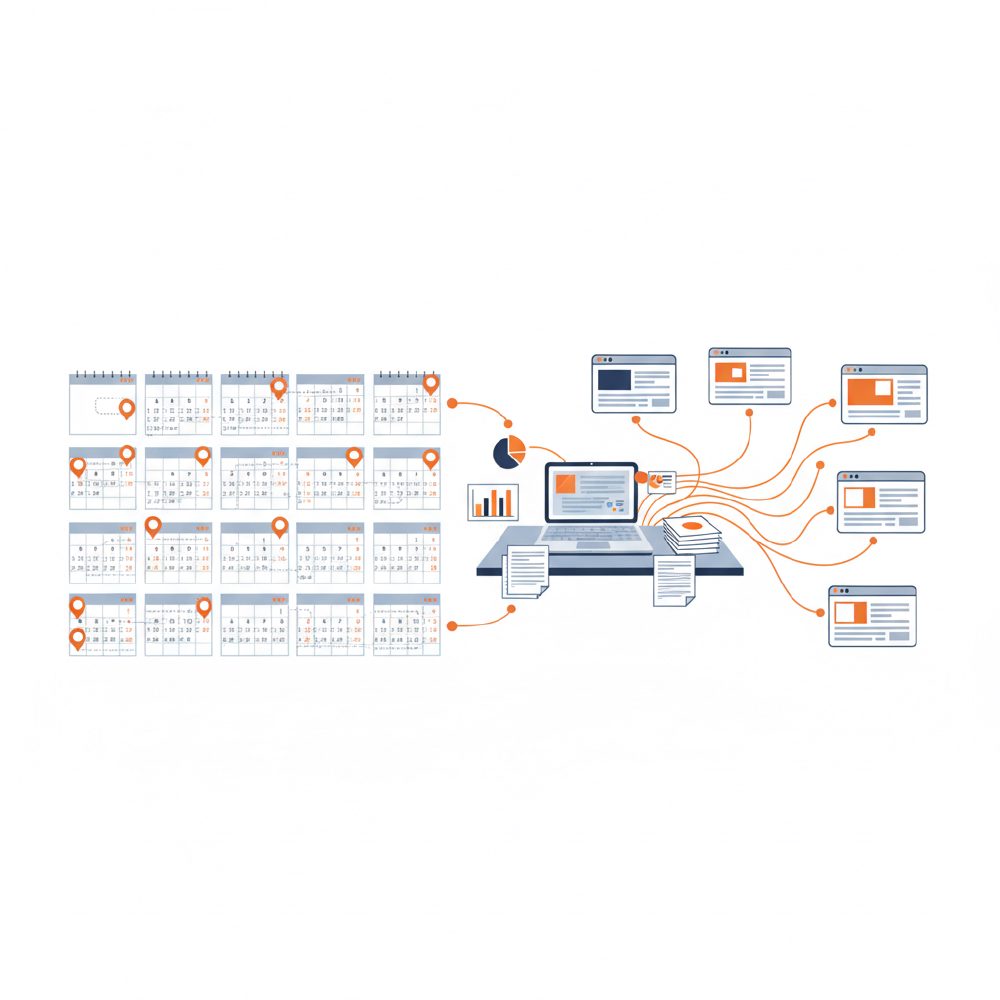
Build a 12-month fixture calendar mapping casino search demand to fixed dates, New Year's Eve, Super Bowl week, March Madness, Golden Globes prop markets, state legalization anniversaries, then pitch data campaigns 6-8 weeks ahead so journalists have lead time and you hit embargoed coverage right as search volume climbs.
This is the exact playbook I built for sportsbook content, and it transfers cleanly to casino because casino search demand has its own predictable curve, slots and table-game interest spikes around New Year's Eve, Vegas trip season (spring and CES week in January), and major sports betting weekends where casino cross-sell traffic rides alongside the sportsbook spike.
The mechanics: map every fixed date 12 months out, work backwards 6-8 weeks for data collection and journalist outreach, and lock an embargo so coverage drops in the 5-7 day window before peak search interest rather than after it. I've missed this window before, pitched a New Year's Eve slots data story on December 28th instead of December 12th, and coverage landed two days after the search spike had already peaked, which meant the links existed but the traffic lift they should have driven to related content never materialized.
For casino specifically, I now build three fixed anchor campaigns a year as a baseline: a December data story for NYE/holiday play, a February story that rides Super Bowl prop-betting attention into casino cross-sell content, and a March Madness bracket-adjacent casino promotion story. Anything beyond that is opportunistic, a record jackpot hit, a new state going live, a regulator report release.
Which Data-Driven Story Formats Earn the Most Casino Press Coverage?
State spending and search-interest studies, RTP/payout transparency audits, and survey-based player behavior reports consistently earn the most casino press coverage because they give journalists citable numbers. Jackpot trend and economic-impact reports perform well when tied to a live event, but require more data-gathering effort upfront.
Not every format earns equally, and the effort-to-link ratio varies a lot more than most PR vendors admit. Survey campaigns are the cheapest to produce, a 1,000-respondent panel through a platform like Pollfish or Prolific runs $1,500-$4,000, but they only land well when the questions are genuinely novel, not another rehash of 'how many Americans bet on sports.'
State spending studies require pulling public gaming revenue data (most US state gaming commissions publish monthly handle and revenue reports) and building a comparison narrative. These take longer to produce but earn disproportionately high-authority pickups because local business journalists treat regulator data as inherently credible and citable.
| Format | Example angle | Typical referring domains earned | Relative production effort |
|---|---|---|---|
| State spending/search study | Which states bet most per capita on NFL season | 15-35 | Medium |
| Survey/behavioral poll | How Gen Z players approach bankroll management | 8-20 | Low |
| RTP/payout transparency audit | RTP variance across top 10 online slot titles | 10-25 | High |
| Jackpot/trend historical report | Biggest progressive jackpot wins of the decade | 20-40 (event-dependent) | Medium |
| Economic impact report | Tax revenue generated by state online casino launch | 25-50 | High |
How Do You Pitch Journalists Covering Gambling and iGaming?
Build a segmented media list separating gambling trade press, mainstream business/sports desks, and local outlets, then pitch each with a tailored angle and a tight embargo window. Use tools like Muck Rack, Prowly or Connectively to find beat-specific contacts, and always lead with the number, not the brand.
Generic blast pitches to a 500-contact list get maybe a 1-2% pickup rate and burn your sender reputation with journalists who'll ignore you next time. I run three separate lists: gambling trade press (iGaming Business, CDC Gaming Reports, Gambling Insider, these cover brand news directly and move fast), mainstream sports/business desks (ESPN, local Fox affiliates, regional business journals, these want the data story, not the brand angle), and local market reporters when a campaign has a state-specific hook.
Connectively (formerly HARO) and Muck Rack's journalist database both work for finding beat-specific contacts, but the response rate difference between a cold pitch and one referencing a journalist's last three articles is enormous in my experience, cold pitches run under 3% response, personalized ones with a genuine embargo exclusive to one Tier-1 outlet have gotten me 25-30% response on good campaigns.
Exclusivity matters more in gambling PR than most verticals because trade press specifically wants first-mover coverage on regulatory and data stories. Give one outlet a 48-hour exclusive, then open the dataset to everyone else with a press release and downloadable asset. That sequencing alone has roughly doubled total pickup volume on campaigns I've run compared to simultaneous mass distribution.
What Digital PR Tactics Are High-Risk or Likely to Burn a Casino Domain?
Fabricated or unsourced 'studies,' sponsored content dressed up as earned coverage, reciprocal link swaps disguised as partnerships, and syndication networks that republish the same press release across dozens of thin domains all carry real manual-action risk. Google's spam team has named gambling specifically as a repeat target since the 2023-2024 update waves.
The line between aggressive-but-legitimate PR and a link scheme is thinner than most agencies want to admit. A press release syndicated to 200 low-quality 'news' sites that exist mainly to host PR wire content is not digital PR, it's a scaled link scheme wearing a press hat, and I've seen it trigger the same unnatural-link warnings in Google Search Console as a PBN network.
Fabricated data is the other big risk, and it's not just an SEO risk, it's a regulatory and reputational one. I've turned down campaigns where a client wanted to publish a 'study' with numbers that weren't actually collected, because one journalist asking for methodology and getting a non-answer can turn a link-earning campaign into a credibility story that costs far more than the links were worth.
Reciprocal arrangements dressed as 'media partnerships', where an outlet links to you in exchange for ad spend or a quid-pro-quo mention, fall into the same unnatural-link category Google has enforced against since Penguin 4.0 went real-time in 2016. If the relationship exists only because money or a favor changed hands and there's no editorial independence, treat it as a paid link for risk purposes, even if a press release is involved.
How Do You Measure ROI on Casino Digital PR Campaigns?
Track referring domains gained and their DR distribution, branded search lift in Google Search Console, assisted conversions in GA4, and link retention at the 90-day mark. Raw link count is a vanity metric, five DR70+ placements that still exist after three months outperform fifty low-authority syndication pickups that may get pulled.
I report on four numbers for every casino PR campaign: referring domains gained (via Ahrefs or SEMrush, filtered to exclude syndication duplicates), average DR of those domains, branded search impression lift in GSC in the 30 days post-campaign, and a 90-day retention check to see what's still live. That last metric catches the syndication networks that quietly pull content once a campaign cycle ends, I've seen 'earned' links from PR wire syndication drop by 30-40% within three months.
Branded search lift is the metric most agencies skip but it's often the real value driver. A well-placed casino jackpot story on a regional news site can spike branded search volume 15-25% for a week, and that demand signal feeds directly into Google's own quality assessment of the brand, it's a reinforcing loop PR links create that paid links simply can't.
For budget conversations with operators, I frame cost per earned referring domain against cost per paid niche edit. A well-run campaign with a $5,000-$12,000 budget (data collection, design assets, distribution) earning 20 referring domains averaging DR55 runs roughly $250-$600 per domain, comparable to or cheaper than quality niche edits at that authority range, with none of the deindexing risk.
What Tools and Vendors Actually Support Casino Digital PR?
Prowly, Muck Rack, Cision and Connectively handle journalist databases and pitch distribution, while Ahrefs, SEMrush and Talkwalker monitor coverage and link outcomes. No single platform runs a full casino PR campaign, expect to combine a media database, a monitoring tool and a data/survey platform for each campaign.
I use Ahrefs' Content Explorer to scope what's already earned coverage in the casino niche before building a pitch, if three competitors already got pickup on 'biggest slot jackpots of the year,' I need a sharper angle, not the same one a month later. SEMrush's brand monitoring and backlink gap tool help confirm which outlets actually publish casino-adjacent data stories regularly, which narrows the media list before outreach even starts.
On the outreach side, Muck Rack and Cision are the enterprise-grade journalist databases with the best beat-level filtering, but they're priced for agencies and large operators ($400-$1,500+/month). Prowly and Connectively are the more accessible alternatives for a single in-house casino marketing team running a handful of campaigns a year.
| Tool | Primary use | Typical cost tier | Best for |
|---|---|---|---|
| Muck Rack / Cision | Journalist database, pitch tracking | Enterprise, $400-$1,500+/mo | Agencies running frequent campaigns |
| Prowly / Connectively | Media lists, pitch distribution | Mid, $100-$400/mo | In-house operator teams, occasional campaigns |
| Ahrefs / SEMrush | Competitor coverage gap, link monitoring | Mid, $100-$450/mo | Measuring pickup and link retention |
| Talkwalker / Google Alerts | Media mention tracking | Free-Mid | Real-time coverage monitoring |
| Pollfish / Prolific | Survey data collection for campaigns | Per-project, $1,500-$4,000 | Behavioral/opinion PR formats |
How Does Digital PR Fit Into a Tiered Casino Link-Building Strategy?
Treat earned PR links as your top tier, pointing to hub pages and authoritative supporting content rather than deep money pages directly. Reinforce them with syndication and internal linking, and keep anchor text mostly branded or naked-URL to match the natural pattern real earned links actually produce.
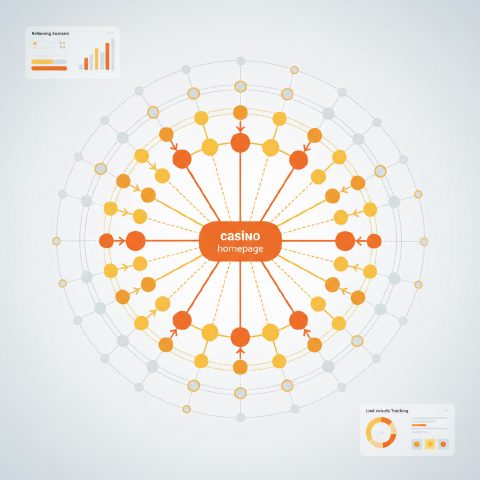
Operators sometimes expect PR links to point straight at a '/online-slots-[state]' money page with exact-match anchor text. That's not how earned links behave, and forcing it defeats the purpose. Real journalists link to your homepage, your newsroom, or a specific data report URL, almost always with branded or naked-URL anchor text. I let that happen naturally, then use internal linking from the PR-earned page down to the commercial pages, passing authority through the site architecture instead of through anchor manipulation.
In a tiered structure, I treat PR coverage as Tier 1, the highest-trust layer that needs zero manual intervention and the least anchor risk. Tier 2 is syndication and republishing (press wire pickups, trade outlet reprints) that reinforces the Tier 1 links. Tier 3 is where more aggressive tactics like curated niche edits can still play a role, but only pointed at Tier 1/Tier 2 pages, never directly injected alongside PR links on the same money page in a way that creates an obvious mixed-footprint pattern.
This layering also protects the PR investment. If a spam update devalues Tier 3 niche edits, the Tier 1 PR links and the internal link equity they pass remain untouched, because they were never part of the pattern that got flagged.
What Compliance and Regulatory Landmines Should Casino Operators Avoid in PR Campaigns?
Avoid data or messaging that could read as targeting self-excluded players, follow each state's gambling advertising code (and UKGC/MGA rules for international operators), and disclose sponsored elements even in PR-adjacent content under FTC guidelines. A PR win that triggers a regulatory complaint costs far more than the links are worth.
Casino PR sits at the intersection of marketing and gambling regulation, and the rules differ sharply by market. US operators need every state advertising code checked, several states require responsible gambling messaging in any promotional content, including PR-driven data reports that read as promotional. UK-facing campaigns fall under UKGC's advertising and promotions requirements, with strict rules on appealing to under-18s or problem gamblers, and Malta-licensed brands need to track MGA's equivalent codes.
I've seen a well-performing US campaign, a state spending study, get flagged by a state regulator's marketing review because the release implied betting volume data could be read as encouragement rather than reporting. The fix was simple (reframe language, add a responsible-gambling disclosure line) but it delayed syndication by two weeks and nearly cost the exclusive placement with the lead outlet.
FTC disclosure rules also apply if any part of the campaign involves compensation to an outlet or influencer, even loosely, sponsored research disclosed honestly protects both the brand and the publication. Build a compliance check into the campaign timeline before pitching, not after a journalist asks a question you can't answer cleanly.




Comments
No comments yet, be the first.