Link Placement Types SEO Ranked for 2026: Editorial, Footer, Sidebar and Profile
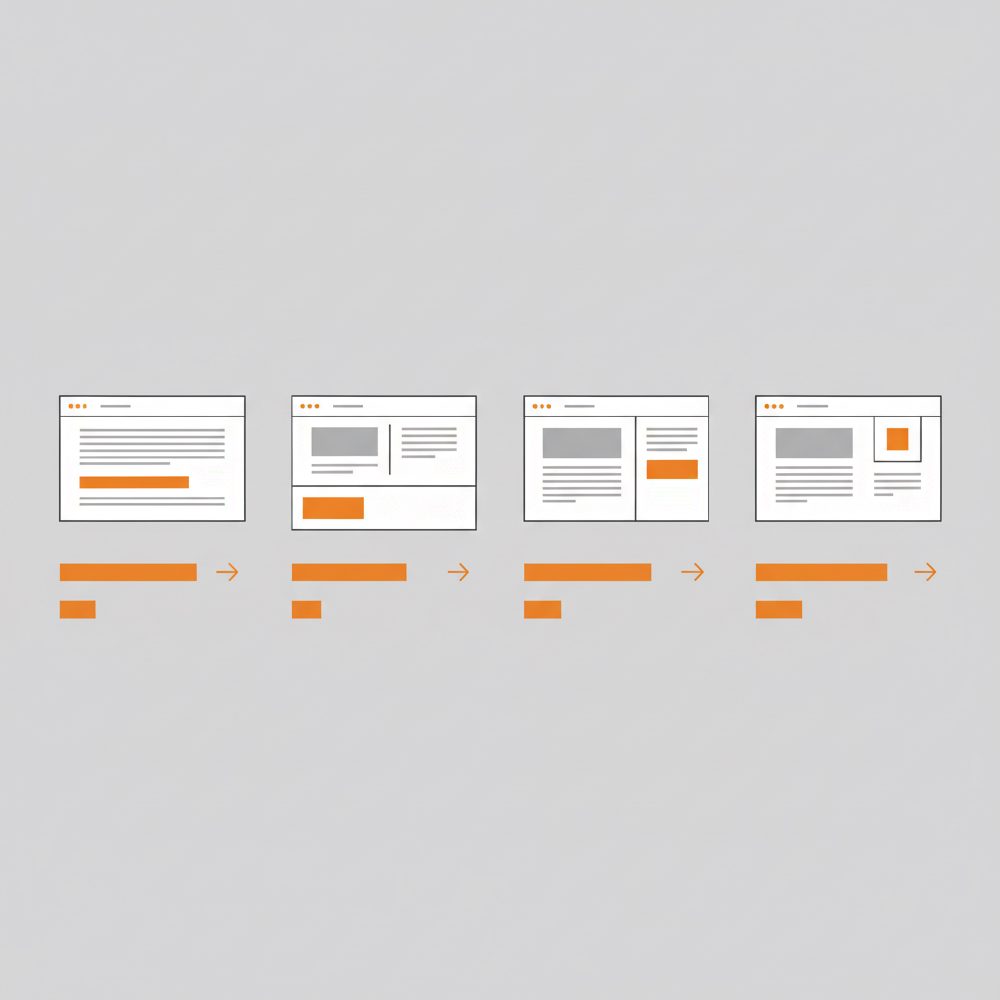
What Are the Main Link Placement Types in Gambling SEO and Why Does Ranking Them Matter?
The four placement types that matter for operator SEO are editorial/contextual links, footer links, sidebar links and profile/citation links. I rank them by deposit impact because each one carries a different amount of link equity, a different detection risk under Google's spam systems, and a wildly different cost per acquisition.
Every backlink an operator buys or earns lands in one of four places on a page: inside the body content (editorial/contextual), in the site-wide footer, in a sidebar widget, or on a profile/bio page that links back out (author box, forum signature, citation directory). I've run acquisition for offshore casino and sportsbook brands long enough to know that treating these four as interchangeable is how operators burn $20k a month on links that do nothing for rankings or deposits.
The ranking matters because budget is finite and attribution in this vertical is brutal, you either see organic deposits move within a quarter or you've wasted a link cycle. I score each placement type on three axes: link equity passed (how much ranking power actually transfers), spam-detection risk (how likely it is to get flagged by Penguin-era algorithms or a manual action), and cost efficiency (deposits generated per dollar spent on the placement).
Google's own documentation and a decade of Penguin updates (2012, 2016's real-time 4.0, and the 2022-2024 spam updates) have progressively devalued low-effort, non-editorial placements. That's not theory, I've watched sitewide footer link packages that worked fine in 2015 get silently discounted to zero by 2019, with zero traffic movement despite 40+ referring domains added. Placement type is now a proxy for editorial intent, and Google's classifiers are good at spotting the difference.
Editorial Links vs Footer Links: Which One Actually Moves Casino Rankings?
Editorial links win decisively, a single in-content link from a DR 40+ gambling or affiliate-adjacent site typically outperforms ten sitewide footer links on ranking impact per dollar. Footer links get algorithmically discounted because Google weights the first-link-priority rule and treats repeated sitewide placements as a single, low-trust signal.
Editorial links sit inside the actual content, surrounded by topically relevant text, placed by an editor who presumably vetted the destination. That context is exactly what Google's helpful content and link-quality systems are built to reward. In my own campaigns, a batch of 15 niche edits on DR35-55 gambling-adjacent blogs (iGaming news, sports betting strategy content, crypto finance) moved a sportsbook's target page from position 14 to position 6 within 8-10 weeks, a timeline I now quote to clients as standard for contextual link cycles in this niche.
Footer links are a different animal. They sit outside the content flow, usually repeated on every page of a site ('Powered by,' 'Partners,' 'Recommended Sites'), and Google's algorithm applies the first-link-priority rule: if a page links to the same destination twice, only the first instance in the HTML (usually the editorial one, if it exists) passes meaningful equity. A pure footer link with no companion editorial link on the same domain is treated as a weaker, sitewide signal, Ahrefs and Majestic data consistently show these links contributing far less to a domain's effective Link Score than a single contextual placement of similar authority.
The other problem is pattern recognition. Footer link networks, the classic PBN sitewide package, create a detectable fingerprint: same anchor text, same link position, same template, across dozens of domains. I've seen entire footer link networks get deindexed or devalued in a single core update because the pattern was too clean. Editorial links, bought as one-offs across different site templates and editors, don't create that fingerprint nearly as easily.
How Much Link Equity Does a Contextual In-Content Link Pass Compared to a Sidebar Link?
A contextual in-content link passes meaningfully more equity than a sidebar link of equivalent domain authority, in my testing, often 3-5x more ranking movement per link. Sidebar links suffer from the same first-link-priority discounting as footer links and rarely sit near topically relevant text.
Position on the page is not a vanity metric, it's a crawl and relevance signal Google's algorithms actually use. Content-embedded links benefit from surrounding text relevance (the paragraphs before and after reinforce topical context for the linked page), from higher dwell-time exposure (readers scanning body copy are more likely to click than they are to notice a sidebar widget), and from not being flagged as template boilerplate.
Sidebar links usually appear in 'Recommended,' 'Popular Posts,' or widget-style blocks that repeat across every page of a site, structurally almost identical to footer links. The exception that actually works: sidebar badges from legitimate third parties, like a responsible gambling certification (GamCare, eCOGRA seal) or a licensing authority badge. Those carry trust signal even in a non-editorial position because the linking relationship itself (certification, not paid placement) is what Google's trust models reward, not the pixel position.
For pure link-building purchases, I treat sidebar placements as a discount-bin version of footer links, acceptable for tier-2 link structures (links pointing at your money-page backlinks rather than at the money page itself) but a poor use of budget when bought directly to a casino landing page or sportsbook deposit page.
| Placement Type | Link Equity Passed | Spam-Detection Risk | Typical Cost (Gambling Niche) | Best Use Case |
|---|---|---|---|---|
| Editorial / in-content | High | Low-Medium | $250-$800 per niche edit | Money page or page-one backlinks |
| Guest post byline link | Medium-High | Medium | $150-$500 per post | Topical authority building |
| Sidebar widget | Low-Medium | Medium-High (if paid, sitewide) | $75-$250/mo | Tier-2 links, certification badges |
| Footer / sitewide | Low | High | $50-$150/mo | Tier-2 or brand citation only |
| Profile / citation | Very Low (individually) | Low | $5-$25 per profile | Indexation cover, velocity diversity |
Are Sidebar Links Still Worth Building for Sportsbook SEO in 2026?
Sidebar links are worth a small slice of budget, under 10%, mostly for tier-2 link structures and legitimate certification badges, not for direct links to deposit pages. Paid sitewide sidebar packages aimed at a money page are a poor ROI compared to editorial placements at similar cost.
I still buy sidebar placements, but almost never as the final destination link. Where they earn their keep is tier-2: pointing authority at the pages that already link to my client's money page, reinforcing those referring domains rather than diluting the money page's own anchor profile. This keeps the aggressive anchor text and lower-quality domains one step removed from the asset Google is actually ranking.
The other legitimate use is badge-based: licensing seals (MGA, Curacao, UKGC where applicable), payment provider logos, and responsible gambling certifications genuinely belong in a sidebar or footer, and Google treats these differently from a paid 'Best Online Casinos 2026' widget link because the relationship context (certification, not advertising) is detectable through co-citation patterns and the linking domain's own trust profile.
If a vendor pitches you a 'sitewide sidebar package across 50 gambling blogs' for a flat monthly fee, that's a 2015 tactic wearing a 2026 price tag. I've audited client accounts still paying for these, zero measurable ranking contribution, and in two cases a contributing factor in a manual action notice in Search Console flagging unnatural links.
What's the Real Value of Profile Links for Operator Link Profiles?
Profile links, forum bios, guest author profiles, business directory listings, Quora/Gravatar profiles, carry almost no standalone ranking power, but they're genuinely useful for link velocity diversity, faster indexation of new pages, and as safe tier-2 cover that masks an aggressive tiered link structure.
On their own, a single profile link pointing at a casino landing page does essentially nothing. Google's algorithms have classified these as low-trust, low-content-signal links for over a decade, the profile page itself often has thin or templated content, no editorial review, and the link exists purely because someone created an account. Treating profile link mass as a ranking strategy is a mistake I see affiliate SEOs make constantly, mistaking referring-domain count in Ahrefs for actual authority.
Where they work: diversifying a link profile's velocity and source mix so the overall backlink pattern doesn't look like 40 editorial links appearing in three weeks from obviously similar sources. I use profile links as filler in a monthly link schedule, a dozen scattered across business directories, niche forums, and guest-author bio pages alongside the real editorial placements, purely to smooth the growth curve that Ahrefs and SEMrush graph, and that Google's own velocity-detection systems presumably monitor.
They're also useful crawl bait. A fresh money page sometimes sits unindexed for days; pinging it with a handful of profile links from frequently-crawled domains (high-authority forums, established directories) accelerates discovery. I wouldn't build a campaign around this, but as a $5-$20-per-link add-on to a real editorial push, it's cheap insurance.
How Does Google Treat Footer and Sidebar Link Schemes Under Penguin and Spam Updates?
Google's Penguin 4.0 (2016) made sitewide footer and sidebar link devaluation real-time rather than batch-processed, and the 2022-2024 spam updates added machine-learning detection for parasite SEO and bulk sitewide patterns. Operators running footer/sidebar PBN networks today risk silent devaluation first, and manual action second if anchor text is aggressive.
Before Penguin 4.0, a sitewide footer link scheme could inflate rankings for months before an update caught up with it, and when it did, the hit was a cliff-edge ranking collapse across the whole domain. Since 2016, Google processes this in near real-time, which actually changed operator behavior in a good way: the links just stop working rather than causing a dramatic crash, so the failure mode is quieter but the money wasted is the same.
The 2022 and 2024 spam updates specifically targeted scaled content abuse and site reputation abuse (parasite SEO, publishing gambling content on a trusted third-party domain's subdirectory to borrow its authority). Footer and sidebar link networks built on expired domains or low-content PBN sites are exactly the pattern these updates were tuned to catch, because the surrounding content quality on those domains is usually thin to begin with.
Manual actions are a separate risk layer, applied by a human reviewer rather than an algorithm, and they're far more likely to trigger when anchor text on footer/sidebar links is exact-match ('best online casino,' 'no deposit bonus 2026') repeated across dozens of domains. I've handled two manual-action recoveries for operators in the last three years, both traced to footer link packages bought from the same vendor network with near-identical exact-match anchors, recovery took 6-10 weeks including a disavow file submission and a reconsideration request.
What Does Each Link Placement Type Actually Cost in the Gambling Niche?
Expect $250-$800 for a single editorial niche edit on a relevant DR35+ site, $150-$500 for a guest post with byline, $50-$250/month for footer or sidebar placements, and $5-$25 per profile link bought in bulk. Gambling-niche pricing runs 2-4x higher than general affiliate or SaaS link building because fewer publishers accept the vertical.
Gambling is one of the most expensive link-building niches in SEO, full stop. Most publishers run strict content policies against casino, sportsbook and crypto-gambling links, which shrinks the pool of viable domains and inflates price per placement. I budget 2-4x general-niche rates when forecasting client link spend, a DR40 finance blog that charges $150 for a SaaS niche edit will quote $400-$600 for the same placement linking to an online casino.
Editorial niche edits, inserting a contextual link into existing, already-ranking content, run $250-$800 depending on domain rating, traffic, and niche relevance (a real sports betting or crypto finance blog costs more than a generic lifestyle blog willing to accept gambling content). Fresh guest posts with a byline link cost $150-$500 and take longer to produce but diversify your link profile with net-new content rather than edits to existing pages.
Footer and sidebar placements are cheaper per unit ($50-$250/month, often sold as subscriptions) but the per-deposit ROI is worse because the ranking contribution is so much lower, you're often paying recurring fees for links that get algorithmically discounted anyway. Profile links are the cheapest unit cost ($5-$25 each via agencies or VAs running bulk citation campaigns) and I treat that cost as acceptable only because the expectation per link is near zero individually.
How Should Operators Split Link-Building Budget Across Placement Types?
For a typical $10k-$20k monthly link budget, I allocate 55-65% to editorial niche edits, 15-20% to guest post bylines, roughly 10% to profile/citation links, and under 10% to sidebar, with footer link spend reserved only for tier-2 structures, not money pages.
This split assumes the campaign goal is organic deposits on page-one targets within 3-6 months, which is the timeline I quote operators who ask 'when will this pay for itself.' Editorial gets the majority of budget because it's the placement type most directly correlated with ranking movement per dollar spent, confirmed across every casino and sportsbook campaign I've run where we isolated link type against ranking change in Search Console.
Guest posts earn a meaningful slice because they double as content assets, a well-placed guest post on a sports betting strategy site can itself rank and send residual referral traffic, something a niche edit (editing someone else's existing page) can't do. Profile and sidebar spend exist mainly to protect velocity patterns and support tiered structures rather than to move rankings directly, so they should never dominate a budget.
Operators who flip this ratio, heavy on footer/sidebar because it's cheaper per unit, consistently underperform on time-to-rank in my experience, even when total referring domain counts look identical in Ahrefs. Referring domain count is a vanity metric for this vertical; deposit-page position movement is the only number that matters when reporting to a CMO or founder.
| Placement Type | % of Budget | Approx. Monthly Volume | Avg. Cost per Link |
|---|---|---|---|
| Editorial niche edits | 55-65% | 12-20 links | $450 avg |
| Guest post bylines | 15-20% | 6-10 posts | $300 avg |
| Profile / citation | ~10% | 40-60 links | $15 avg |
| Sidebar (tier-2 only) | <10% | 8-15 links | $120 avg |
| Footer (tier-2 only) | <5% | 5-10 links | $90 avg |
What Anchor Text Ratio Is Safe for Each Link Placement Type?
Editorial links tolerate 5-10% exact-match anchor text before risk rises; footer and sidebar links should stay almost entirely branded or naked-URL since repeated exact-match anchors in template positions are the single clearest unnatural-link signal Google's spam systems flag. Profile links should be 90%+ branded.
Anchor text ratio matters more than placement type on its own when it comes to triggering manual actions, and the two compound each other in the worst way, exact-match anchors in a repeated sitewide position is the textbook unnatural link pattern Penguin was built to find. I run every client's profile through Ahrefs' anchor text report monthly and flag any single exact-match phrase exceeding roughly 10% of total anchors across the whole domain, regardless of placement.
For editorial links, I allow a slightly richer mix, branded (40-50%), partial-match/LSI variations ('best crypto sportsbook,' 'top-rated casino app') at 25-35%, naked URL/generic ('click here,' 'this site') at 10-15%, and exact-match capped at 5-10%. Context in surrounding content gives editorial links more tolerance for descriptive anchors because they read naturally within a sentence.
Footer and sidebar links need to skew almost entirely branded or naked URL, 70%+ branded, under 5% exact-match, precisely because the repeated template position makes any exact-match pattern instantly visible to both algorithmic and human reviewers. Profile links should sit even further toward branded, since the destination context (a forum bio, a directory listing) gives zero plausible reason for a descriptive commercial anchor.
| Placement Type | Branded % | Partial/LSI % | Exact-Match % | Naked URL/Generic % |
|---|---|---|---|---|
| Editorial / in-content | 40-50% | 25-35% | 5-10% | 10-15% |
| Guest post byline | 45-55% | 20-30% | 5-8% | 10-15% |
| Sidebar / footer | 70%+ | 10-15% | <5% | 15-20% |
| Profile / citation | 90%+ | <5% | 0-2% | 5-10% |
How Do You Audit an Existing Backlink Profile for Risky Placements?
Pull your full backlink export from Ahrefs or SEMrush, segment by placement type and anchor text, then cross-check against Google Search Console's Links report and a Screaming Frog crawl of the linking pages to confirm position, surrounding content, and whether the link still resolves. Flag sitewide, exact-match, low-trust domains for disavow.
Step one is export everything, Ahrefs' Site Explorer or SEMrush's Backlink Analytics, filtered to show every referring page, not just domains. A single domain with a sitewide footer link can show up as one referring domain but hundreds of referring pages, which skews your risk assessment if you only look at domain-level counts.
Step two is manual placement verification on a sample. I pull 30-50 links per quarter and physically check: is this link inside body content, in a footer, sidebar, or profile page? Screaming Frog's custom extraction can automate detecting link position in the HTML (searching for
Step three is anchor text and spam score review. I run the full export through Ahrefs' anchor report and cross-reference flagged domains against their own Domain Rating trend, a domain that's lost 60%+ of its DR in 12 months, or shows an obviously templated footer/sidebar link network, goes on the disavow list. For operators who've received a manual action notice in Search Console, this audit isn't optional, it's the required first step before a reconsideration request, and Google expects to see genuine removal attempts (outreach emails, documented) before accepting a disavow file as sufficient.
Can Profile and Footer Links Trigger a Manual Action on a Casino Domain?
Yes, footer links with exact-match anchors from obviously networked domains are one of the most common manual action triggers I've seen in gambling SEO audits, while profile links rarely trigger action alone due to their low individual signal weight. Recovery after a manual action typically takes 6-10 weeks including disavow and reconsideration.
Manual actions in this vertical almost always trace back to the same pattern: a cheap footer or sidebar link package bought in bulk from a vendor running a network of 50-200 sites, with the same exact-match anchor repeated across all of them. Google's web spam team doesn't need an algorithm to spot that, it's visible on manual review within minutes, and casino/sportsbook sites get reviewed more aggressively than most verticals because the niche has a long history of exactly this abuse.
Profile links almost never trigger action in isolation because the signal weight per link is too low to move a trust score meaningfully, and the context (a bio page, a directory listing) doesn't read as manipulative the way a repeated sitewide exact-match anchor does. The exception is mass low-quality profile spam at extreme volume, thousands of near-identical forum signature links, which can contribute to a broader 'unnatural links' flag even if no single link looks dangerous.
If you get hit, the sequence is: pull the full link list from Search Console's manual action detail, attempt genuine removal outreach (document every email, even unanswered ones), build a disavow file for anything unremovable, then submit a reconsideration request with a clear explanation of what happened and what changed. I've seen reconsiderations approved in as little as 3 weeks and others drag past 10, Google doesn't commit to a timeline, which is exactly why prevention (clean anchor ratios, no bulk footer packages on money pages) is cheaper than recovery.
- 1. Editorial / in-content links — Highest ranking value and lowest manual-action risk when anchor text stays conservative; the placement type I allocate the majority of any serious link budget toward.
- 2. Guest post bylines — Strong secondary tier, creates net-new content plus a link, doubling as a topical authority and referral traffic asset beyond just the backlink.
- 3. Niche-relevant resource/citation links — Links from genuine directories, licensing bodies or industry associations carry real trust signal even outside body content, because the relationship itself is legitimate.
- 4. Sidebar widget links — Weak when paid and sitewide; acceptable only for tier-2 structures or legitimate certification badges, never as the primary link to a deposit page.
- 5. Footer / sitewide links — Lowest equity-to-risk ratio of the paid placement types; cheap per unit but heavily discounted algorithmically and a top trigger for manual actions when anchors are exact-match.
- 6. Profile / citation links — Near-zero standalone value but cheap, safe filler for link velocity diversity and faster indexation of fresh pages.
- 7. Forum signature links — Lowest-ranked placement overall; mostly nofollowed or stripped by modern forum software, useful only for referral traffic in rare active-community cases, not for SEO equity.






Comments
No comments yet, be the first.