How Long Does Casino SEO Take in 2026? Timelines Mapped to Your Starting Point, Not Wishful Thinking
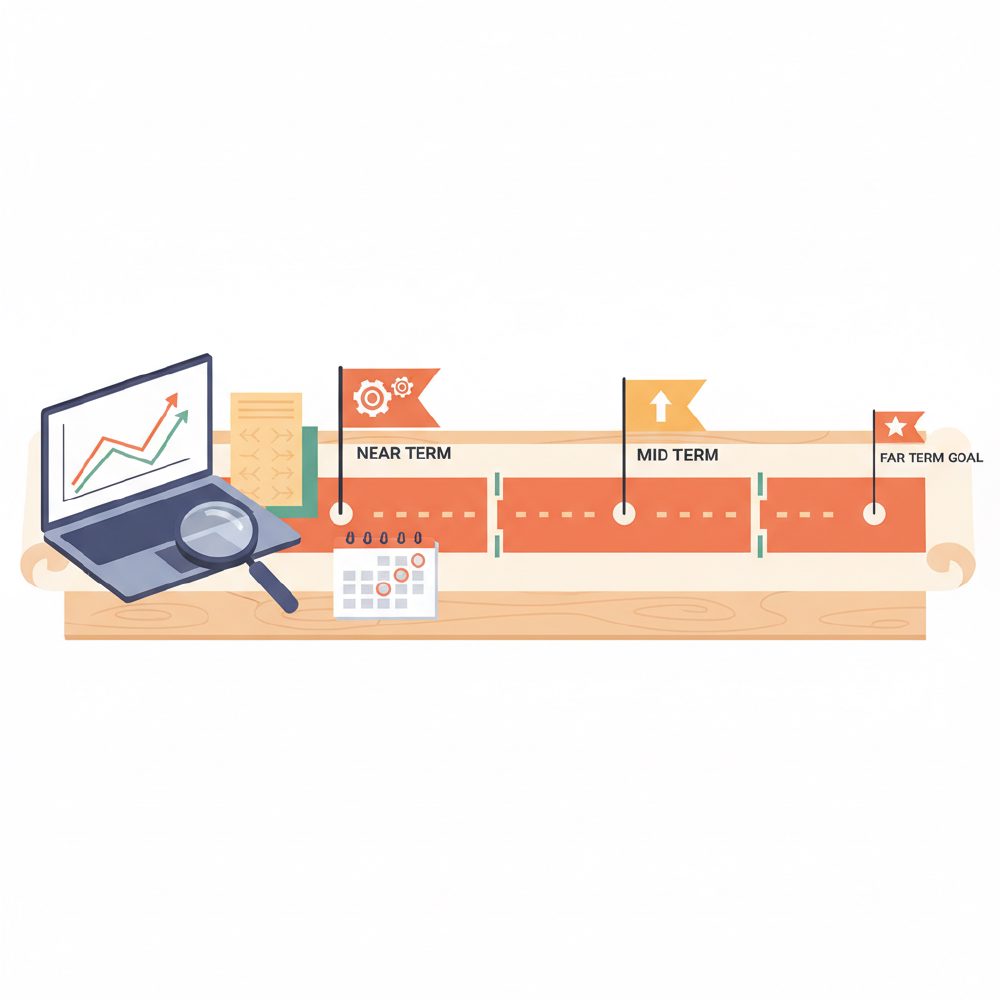
How long does casino SEO take to show real ranking movement?
Expect first measurable movement, impressions and long-tail positions in GSC, at 6-10 weeks. Page-one movement on competitive commercial terms takes 4-8 months on an established domain, 9-14 months on a fresh one. Anyone promising page one in 30-60 days for 'best online casino' is either lying or selling you a parasite play that won't last.
I track this against our Link-Price Index across 40+ live operator campaigns, and the pattern holds regardless of who's running the campaign: Google needs time to trust a signal, and gambling YMYL scrutiny stretches that trust-building window compared to most other verticals. First-derivative movement, impressions climbing in Search Console, long-tail terms popping into positions 40-90, shows up around week 6 to 10 if the technical foundation and content are solid on day one.
Real commercial movement is a different clock. On a domain with an established crawl history, decent DR (30+), and no toxic backlink baggage, I see page-one entries for mid-competition terms like '[brand] no deposit bonus' or '[niche] casino review' inside 4-6 months. Top-3 positions on head terms like 'best online casino' or 'crypto casino no KYC' take 8-14 months even with an aggressive tiered link program, because you're competing against affiliates and operators who've been building authority since 2015.
The variable that changes this timeline more than anything else is starting domain authority and link footprint, not budget size. I've had operators throw $15,000/month at link building on a zero-authority domain and still take 11 months to break top 10, while a rebuilt expired domain with residual gambling-relevant DR40 authority hit top 5 in 4 months on a fraction of that spend.
How long does casino SEO take for a brand-new domain with zero backlink history?
A brand-new domain (DR0-5, no referring domains) needs 9-14 months to reach page one for competitive casino terms, and 3-4 months minimum just to clear Google's initial trust threshold known informally as the 'sandbox' period. Rushing links into a fresh domain faster than 15-20 referring domains a month risks a spam classifier flag before you've earned any authority.
New domains carry zero link equity and zero crawl trust, so the first 60-90 days are almost entirely about technical foundation: indexation, internal linking, Core Web Vitals, and a content base broad enough that Google can categorize the site correctly in the gambling vertical without ambiguity signals. Skip this and your link building has nothing to attach authority to, I've seen operators build $8,000 worth of niche edits into a domain with 40 thin pages and watch none of it convert to rankings because there was no relevant page to receive the signal.
Once the foundation is live, link velocity needs to ramp gradually. My rule for zero-history domains: cap new referring domains at 15-20/month for the first quarter, weighted 60% niche edits on DR20-50 gambling-adjacent sites ($250-$600 each per our index), 25% guest posts on dedicated casino/affiliate blogs ($300-$900), and 15% higher-authority digital PR placements ($1,500-$5,000) to seed trust signals early. Front-loading PBN links on a fresh domain before it has any organic footprint is the fastest way to get it caught in a pattern-match filter during the next spam update.
Realistically, months 1-3 are foundation and low-velocity seeding, months 4-8 are the compounding phase where rankings for mid-tail terms start appearing, and months 9-14 are where head terms become achievable if the anchor text ratio and link source diversity have stayed clean the whole way through.
How long does casino SEO take on an aged domain with existing gambling backlinks?
An aged domain with a clean gambling-relevant backlink profile can reach page one for mid-competition terms in 3-5 months and top 10 for head terms in 6-9 months, roughly half the timeline of starting fresh, because the trust threshold is already cleared. The catch: 'existing backlinks' has to mean clean, not just old.
This is the fastest legitimate path in casino SEO, and it's why expired-domain acquisition remains one of the highest-ROI tactics in our playbook despite Google's repeated attempts to devalue it through core updates. A domain with genuine crawl history, existing DR30+ from relevant placements, and no manual action baggage skips the 3-4 month trust-clearing phase entirely. I've moved operator brands from acquisition to top-10 rankings on mid-tail casino review terms in as little as 11 weeks using this route.
The vetting cost matters here. A properly audited expired domain, checked in Ahrefs for referring domain history, spam score trajectory, and a manual link-by-link review for PBN or link-farm contamination, runs $800-$3,000 to acquire and clean, plus 6-12 weeks of 'seasoning' where you rebuild content and let the domain re-establish crawl patterns before pushing new links. Skip the vetting and you inherit someone else's penalty or a 40% toxic backlink ratio that takes months to disavow away.
The mistake I see operators make constantly: they buy an aged domain, see the DR number, and immediately blast 30 new links at it in month one assuming the authority buys them velocity headroom. It doesn't. The domain still needs anchor text ratio discipline and gradual link introduction, aged authority shortens the trust-building phase, it doesn't remove the velocity ceiling.
How long does casino SEO take to recover from a manual action or algorithmic filter?
Manual action recovery takes 4-9 months minimum: 2-4 weeks per Google reconsideration request review, usually 2-3 rounds before approval, plus the cleanup work beforehand. Algorithmic filters (Penguin-style over-optimization) resolve faster, 60-120 days after anchor text and toxic link cleanup, because there's no manual review queue involved.
These are two different animals and operators conflate them constantly. A manual action shows up explicitly in Google Search Console under Security & Manual Actions, and it requires a formal reconsideration request. Google's stated response window is 2-4 weeks per submission, but in casino/YMYL cases I've rarely seen approval on the first attempt, budget for 2-3 rounds, meaning 2-4 months of back-and-forth minimum, on top of however long the actual link cleanup and disavow work took.
Algorithmic suppression is quieter and more common in this niche, no GSC notification, just a ranking cliff that coincides with a spam update or core update rollout. This is almost always an over-optimized anchor text ratio problem: too much exact-match ('best online casino', 'no deposit bonus 2026') relative to branded and naked-URL anchors. My internal benchmark for casino money sites is exact-match anchors capped at 4-7% of total referring domain anchor text, branded at 50-60%, and the remainder split across partial-match, naked URL, and generic anchors. Sites I've pulled out of these filters typically recover within 60-120 days of correcting that ratio and disavowing the worst 10-20% of the toxic link profile, no new links required.
One thing worth being blunt about: recovery timelines get worse, not better, if you keep building the same anchor pattern while waiting for a fix to take effect. I've seen operators panic-build 40 more exact-match links during a suppression period trying to 'push through' it, which just deepens the pattern the filter is matching against and adds another 2-3 months to recovery.
How long does it take for anchor text ratio fixes to unstick rankings?
Anchor text ratio corrections typically show measurable ranking recovery in 60-120 days, faster than most link-building pushes, because you're removing a negative signal rather than waiting for a new one to accrue authority. The fix itself, disavow plus new anchor diversification, takes 2-4 weeks to implement; the wait is Google reprocessing the link graph.
This is consistently the fastest, cheapest win in casino SEO recovery, and most agencies skip straight to buying more links instead of diagnosing the ratio problem first. I run every filtered client through an Ahrefs anchor text export segmented by referring domain, categorize each into branded/exact/partial/naked/generic, and calculate exact-match percentage against total. Anything above 10% exact-match on a money site in this niche is a red flag; above 15% and I'd bet on an algorithmic suppression being active or imminent.
The fix has two components. First, disavow the worst offenders, usually low-quality PBN or crowd-marketing links carrying exact-match anchors, which paradoxically are often the cheapest links in the portfolio ($15-$40 per crowd link, $80-$150 per weak PBN post) and the ones doing the most damage. Second, actively build new links with branded and naked-URL anchors to dilute the ratio going forward, niche edits are ideal here because you control the anchor text negotiation directly with the publisher, unlike guest posts where editors sometimes insert their own.
Recovery isn't instant because Google doesn't reprocess your link graph in real time, it happens on a rolling basis tied to crawl frequency and, for the algorithmic filters specifically, tied to the next relevant system refresh. In practice that's 60-120 days for most casino domains I've worked on, sometimes faster if the domain has high crawl frequency already from strong internal linking and fresh content signals.
Which link types move casino rankings fastest, and which take the longest?
Niche edits move fastest because they're placed on already-indexed, already-trusted pages, impact shows in 3-6 weeks. PBN links can move rankings even faster (2-4 weeks) but carry the highest de-indexation risk. Digital PR and guest posts take 8-14 weeks to show impact but build the most durable, filter-resistant authority.
Every link type in the Gambling Link-Price Index trades speed against durability, and picking the wrong mix for your timeline goal is the most common strategic mistake I audit into operator campaigns. Niche edits, inserting a contextual link into existing, aged, already-ranking content, pass authority fast because the host page already has crawl trust; Google doesn't need to discover and evaluate a new page first. PBNs move even faster when the network is well-maintained, but 2024-2025 spam updates have made poorly de-footprinted networks a liability that can wipe a client's gains overnight.
Guest posts and digital PR sit on the slower end because you're often waiting on a brand-new page to get indexed and crawled with sufficient frequency before its outbound link carries full weight, that indexation lag alone can eat 3-4 weeks before the clock on ranking impact even starts. The tradeoff is durability: a Forbes or industry-trade digital PR placement doesn't disappear in the next PBN de-indexation sweep.
My standard allocation for a client wanting balanced speed and safety: 40% niche edits, 25% guest posts on dedicated gambling/affiliate sites, 20% vetted PBN (only on domains I've personally audited for footprint and history), 15% digital PR/HARO-style placements. That mix gets early movement from the niche edits while the PR and guest post layer matures into the long-term authority base.
| Link Type | Typical Cost | Time to Impact | Risk Level |
|---|---|---|---|
| Niche edit (DR20-50 gambling-relevant) | $250-$600 | 3-6 weeks | Low-Medium |
| Niche edit (DR50-70 finance/lifestyle) | $600-$1,500 | 4-8 weeks | Low |
| Vetted PBN post | $80-$300 | 2-4 weeks | High |
| Guest post (casino/affiliate blog) | $300-$900 | 6-10 weeks | Low-Medium |
| Digital PR / DR70+ placement | $1,500-$5,000 | 8-14 weeks | Very Low |
| Crowd marketing (forums/comments) | $15-$40 | 1-3 weeks (volume-dependent) | Medium-High |
| Expired domain rebuild + 301 | $800-$3,000 per domain | 6-12 weeks seasoning + effect | Medium |
How does the market you're targeting change your casino SEO timeline?
US-regulated states (NJ, PA, MI, PA) rank branded and local terms fast but stall on generic money terms behind DraftKings and FanDuel-level authority; expect 6-10 months for niche terms. Offshore and LATAM markets move faster on head terms, 3-6 months to page one, because competitor domain authority is thinner, but rankings there are less defensible long-term.
Market choice changes the competitive ceiling more than any tactic I could recommend. In US-regulated states, you're competing against operators with eight and nine-figure marketing budgets and DR80+ domains that have been building since legalization, DraftKings, FanDuel, BetMGM. Generic terms like 'online casino [state]' are effectively closed doors for a new entrant inside 12 months; your realistic wins are branded terms, promo-specific long-tail, and local intent ('casino near me [city]') where authority requirements are lower.
Offshore markets, Curacao-licensed operators targeting US traffic indirectly, or LATAM markets like Brazil, Mexico, and Colombia, have a thinner top-10 authority bar. I've taken LATAM crypto-casino clients from launch to top-5 on primary money terms in 4-5 months, something that would take double that time in a US-regulated state. The tradeoff is volatility: offshore SERPs get reshuffled harder during core updates because Google is actively trying to surface licensed operators over unregulated ones in markets where regulation exists, and rankings there are more exposed to sudden deindexation sweeps.
EU markets (UK, Malta-licensed operators targeting Germany, Spain) sit in between, regulatory content requirements (responsible gambling disclosures, license badges) add technical/on-page work that extends timelines by 4-6 weeks versus offshore builds, but the resulting rankings are more stable against enforcement-driven SERP purges.
| Market | Competition Level | Avg. Timeline to Page 1 (mid-tail) | Key Risk |
|---|---|---|---|
| US regulated (NJ/PA/MI) | Very High | 8-12 months | Established operator authority ceiling |
| UK/Malta-licensed EU | High | 6-9 months | Compliance content overhead |
| LATAM (BR/MX/CO) | Medium | 4-6 months | SERP volatility from regulatory shifts |
| Offshore/crypto (Curacao) | Medium-Low | 3-5 months | Deindexation sweeps, payment-processor risk |
What link velocity is safe, and how does it affect how fast you can rank?
Safe velocity for an aged domain (DR30+) is 8-15% month-over-month referring domain growth; for a young or thin domain, cap new referring domains at 15-20/month. Push past 30-40 new referring domains monthly on a low-authority site and you risk a spam classifier flag before the links even finish passing authority.
Velocity is the lever every impatient operator wants to pull harder, and it's the one that burns the most domains in this niche. Google's spam systems, the successors to what used to be a standalone Penguin update, now folded into ongoing spam updates, pattern-match unnatural acquisition curves: a domain that goes from 20 referring domains to 90 in six weeks looks nothing like organic link earning, and gambling is one of the most heavily scrutinized verticals for exactly this pattern.
My working thresholds, calibrated against campaigns that survived multiple spam updates without losing ground: aged domains with DR30+ and organic traffic history can absorb 8-15% referring-domain growth month over month without tripping anything. A brand-new or thin domain should stay under 15-20 new referring domains a month for the first two quarters, then can scale to 25-35/month once there's enough organic signal (branded search volume, direct traffic, engagement metrics) to support the pattern looking earned rather than purchased.
Faster velocity does compress your timeline, but only up to the point where the risk-adjusted expected value flips negative. I've modeled this across client accounts: pushing velocity 2x above safe thresholds shaves maybe 4-6 weeks off a ranking timeline but roughly triples the probability of a filter hit within the next two spam update cycles, and a filter hit costs you 3-6 months of recovery time. That trade is almost never worth it unless you're running a short-horizon parasite or microsite play you're prepared to burn.
How long does it take to rank for 'best online casino' vs branded vs long-tail terms?
Branded terms rank in 4-8 weeks since there's no real competition for your own name. Long-tail terms (specific game/bonus reviews) rank in 2-4 months. Head commercial terms like 'best online casino' or 'top crypto casino' take 8-14 months even on an aggressive campaign, because you're competing against entrenched affiliate authorities with years of link equity.
Keyword difficulty and timeline correlate almost linearly in this niche, but operators consistently underestimate how much authority the head terms require. Branded searches are the easiest win in casino SEO, if your site is indexed and technically sound, you'll rank for your own brand name within weeks regardless of link building, because there's zero real competition for a unique term.
Long-tail terms, '[game name] RTP review', '[bonus type] wagering requirements', '[payment method] casino deposit', sit in a sweet spot where solid content plus a handful of niche edits gets you ranked in 2-4 months. These terms carry lower individual search volume but compound fast across a large content library, and they're where I tell most clients to focus budget in months 1-6 rather than chasing the flagship term prematurely.
'Best online casino,' 'top sportsbook bonus,' 'crypto casino no verification', these are dominated by affiliate sites (AskGamblers, Casino.org, established review networks) that have 5-10 years of link accumulation and thousands of referring domains. Realistic timeline to break top 10 there is 8-14 months minimum with sustained link velocity at the safe thresholds above, and top 3 often needs 18+ months. I tell every client this upfront because setting a 3-month expectation on a head term is the single fastest way to lose a client relationship over a timeline problem that was never realistic to begin with.
What does a realistic month-by-month casino SEO timeline actually look like?
Months 1-3 are technical foundation and low-velocity link seeding. Months 4-8 show compounding movement on mid-tail terms. Months 9-14 are where head commercial terms become reachable if anchor ratios and velocity stayed disciplined throughout. Skipping any phase to rush the next one is the most common cause of stalled campaigns I audit.
Clients respond better to a phased map than a single number, so here's the structure I run on most new casino SEO engagements, assuming a starting domain with moderate existing authority (DR15-30, some backlink history, no penalties).
Months 1-3: technical audit and fix (Screaming Frog crawl, Core Web Vitals, indexation cleanup), content gap analysis against top 10 competitors, and initial link seeding at 10-15 referring domains/month weighted toward niche edits. Expect impressions growth in GSC but minimal ranking movement on commercial terms yet.
Months 4-8: link velocity ramps to 15-25/month, anchor text diversification locks in, content library expands into long-tail clusters. This is where mid-tail terms start landing page one and branded search volume starts climbing as a secondary trust signal. Digital PR placements from months 2-3 typically mature and show impact here.
Months 9-14: sustained velocity, tier-2 link support pushing authority into your best-performing tier-1 pages, and head commercial terms start moving into top 10-20, with top 3-5 achievable by month 12-14 if competition allows. Beyond month 14, the work shifts from acquisition to defense, maintaining velocity to hold position against competitors doing the same thing to you.
| Phase | Focus | Link Velocity | Expected Ranking Movement |
|---|---|---|---|
| Months 1-3 | Technical fixes, content gaps, low-velocity seeding | 10-15 RDs/month | Long-tail impressions only |
| Months 4-8 | Anchor diversification, content scaling | 15-25 RDs/month | Mid-tail page-one entries |
| Months 9-14 | Tiered links, sustained velocity | 20-30 RDs/month | Head terms reach top 10-20 |
| Month 15+ | Maintenance, defense against competitor velocity | 10-15 RDs/month (maintenance) | Top 3-5 on head terms if sustained |
What slows down casino SEO more than link building ever will?
Thin or duplicate content, broken internal linking, and payment/licensing trust signals missing from the page slow campaigns down more than any link gap. I've seen operators with strong link profiles stall for 6+ months because Google's YMYL quality signals flagged the content itself as insufficiently trustworthy for a gambling money page.
Link building gets the attention, but I audit stalled casino campaigns more often than not and find the bottleneck sitting in content and technical structure, not the backlink profile. Gambling is explicit YMYL territory, Google's quality raters and the systems trained on their guidelines weight trust signals (visible licensing info, responsible gambling links, author credentials, payout transparency) heavily on money pages. A page with a strong link profile but no visible license number or generic "our team" byline can sit stuck below page two indefinitely regardless of how many links point at it.
Internal linking is the second-biggest silent killer. I've audited sites where a client spent $6,000/month on external links for six months while their best money page was three clicks deep from the homepage with zero internal links pointing to it from high-traffic blog content. External authority can't compensate for a site architecture that tells Google the page isn't important internally.
Duplicate and templated content is the third. Affiliate-style casino sites often spin the same review template across 200 casino brand pages with 80% boilerplate text, Google's helpful content systems increasingly suppress this pattern site-wide, not just on the offending pages, which means one bad content decision can throttle your entire domain's velocity ceiling regardless of link quality.
How do you know casino SEO is working before rankings actually move?
Watch impressions growth in GSC (should climb within 6-10 weeks), referring domain growth trending toward organic-looking patterns in Ahrefs, and average position improving even below page one. These leading indicators show up months before top-10 rankings and are the honest way to judge campaign health during the long wait.
Operators judge campaigns by rankings alone, which is a mistake, because rankings are a lagging indicator that can take 6-14 months to reflect work that's already succeeding. I report on three leading indicators to every client monthly so nobody's flying blind during the compounding phase.
Impressions in Google Search Console, segmented by query cluster, should show consistent month-over-month growth starting around week 6-10 if content and technical work are solid, this means Google is surfacing you for more queries even if you're not clicking through yet. Average position dropping from, say, 47 to 22 on a target term over three months is real progress even though it produces zero visible traffic; it's the setup for the eventual page-one breakthrough.
Referring domain growth quality matters as much as quantity, I check whether new links are landing on relevant, indexed, traffic-carrying pages versus dead PBN nodes, using Ahrefs' traffic estimate per referring domain as a proxy. And branded search volume growth in Search Console or via a rank tracker is probably the most underrated signal: rising branded searches mean your off-site visibility (PR, social, affiliate mentions) is generating demand that reinforces every other ranking signal Google evaluates.





Comments
No comments yet, be the first.