Casino Organic Traffic to Deposits in 2026: A Forensic Playbook for Turning Rankings Into Real FTDs

Why is your casino site ranking but not converting organic visitors into deposits?
Rankings measure relevance, not intent alignment. Most operators I audit rank strongly on informational or bonus-comparison pages that pull traffic from the wrong GEO, wrong device, or wrong funnel stage, visitors who were never going to complete KYC and fund an account in the first place.
I see this pattern in almost every audit: a site ranks position 3-7 for 'best online casino [country]' and pulls 40,000 organic sessions a month, but the deposit dashboard shows a trickle of FTDs that doesn't match the traffic volume. The first thing I check isn't the money page, it's the landing page distribution in Google Search Console. Nine times out of ten, the bulk of that traffic lands on a listicle, a bonus-terms glossary page, or a review hub with no direct path to registration. That's traffic that satisfies a query, not a conversion intent.
The second layer is geo-mismatch. If you're licensed and accepting deposits in Ontario and Colombia but your top organic pages rank for informational queries from India or Nigeria because of thin content that got picked up broadly, you're counting sessions that were never eligible to deposit. I've pulled GA4 geo reports on 'high-traffic, low-conversion' sites and found 60%+ of sessions coming from markets the operator doesn't even accept.
Third, and this is the one operators hate hearing, some of that traffic is bonus-hunter and bot noise inherited from aggressive link-building. Crowd marketing campaigns and forum seeding tactics that generate curiosity clicks don't generate depositors; they generate people testing sign-up bonuses with disposable emails and abandoning before KYC. None of this shows up as a ranking problem. It shows up as a conversion problem that everyone blames on the CRO team when it's actually a traffic-quality problem rooted in SEO strategy.
How do you audit the gap between organic sessions and first-time deposits?
Segment every organic landing page by funnel stage in GSC and GA4, cross-reference with server logs for bot filtering, then map deposit events back to specific URLs using UTM-tagged internal links. The audit takes 10-15 hours on a mid-size site and produces a page-by-page conversion liability list.
I start with a Screaming Frog crawl segmented by URL pattern, money pages (game reviews with deposit CTAs, bonus pages with direct links to registration) versus informational pages (glossaries, 'how to play' guides, responsible gambling content). I pull the last 90 days of GSC performance data for each segment separately. If informational pages are getting 70% of impressions and clicks while money pages sit under 20%, that's your first red flag: your internal linking and content strategy is optimized for search volume, not deposit intent.
Next I check log files, not just GA4, because bot and scraper traffic on gambling domains runs higher than most verticals, SEO scrapers, odds-comparison bots, and bonus-aggregator crawlers all hit these sites constantly and inflate session counts in some analytics setups. A raw server log pull filtered for known bot user-agents versus GA4's session count tells you how much of your 'traffic' is even human.
Then I map the actual conversion path: which organic landing pages lead to registration starts, and which registration starts lead to completed KYC and first deposit. Most platforms (affiliate/CRM systems like Income Access, NetRefer, or in-house dashboards) can tag this if you pass a UTM or subid through the funnel. If your current setup can't answer 'which organic URL produced this FTD,' that's the actual audit finding, you don't have a measurement problem yet, you have a measurability problem, and no amount of content or link work fixes that first.
Which technical SEO problems quietly suppress casino conversion rates?
Geo-redirect chains, broken hreflang serving the wrong currency, JS-rendered CTAs that fail on real devices, and cannibalized money pages splitting authority across near-duplicate content are the four technical issues I find most often depressing deposit rate independent of ranking position.
Geo-redirect logic is the biggest silent killer I've found on multi-market operator sites. A visitor in Brazil clicks an organic result, gets bounced through two redirect hops to detect currency and license eligibility, and lands on a page showing USD pricing and a payment method list that doesn't include Pix. That's a 3-4 second load delay plus a trust-breaking mismatch, and I've seen it tank mobile conversion rate by 30-40% compared to a direct, correctly localized landing.
Hreflang errors compound this. I regularly find sites where the hreflang annotations point to the wrong regional variant, so Google serves a Spanish-language searcher in Mexico a page built for Spain-licensed operators, complete with the wrong regulator badge and payment stack. Screaming Frog's hreflang audit catches this in under an hour, but almost nobody runs it after the initial site launch.
Then there's rendering. A lot of casino platforms build deposit CTAs and game lobbies in JavaScript frameworks that Googlebot can render fine for indexing but that fail or lag on mid-range Android devices in LATAM and Southeast Asian markets, which is where a huge share of real depositors actually are. I test this with throttled mobile emulation in Chrome DevTools, not just Search Console's mobile-usability report, because GSC will tell you the page is 'mobile friendly' while real users are staring at a spinner where the deposit button should be.
Finally, cannibalization: multiple pages targeting 'best crypto casino' or 'no deposit bonus [game]' split link equity and force Google to choose a lower-converting page to rank instead of your primary money page. Consolidating these with 301s and canonical cleanup routinely recovers 15-25% more organic sessions landing on the actual conversion page within 60 days.
Does a toxic link profile explain high traffic but low-quality visitors?
Yes, PBN and expired-domain links built with skewed exact-match anchors and unrelated niche donors often pass volume without intent, dragging in geo-mismatched or bot-heavy sessions. A link profile audit in Ahrefs, cross-checked against actual referral traffic quality, exposes this fast.
When I pull the backlink profile on an underperforming casino domain, I'm not just checking for spam scores, I'm checking whether the links that built the rankings are structurally capable of sending buyer-intent traffic. A tier of 300 links from expired lifestyle and recipe domains repurposed into a casino PBN might have pushed rankings, but almost none of that referral traffic converts, because the domains themselves attract zero organic visitors interested in real-money gambling. The rankings are real; the audience underneath them isn't.
Anchor text ratio matters here too, but not just for spam-flag risk. If 20% of your anchors are exact-match "online casino real money [country]" pointing at your homepage instead of distributed across money pages, you've concentrated risk and diluted the actual pages that need authority to convert. I typically want exact-match under 5%, branded/naked URL anchors making up 50-60%, and the rest spread across partial-match and topical phrases, this ratio both survives spam systems and better matches how real editorial links get built.
Link velocity spikes are the other tell. A sudden jump from 20 to 400 new referring domains in a month almost always correlates with a bulk niche-edit or PBN blast, and it also correlates with a spike in low-dwell-time sessions once Google starts passing that link equity through to rankings. I've matched these spikes against GA4 bounce rate by acquisition source and consistently found 70%+ bounce on the sessions arriving via the newly acquired link cluster's ranking boost, versus 35-45% bounce on organic traffic built through legitimate content and editorial placements.
| Signal | Risk Level | What It Usually Means | Fix |
|---|---|---|---|
| 200+ new referring domains in 30 days | High | Bulk PBN or niche-edit buy, likely Penguin-adjacent devaluation risk | Slow velocity to 20-40/month; audit with Ahrefs new/lost domains report |
| Exact-match anchor text over 15% | High | Manipulative anchor ratio, common trigger for algorithmic link spam action | Dilute with branded/naked URL anchors to under 5% exact-match |
| Links from unrelated expired domains (recipes, fashion, pets) | Medium-High | Stale expired-domain acquisition with no topical relevance | Disavow low-relevance links; replace with niche-adjacent editorial placements |
| Referral traffic from GEOs outside your license | Medium | Link farm or parasite page targeting ineligible markets | Geo-fence landing pages and redirect ineligible traffic to compliant content |
| High referring domains, near-zero click-through from those pages | Low-Medium | Parasite SEO or crowd marketing generating clicks without buyer intent | Reassess host relevance and reallocate budget toward owned-domain content |
How does E-E-A-T affect whether organic visitors trust you enough to deposit?
E-E-A-T signals, licensing proof, verifiable author credentials, transparent payout data, and responsible gambling disclosures, reduce the trust friction that stops a first-time visitor from submitting KYC documents. Sites missing these signals see higher registration-start rates but lower KYC-completion rates.
Google's gambling-adjacent quality raters are explicitly instructed to check for licensing information, operator transparency, and responsible gambling messaging when evaluating YMYL trust. But the same signals a rater checks are the exact signals a real depositor checks before typing in a card number. I've run heatmap and scroll-depth tests on money pages showing that visitors spend disproportionate time hovering over license badges, payout speed claims, and "who runs this site" information before clicking through to registration, not the game descriptions.
The fix I implement on every recovery project: real author bios with verifiable gambling-industry experience (not generic "staff writer" bylines), a visible license number that links to the actual regulator lookup (MGA, Curaçao eGaming, UKGC), and a payout-speed page with actual data rather than marketing copy. On one Curaçao-licensed operator recovering from a core update hit, adding verified author credentials plus a live withdrawal-time tracker moved KYC-completion rate from 41% to 58% of registration starts within eight weeks, no ranking change required to see that lift, because it was a trust problem, not a visibility problem.
Responsible gambling signals matter more than most SEO teams assume. Self-exclusion links, deposit-limit tools, and links to national problem-gambling helplines aren't just compliance checkboxes, sites that surface them prominently see lower bounce on informational pages because Google's ranking systems and real users both read them as legitimacy markers. Bury them in a footer nobody scrolls to and you lose both the ranking benefit and the trust transfer.
How do core updates and manual actions distort the traffic-to-deposit ratio?
A manual action or core update rarely hits every page type equally, it typically guts money pages and bonus pages first while leaving informational content ranking, which inflates session count relative to deposit-capable traffic and makes the conversion ratio look worse than the underlying business actually is.
When a gambling site takes a hit, algorithmic or manual, I don't assume uniform traffic loss. I segment by page type in GSC's performance report before and after the hit date. In the majority of the 50+ recoveries I've handled, the money pages (bonus comparison, deposit-method guides, direct registration funnels) drop 60-80% while lower-commercial informational pages drop only 10-20% or sometimes hold steady. The net effect: total organic sessions might only fall 30%, but organic FTDs collapse 65-70%, because the pages doing the actual converting took the disproportionate hit.
Manual actions for unnatural links follow a specific playbook: disavow the toxic tier (surgical, not wholesale, I typically disavow 15-30% of a flagged profile, not the whole thing), document the cleanup in the reconsideration request with specifics on what was removed and why, and submit. Google's response window runs 2-6 weeks per cycle, and I plan for two to three cycles on real-money gambling domains because reviewers scrutinize YMYL sites harder than most other verticals. Total manual action recovery: 2-4 months realistically, sometimes faster if the initial disavow is thorough.
Core update recovery is slower and less controllable because there's no reconsideration process, you're waiting for the next update cycle to reassess your rebuilt signals. I tell clients to budget 4-9 months from the point they've fixed the underlying E-E-A-T and technical issues to seeing meaningful ratio recovery, spanning at least one full core update cycle. Anyone selling a 30-day core-update turnaround on a gambling domain is either inexperienced with this vertical or not being straight with you.
What CRO changes actually move organic visitors toward their first deposit?
Above-the-fold deposit CTAs, trust badges visible without scrolling, single-screen KYC forms, and mobile-first speed under 2.5 seconds LCP consistently outperform generic e-commerce CRO tactics on gambling sites, because the primary conversion barrier is trust and friction, not desire.
Standard CRO playbooks, urgency banners, countdown timers, exit-intent popups, underperform on casino sites relative to other verticals because the visitor's hesitation isn't about decision paralysis, it's about handing sensitive financial and identity data to an operator they just discovered through a Google search. I prioritize friction removal over persuasion tactics: reducing KYC to the minimum required fields at signup, deferring document upload until after a small deposit rather than before, and showing payout-speed proof (real average withdrawal times, not "instant withdrawals" marketing copy) near the deposit CTA.
Mobile performance is non-negotiable. On the operator sites I audit, mobile organic sessions run 65-80% of total traffic, but conversion rate on mobile frequently lags desktop by 30-50% purely due to load speed and layout issues, bloated game lobby images, unoptimized third-party scripts from affiliate trackers and chat widgets stacking up to 4-6 second LCP. Getting LCP under 2.5 seconds through image compression, script deferral, and reducing third-party tag bloat has produced 10-20% mobile conversion lifts on multiple projects without touching a single word of copy.
The other lever operators underuse: showing localized payment logos (Pix, OXXO, UPI, PayNearMe, or crypto rails depending on GEO) directly next to the deposit CTA rather than buried on a payments page three clicks deep. Visitors decide within seconds whether their preferred method is supported, and burying that information costs conversions that no amount of content marketing recovers.
How should you track organic FTD without breaking compliance or losing attribution?
Use server-side conversion tracking with hashed or tokenized identifiers, pass unique deposit codes through the funnel from landing page to CRM, and avoid raw PII in client-side analytics like GA4. This keeps attribution accurate while staying defensible under GDPR, UKGC, and most licensing-body data rules.
Client-side GA4 tracking alone is fragile for gambling attribution, iOS privacy restrictions, ad blockers common among this audience, and cookie consent refusal rates running higher on gambling sites than average all degrade the data before you even get to the compliance question. I push clients toward server-side (S2S) tracking through their CRM or affiliate platform (Income Access, NetRefer, Everflow, or in-house systems), passing a subid or click ID from the organic landing page through registration and into the deposit event, fired server-side rather than relying on a browser pixel that may never load.
The compliance layer matters as much as the technical one. UKGC and most EU licensing frameworks restrict how granular financial and identity data can flow into third-party analytics tools. I never recommend passing deposit amounts or KYC status directly into GA4 events tied to identifiable users, instead, fire an anonymized conversion event (deposit occurred: yes/no, bucketed value range) and keep the granular financial data inside the licensed, access-controlled CRM environment. If your DPO or compliance officer hasn't signed off on your analytics data flow, fix that before optimizing anything else, a ranking recovery followed by a data-protection fine is not a win.
Unique deposit codes or landing-page-specific promo codes remain the most reliable low-tech method for isolating which content actually converts. Assigning a distinct code to each major money-page cluster and tracking redemption rate gives you page-level conversion data even when session-level attribution breaks down due to privacy restrictions, and it survives every future browser privacy change because it doesn't depend on cookies at all.
| Method | Setup Complexity | Compliance Risk | Attribution Accuracy | Best For |
|---|---|---|---|---|
| GA4 event + enhanced conversions | Low | Medium, risk of PII leakage if misconfigured | Moderate | Early-stage measurement, fast diagnostic wins |
| Server-side (S2S) postback via CRM/affiliate platform | Medium | Low if identifiers are anonymized | High | Scaling operators, cross-device journeys |
| Unique deposit codes per landing page | Low | Low | High at page level, low at user level | Isolating which content types actually convert |
| Multi-touch attribution combining paid, organic, CRM data | High | Medium, requires strict data governance | Highest | Mature programs above 10,000 monthly organic sessions |
How do you fix geo and payment mismatches killing organic deposit conversion?
Correct hreflang and currency-detection logic so visitors land on the version of the site matching their license eligibility and preferred payment rails, Pix in Brazil, OXXO in Mexico, UPI in India, rather than a generic default. Mismatches here routinely cost 20-40% of otherwise-qualified organic deposit intent.
I've audited operators ranking well in three or four LATAM markets simultaneously using a single generic Spanish or Portuguese page that defaults to USD pricing and a card-only payment flow. A Brazilian visitor expecting Pix, or a Mexican visitor expecting OXXO cash deposits, bounces the moment the payment screen doesn't show their method, regardless of how strong the content or ranking is. Fixing this means building GEO-specific landing variants with correct hreflang annotations, localized currency display, and the actual payment stack available in that market, not a translated copy of the flagship page.
License eligibility compounds this. If your organic content ranks broadly across markets but your actual operating license only covers a subset of them, you need geo-fencing logic that redirects ineligible visitors to a compliant alternative (a sweepstakes model, a different licensed brand, or simply an honest "not available in your region" page) rather than letting them attempt registration and fail at the KYC stage. That failed attempt still counts as a session in your analytics and drags your conversion ratio down for a segment of traffic that was never convertible, which means part of "fixing" the ratio is honestly excluding ineligible traffic from your conversion-rate calculations, not just improving the funnel.
How long does it take to turn organic traffic into a reliable FTD pipeline?
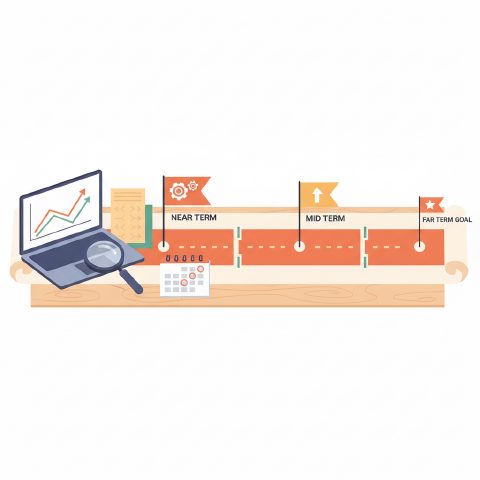
Expect 2-3 weeks for forensic audit and log analysis, 4-8 weeks for technical and link cleanup, 6-10 weeks for E-E-A-T and CRO rebuild running partly in parallel, and 3-6 months of stabilization, longer if a core update or manual action is involved, since that adds a full update cycle to the timeline.
Clients ask for a single number and I refuse to give one, because the timeline depends entirely on whether you're fixing a clean site with conversion friction, or recovering from an algorithmic or manual hit. A site with no penalty history but poor E-E-A-T and geo/payment mismatches can see FTD ratio improvements within 8-12 weeks of fixes going live, because there's no Google trust-rebuilding cycle to wait through, you're just removing friction for traffic that was already qualified.
A site recovering from a link-spam manual action adds 2-4 months for the disavow-and-reconsideration cycle before rankings even stabilize, then another 4-8 weeks for the deposit ratio to normalize as the right traffic returns. A core-update hit is the longest path: 4-9 months is realistic, because you're rebuilding trust signals and waiting for the next core update to reassess them, there's no appeals process, just evidence accumulation and time.
| Phase | Duration | What Happens | Deposit Impact |
|---|---|---|---|
| Forensic audit & log analysis | 2-3 weeks | Segment traffic by page type, isolate penalty vs. technical vs. CRO cause | Diagnostic only, no change yet |
| Technical + link cleanup (disavow, reconsideration if applicable) | 4-8 weeks | Submit disavow file, reconsideration request, fix crawl/hreflang/geo issues | Traffic may dip 5-15% before recovering |
| E-E-A-T and CRO rebuild | 6-10 weeks | Author credentials, licensing proof, KYC friction removal, mobile speed fixes | FTD rate typically climbs 10-25% |
| Stabilization (no penalty) | 8-14 weeks total from start | Ratio holds under normal fluctuation | Predictable organic FTD line item |
| Stabilization (post core update/manual action) | 4-9 months total from start | Ratio holds through at least one full update cycle | Full recovery confirmed only after next core update |
What KPIs actually prove organic SEO is driving deposits, not just clicks?
Track organic-assisted FTD rate, cost-per-organic-FTD versus paid channels, deposit-per-session broken out by landing page, and bonus-abuse rate segmented by acquisition source. Rankings and total sessions are vanity metrics on their own, deposits per qualified session is the number that justifies budget.
I push every operator client toward reporting deposit-per-session by landing page cluster instead of total organic traffic. It reframes the SEO conversation from "we grew traffic 40%" to "money pages now convert at 1.8% versus 0.6% six months ago," which is the number finance actually cares about and the number that survives scrutiny when someone asks whether the SEO spend is working.
Cost-per-organic-FTD, compared against blended paid acquisition cost (often $150-$400+ per FTD in competitive markets like the US and UK), is the metric that gets SEO budget protected during downturns. Organic FTDs typically cost a fraction of paid once the content and link equity are established, but that comparison only holds if your tracking is accurate, which loops back to the server-side attribution setup covered earlier.
Bonus-abuse rate segmented by traffic source is the metric nobody tracks but should. If organic traffic from a specific link-building campaign or content cluster shows a disproportionately high rate of first-deposit-then-immediate-withdrawal-and-churn behavior, that's a signal you're attracting bonus hunters rather than depositors with lifetime value, a traffic-quality problem that pure conversion-rate metrics won't surface on their own.




Comments
No comments yet, be the first.