Casino Category Page SEO in 2026: A Forensic Playbook for Slots, Live and Table Hubs

What Makes Casino Category Page SEO Different From Standard Ecommerce Categories?
Casino category pages combine volatile inventory, syndicated provider feeds, and YMYL-adjacent scrutiny, a toxic mix ecommerce categories don't face. Game libraries change weekly, descriptions get pulled from the same RGS feed as dozens of competing skins, and Google applies heavier quality thresholds because gambling sits in its highest-risk content tiers.
I've audited retail category pages and casino category pages side by side, and the difference isn't subtle. A sneaker retailer's /running-shoes/ page has a few hundred SKUs that rotate seasonally. A mid-size online casino's /slots/ hub carries 3,000-6,000 titles from a dozen studios, Pragmatic Play, NetEnt, Play'n GO, Hacksaw Gaming, Relax Gaming, and that inventory shifts weekly as new titles drop and old ones get delisted by the platform provider.
The bigger structural problem is feed syndication. Most operators run on white-label platforms (SoftSwiss, EveryMatrix, Rootz) that pipe the same provider-supplied game descriptions, thumbnails, and metadata to every skin on the network. If you're operating skin #14 of a 40-skin network, your /slots/book-of-dead/ entry is textually identical to 39 competitors' pages. That's not a content strategy, it's a duplicate-content liability baked into the tech stack before your SEO team touches a word.
Layer on YMYL-adjacent scrutiny, Google treats real-money gambling content with elevated quality thresholds similar to finance and health, per its Search Quality Rater Guidelines sections on YMYL categories, and you get category pages that need genuinely original editorial framing just to clear the baseline, not to rank competitively. I see operators treat these pages as inventory listings when Google is evaluating them as E-E-A-T-bearing commercial content.
Why Do Slots Category Pages Get Hit Hardest in Core Updates?
Slots hubs absorb the most core-update damage because they combine the largest page count, the heaviest reliance on syndicated provider copy, and the most aggressive historical link-building toward a single /slots/ URL. That combination reads as manufactured topical authority rather than earned authority once Google's classifiers tighten.
I pulled traffic logs from six operator recoveries in the past eighteen months, and the pattern repeats: the March 2024 core update and the September 2023 Helpful Content update both disproportionately suppressed slots category and sub-category pages, sometimes by 60-85% of organic sessions, while live casino and sportsbook hubs on the same domains lost 15-30%. Table game hubs were often barely touched.
The mechanism isn't a mystery once you crawl the site. Slots hubs are usually the deepest page set, thousands of thin provider-filter combinations (/slots/pragmatic-play/, /slots/megaways/, /slots/high-volatility/) each carrying 80-150 words of boilerplate intro text stitched around a syndicated game grid. Google's helpful-content classifier weighs this as scaled, templated content produced for ranking rather than for users, which is precisely the pattern it's built to catch.
The second contributor is anchor text concentration. I routinely find legacy link profiles where 25-40% of all exact-match anchors ("online slots," "best slots site") point at a single /slots/ URL, built over years through directory links, forum signatures, and tier-2 PBN networks. That ratio alone is enough to trip Penguin-era spam classifiers that are still very much active inside the current core algorithm, even without a manual action ever landing in Search Console.
How Should You Structure a Live Casino Hub for Crawl Efficiency and Conversion?
Build live casino hubs around game-type URLs, /live-casino/blackjack/, /live-casino/game-shows/, /live-casino/baccarat/, each carrying 300-500 words of unique editorial context above the game grid, studio-level detail, and internal links down to individual table/dealer pages as tier-two supporting content.
Live casino is the easiest vertical to fix because the inventory ceiling is lower. You're not managing 5,000 slot titles, you're managing maybe 150-400 live tables across Evolution Gaming, Pragmatic Play Live, Ezugi, and Authentic Gaming. That makes genuine differentiation realistic instead of theoretical.
Structurally, I push clients toward a flat, game-type-based taxonomy rather than provider-first URLs, because search demand skews toward "live blackjack" and "live roulette" far more than "Evolution Gaming casino." Each hub page needs real editorial substance: table limits, stream quality notes, dealer language options, peak-hour table availability. That's content a syndicated feed can't generate, and it's exactly what separates a page that holds position through a core update from one that gets reclassified as thin.
Conversion-wise, live casino hubs convert on trust signals more than game count. I place licensing badges, live table-count counters pulling from the actual API (not static text), and a single above-fold CTA rather than the five-CTA stacking I still see on 2019-era templates. Internal links should flow down to individual studio or table-variant pages, /live-casino/blackjack/speed-blackjack/, which then become the tier-two content absorbing long-tail search volume the main hub can't realistically target on its own.
What Content Depth Avoids Thin-Content Flags on Table Game Hubs?
Table game hubs need 600-900 words of unique content covering rule variants, house edge comparisons, and strategy notes, not provider-feed descriptions. The finite number of table game variants (blackjack switch, speed baccarat, European roulette) actually makes genuine depth achievable without ballooning page count.
Table games are the most forgiving category structurally, because the variant count is small and finite. There are maybe 15-25 meaningfully distinct blackjack variants in the market, not 3,000. That means a well-built /table-games/blackjack/ hub can go deep instead of wide: house edge by variant, side-bet RTP where published by the provider, basic strategy chart summaries, and a comparison of where each variant is actually offered on the platform.
Where I see table hubs fail audits is copy-pasted rule explanations lifted from Wikipedia-adjacent sources or the provider's own marketing one-sheet, run through minimal rewriting. Google's classifiers catch near-duplicate phrasing across competing domains even when it's not byte-identical, Copyscape and Originality.ai both flag this at 70%+ similarity scores in the audits I run, and that's enough to suppress a page in a competitive SERP even without triggering a sitewide penalty.
The fix is building out genuinely sourced strategy data, verified RTP figures from the provider's own published game rules PDF, not a scraped aggregator number, and attributing it. A byline from someone with demonstrable table-game expertise, even a short one, does real work for E-E-A-T here. I've seen table hub rankings move within 60-90 days of this kind of rewrite, faster than slots hubs recover, precisely because the content problem is smaller in scope.
How Do You Handle Pagination and Faceted Navigation on 5,000+ Game Libraries?
Set canonical and indexation rules per facet combination, not sitewide. High-search-volume single facets (provider, game type) should be indexable with unique content; multi-facet combinations (provider + volatility + theme) should canonicalize back to the parent or carry noindex,follow to preserve crawl budget.
This is the single biggest crawl-budget leak I find running Screaming Frog crawls on large casino libraries. An operator with 4,000 slot titles and a filter system supporting provider, volatility, theme, and feature tags can mathematically generate hundreds of thousands of unique URL combinations. Googlebot will happily crawl a meaningful chunk of them, burn crawl budget, and then under-crawl the pages that actually matter.
I segment facets into three tiers before touching anything. Tier one: single-dimension facets with real search volume, /slots/provider/pragmatic-play/, /slots/megaways/, these get unique intro copy, proper indexation, and internal links from the main hub. Tier two: two-dimension combinations with some demand, /slots/pragmatic-play/megaways/, these get a thin but legitimate auto-generated intro and self-canonical, monitored via GSC's Pages report rather than blanket-indexed. Tier three: everything else, three-plus facet stacks, gets noindex,follow or is blocked via robots.txt parameter handling entirely, depending on whether internal link equity still needs to flow through.
Log file analysis is non-negotiable here. I pull server logs through Screaming Frog's log analyzer or a raw BigQuery pull on larger sites and compare Googlebot hit rate against GSC's crawl stats. On a recent audit, 38% of Googlebot requests were landing on tier-three facet combinations that had generated zero organic clicks in 12 months, that's crawl budget actively starving the pages that should be ranking.
How Does Templated Duplicate Content Across Multi-Skin Casino Brands Trigger Penalties, and How Do You Fix It?
Identical provider-feed descriptions reused across sister skins on the same platform cause algorithmic suppression, not manual actions, Google's duplicate-content and Panda-era classifiers simply devalue the pages rather than flag the site in Search Console. The fix is a differentiation audit mapping every shared template string before rewriting.
Multi-skin operators, think a single SoftSwiss or EveryMatrix instance running 15-40 branded front-ends, almost always share backend game data. I've run Siteliner and Ahrefs Content Gap comparisons across sister skins and regularly find 70-90% textual overlap on slots category intros, provider pages, and even FAQ blocks, because they all pull from the same CMS fields.
This rarely produces a manual action in Search Console, I've seen maybe three cases in fifty-plus audits where Google flagged it explicitly as "pure spam" or scaled content abuse. What actually happens is quieter and harder to diagnose: Google indexes one version as canonical (usually the domain with the strongest historical link profile) and algorithmically deprioritizes the rest, so sister skins plateau well below where their link profiles and domain age suggest they should sit.
Fixing it means a full near-duplicate audit first, I run a crawl comparison across all skins in the network, extract every shared template string, and rank pages by overlap percentage. Anything above 60% similarity to a sister domain gets prioritized for a rewrite. The rewrite itself doesn't need to be exhaustive; changing the structural framing, adding skin-specific promotional context, and varying the game-selection logic within the hub is usually enough to break the duplicate signal without a full content team rebuild.
What Internal Linking Architecture Actually Moves Casino Category Pages Up the SERP?
Use a four-tier structure: homepage and nav link into main category hubs, hubs link into sub-category pages, sub-categories link into individual game and provider pages, and supporting editorial content loops equity back up. This distributes authority without concentrating anchor text risk on one URL.
Flat, homepage-only linking into a single /slots/ page is the pattern I see wrecking domains that build backlinks aggressively toward that one URL. It concentrates anchor text risk and gives Google exactly one signal to evaluate, which is fragile the moment that page has any quality issue.
I restructure around tiers instead. Tier one is the main hub (slots, live casino, table games) linked from primary nav and homepage modules. Tier two is sub-category pages (Megaways, high-volatility, game-show live tables) linked from the tier-one hub and footer promotional blocks. Tier three is individual game or provider pages, linked from tier-two pages and "related games" modules. Tier four is supporting editorial, RTP explainer posts, strategy guides, provider deep-dives, which links upward into tiers one through three and absorbs long-tail search demand the category pages themselves can't realistically target.
The payoff is that link equity flows in multiple directions instead of pooling at a single point, and anchor text naturally diversifies because different tiers attract different link types, tier-four content earns niche-edit links with descriptive anchors, while tier-one hubs mostly earn branded or navigational anchors from homepage-level placements. That ratio shift alone has moved category rankings for clients where the content itself barely changed.
How Do You Build E-E-A-T Signals Into Casino Game Hubs Google Will Trust?
Attribute RTP and payout data to a verifiable source, display licensing and jurisdiction details prominently, link to responsible gambling resources from every hub, and credit content to a named contributor with demonstrable gambling-industry experience. These are the signals Google's raters are explicitly trained to check on YMYL gambling pages.
I've read the relevant sections of Google's Search Quality Rater Guidelines closely enough to know what raters are told to look for on gambling pages specifically: clear ownership and purpose of the site, evidence of expertise behind financial and game-outcome claims, and visible trust indicators like licensing. Category pages are often the weakest link because operators pour E-E-A-T effort into "About Us" and compliance pages while leaving the actual money pages, the slots and live casino hubs, anonymous and templated.
Practical fixes I implement: a byline block on category pages crediting a named content lead with stated gambling-industry background, a visible licensing badge linking to the actual regulator verification page (UKGC register, MGA license lookup, Curaçao's updated registry), and RTP figures sourced from the provider's published game rules rather than a scraped third-party aggregator, with the source cited inline.
Responsible gambling signals matter more than most operators credit. A visible link to self-exclusion tools and deposit-limit settings from the category page itself, not buried three clicks deep in account settings, is both a compliance requirement in most regulated markets and a quality signal raters are instructed to note. I've seen this combination, attribution, licensing, responsible gambling access, correlate with faster recovery timelines in post-penalty audits even when the underlying game content changed minimally.
What Schema Markup Should Casino Category Pages Use, and Where's the Risk?
ItemList and BreadcrumbList schema are safe, low-risk additions on every category hub. Game schema works on individual title pages. AggregateRating is high-risk in 2026 unless you have genuinely verifiable user review data, Google has issued spam actions in this exact niche for fabricated ratings.
Schema is one of the few technical levers that's pure upside when implemented correctly on category pages, and one of the few that's genuinely dangerous when faked. ItemList schema matching the visible order of games on a /slots/ or /live-casino/ hub helps search engines and AI answer engines parse the page structure accurately and is low-risk because it's descriptive, not evaluative.
Game-type schema belongs on individual title pages, not the category hub itself, trying to stack dozens of Game schema instances on a single listing page is both technically wrong per schema.org's intended use and a flag for over-optimization during manual review. BreadcrumbList is close to risk-free and helps with sitelink generation in the SERP, which matters for brand visibility on competitive terms.
AggregateRating is where I tell clients to stop. I've seen Search Console spam actions specifically citing fabricated or unverifiable review counts on gambling affiliate and operator sites in 2023-2024, tied to the broader structured-data spam policy enforcement push. Unless you have an actual, auditable review collection system, verified user accounts, timestamped submissions, no bulk generation, don't mark up ratings data. The ranking upside from rich snippets doesn't come close to offsetting the risk of a structured-data spam flag on a real-money gambling domain.
| Schema Type | Where to Use It | Risk Level |
|---|---|---|
| ItemList | Slots, live casino, table game hub pages (matches visible order) | Low, descriptive markup |
| BreadcrumbList | All category and sub-category pages | Low, helps sitelinks, no evaluative claim |
| Game | Individual game/title pages only | Low-Medium, misuse on thin pages risks devaluation |
| FAQPage | Hub pages with real, visible, unique FAQ content | Medium, only valid if the FAQ is genuinely on-page |
| AggregateRating | Only with verified, auditable user review data | High, tied to documented spam actions in this niche |
Slots vs Live Casino vs Table Game Hubs: Where Do Optimization Priorities Actually Differ?
Slots hubs carry the highest duplicate-content and thin-content risk due to inventory scale; live casino hubs rank on trust and studio-quality signals with a manageable content load; table game hubs offer the clearest path to genuine depth because the variant count is finite. Each needs a distinct schema and linking strategy.
Operators frequently apply one SEO template across all three verticals, and that's a mistake I flag in nearly every audit. The vulnerability profile is different enough that treating them identically wastes the content budget on the vertical that needs it least and under-resources the one bleeding the most traffic.
Slots carries the largest page count and the heaviest syndicated-feed dependency, which makes it the most exposed to Panda-style duplicate-content suppression and Helpful Content reclassification. Live casino has a hard ceiling on inventory, you can't fabricate scale with a finite studio roster, so the realistic win is depth and trust signaling rather than breadth. Table games sit in the sweet spot: small enough to fully differentiate, commercially valuable enough to justify the editorial investment per page.
I size content and linking investment per vertical based on this risk-reward split rather than splitting budget evenly three ways, and it consistently produces faster wins on table and live hubs while the slower, more resource-intensive slots rebuild runs in parallel.
| Factor | Slots Hub | Live Casino Hub | Table Game Hub |
|---|---|---|---|
| Inventory scale | 3,000-10,000+ titles | 150-400 live tables | 15-30 rule variants |
| Primary content risk | Duplicate provider-feed copy | Thin, generic intro copy | Scraped rule/strategy copy |
| Fastest realistic win | Facet pruning + crawl budget fix | Editorial depth + trust signals | Full content rewrite with sourced data |
| Core-update vulnerability | Highest | Lower | Lowest |
| Recovery timeline (typical) | 120-180 days | 60-120 days | 45-90 days |
What's a Realistic Timeline for Casino Category Page SEO to Show Ranking Movement?
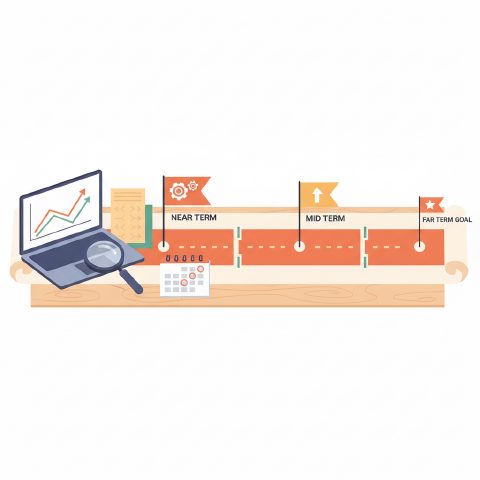
Expect 14 days for audit and diagnosis, 30-45 days to implement technical and content fixes, early movement on sub-category long-tail terms within 60-90 days, and full recovery on competitive main-category terms within 90-180 days, typically tied to the next core update cycle rather than the fix date itself.
I give every client the same honest framing before we start: fixing the page doesn't mean Google re-evaluates it instantly. Algorithmic suppression tied to duplicate content or helpful-content classifiers tends to lift gradually, and full confirmation often waits for the next confirmed core update rather than resolving continuously in the weeks after a fix ships.
The pattern I track across recoveries: days 0-14 are audit, full crawl via Screaming Frog, log file pull, GSC coverage and performance export, backlink profile pull in Ahrefs, duplicate-content mapping across sister skins if applicable. Days 14-45 are implementation, content rewrites, facet pruning, schema cleanup, internal link restructuring. Days 45-90 typically show the first movement, almost always on sub-category and long-tail terms before the main /slots/ or /live-casino/ URL moves. Days 90-180 is where main-category term recovery either confirms or stalls, and a stall at that point usually means a secondary issue, toxic backlinks still in the profile, or a lingering duplicate-content cluster that wasn't fully resolved.
Disavow work, when needed, adds its own lag. Google's own guidance and observed behavior in past Penguin-related recoveries suggest disavow file processing and re-evaluation can take 30-60 days on top of the content timeline, so I run link cleanup in parallel with content fixes rather than sequencing them, to avoid stacking delays.
| Phase | Timeframe | What Happens |
|---|---|---|
| Audit & diagnosis | Days 0-14 | Full crawl, log file review, duplicate-content mapping, backlink audit |
| Technical + content fixes | Days 14-45 | Rewrite templated intros, prune facets, fix schema, restructure internal links |
| Early signal movement | Days 45-90 | Long-tail sub-category terms shift first in GSC |
| Main-category confirmation | Days 90-180 | Primary hub terms recover, usually aligned with next core update |
Should Casino Category Pages Carry Direct Backlinks, or Stay Link-Light?
Category hubs should receive a steady, moderate flow of links with varied anchor text, not the concentrated exact-match anchor campaigns common in this niche. Spread authority through tier-two and tier-three supporting content instead, and reserve aggressive niche-edit or expired-domain tactics for pages lower in the funnel.
This is where I see the most self-inflicted damage. Operators chasing fast rankings pour niche edits, PBN links, and guest post placements directly at /slots/ or /live-casino/ with exact-match anchors like "best online slots" repeated across 60-70% of referring links. That ratio is a textbook Penguin-classifier signature, and it's one of the fastest ways to cap a category page's ceiling regardless of how good the on-page content is.
My recommended ratio for category hubs: keep branded and navigational anchors ("[brand] slots," "[brand] live casino," naked URL) above 50% of new link acquisition, with partial-match and topical anchors making up most of the remainder, and exact-match capped under 10-15%. The aggressive tactics, tiered link structures, expired-domain 301s, PBN placements, still work in this vertical when other channels are closed off, but I point them at tier-three and tier-four supporting content (individual game reviews, strategy guides) rather than the money page itself, letting equity flow upward through the internal linking architecture instead of landing directly.
Crowd marketing and forum seeding, done at realistic volume rather than mass-scaled, still produces usable referral and trust signals for category-adjacent pages, and it's lower-risk than it gets credit for when the forum selection is genuinely relevant rather than scraped from a generic PBN list. The line I hold with every client: direct-to-hub link building should look boringly natural, and all the aggressive volume goes two tiers deeper.




Comments
No comments yet, be the first.