Web 2.0 Links for Gambling in 2026: My Verdict After Three Fixture Cycles
What Are Web 2.0 Links in Gambling SEO, and Do They Still Work in 2026?
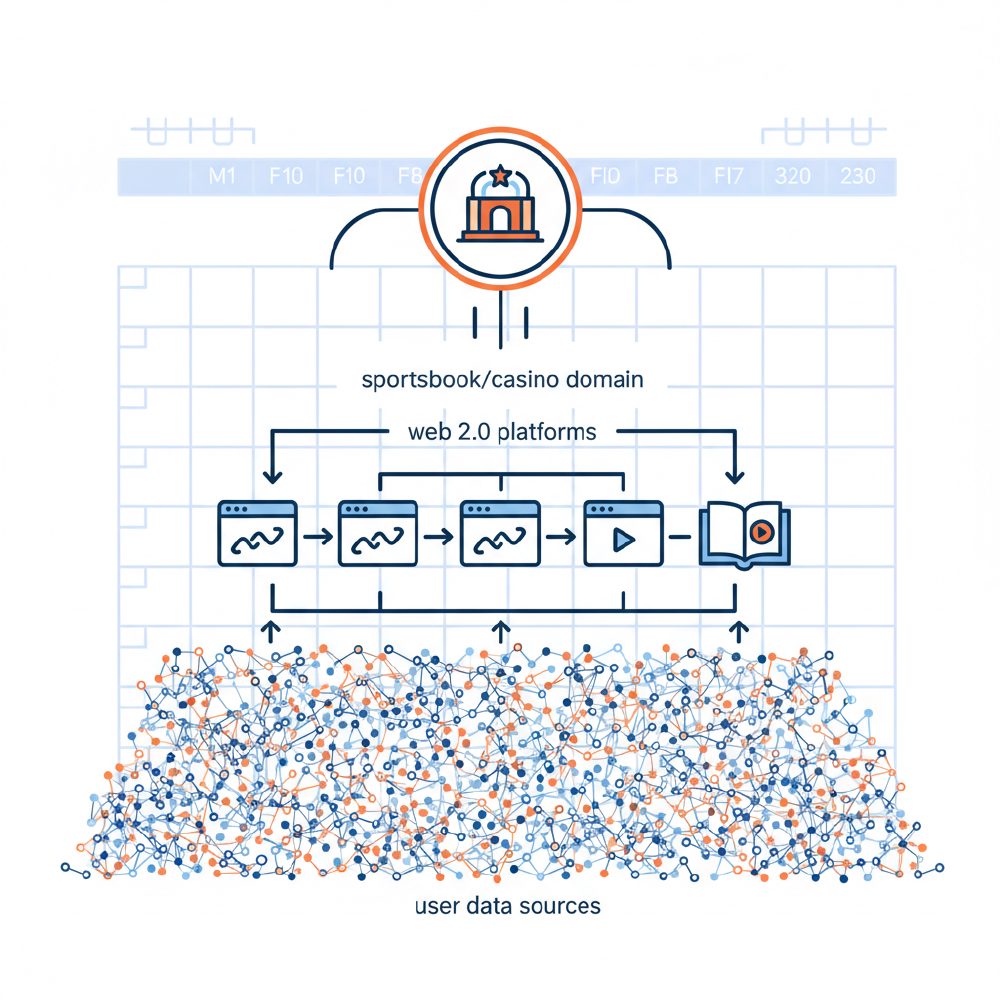
Web 2.0 links are backlinks built on free or freemium publishing platforms, WordPress.com, Blogger, Tumblr, Weebly. In 2026 they still move rankings for casino and sportsbook sites, but strictly as a supporting layer that passes relevance and indexation signals, never as a direct link into your operator domain.
I've been building these since the Penguin 2.0 era, back when a hundred spun Blogspot sites could carry a casino affiliate site to page one in six weeks. That version is dead. What survives is narrower and more disciplined: a web 2.0 property with 400-600 words of genuinely readable content, a handful of contextual outbound links, and zero automation fingerprints.
The function hasn't changed even if the execution has. Web 2.0 properties sit between your money site and the open web, diluting anchor text risk, adding topical breadth around betting, odds, bonus terms and responsible gambling language, and giving crawlers extra paths to find and re-crawl your domain. Domain Rating on these properties typically sits between 15 and 35, not enough to move a competitive 'online sportsbook' term on its own, but plenty to feed a tier-2 layer that supports stronger niche-edit or guest-post tier-1 links.
What's genuinely dead is treating web 2.0 as a direct-to-domain tactic. I still see operators asking agencies for '50 web 2.0 backlinks straight to the homepage' and expecting a ranking jump. That pattern, thin content, templated structure, mass creation timed in a single week, is precisely what Google's scaled content abuse policy was written to catch in March 2024. Direct links from obvious web 2.0 farms into a gambling money page now read as a liability signal, not an asset.
How Do Web 2.0 Properties Fit Into a Tiered Web 2.0 Structure for Casino Sites?
Tiered web 2.0 structures stack link layers so risk and authority filter downward before reaching your money page. Tier 1 is a small set of strong niche edits or guest posts; Tier 2 is web 2.0 properties and quality PBN pages linking into Tier 1; Tier 3 is bulk web 2.0, bookmarks and forum profiles supporting Tier 2.
The logic is simple risk transfer. Google's manual action and algorithmic link-spam systems weigh the context around a link heavily, domain history, content quality, link velocity, anchor patterns. By putting web 2.0 properties two or three hops from your casino domain, you let those signals get reinterpreted before they touch the asset that actually matters: your operator site's organic visibility and, in worse cases, its standing with payment processors who do their own due diligence on your backlink profile.
In practice, for a mid-size sportsbook client I'd run something like 8-12 tier-1 niche edits a month on genuine gambling-adjacent or sports media sites, each with DR 30-55. Those tier-1 pages then get 15-30 tier-2 web 2.0 links apiece, spread across different platforms, built over 3-4 weeks rather than overnight. Tier 3 is where volume lives, bookmarking sites, RSS aggregators, forum signatures, feeding the tier-2 layer to accelerate indexation, not authority.
The mistake that gets domains flagged is collapsing tiers to save money. One agency I audited last year had tier-2 web 2.0 pages linking directly to a casino homepage with 'best online casino bonus' as exact-match anchor on 40% of links. That's not a tiered structure, that's a flat spam pattern with extra steps, and it had already triggered a partial manual action for unnatural links before we got the account.
| Tier | Link type | Typical DR | Points to | Monthly volume (established site) |
|---|---|---|---|---|
| Tier 1 | Niche edits, guest posts, aged-domain redirects | DR 30-55 | Money domain | 8-15 |
| Tier 2 | Web 2.0 properties, quality PBN pages | DR 15-35 | Tier 1 pages | 15-40 |
| Tier 3 | Bookmarks, forum profiles, RSS feeds | DR 5-20 | Tier 2 pages | 40-100 |
Which Web 2.0 Platforms Still Accept Gambling Content in 2026?
WordPress.com, Weebly, Tumblr and Jimdo still host gambling-adjacent content without immediate takedown, provided you avoid direct affiliate links in the body. Medium, Wix and most Google-owned Blogger instances now enforce gambling restrictions more aggressively, and links from them get nofollowed or the account suspended within weeks.
Platform policy drift is the single biggest change since 2022. Medium's creator ToS now explicitly restricts gambling promotion content, and I've had accounts flagged within 10 days of publishing betting-odds comparison posts. Blogger is Google-owned, which means Google's own ad and content policies get applied with more scrutiny to anything resembling a casino or sportsbook mention, and I've seen entire Blogspot subdomains deindexed in bulk during core updates, taking every link on them to zero overnight.
What's held up better: WordPress.com (paid plans give you dofollow capability and custom domains, which matters since the free tier auto-nofollows outbound links), Weebly, Jimdo, Site123 and Webnode. Tumblr still indexes reasonably well and tolerates sports and entertainment content without triggering immediate review, though I keep gambling-specific terminology lighter there, 'odds', 'fixtures', 'stats preview' rather than 'bet now' or bonus-code language.
Nofollow status matters less than people think for this tier. Google has treated nofollow as a hint, not a directive, since 2019, plenty of PageRank-adjacent value still passes for discovery and relevance purposes even on nofollow properties. I'd rather have 20 genuinely indexed, topically relevant nofollow web 2.0 pages than 5 dofollow ones built with spun content that get caught in the next spam sweep.
| Platform | Gambling content tolerance | Default link attribute | Indexation reliability |
|---|---|---|---|
| WordPress.com (paid) | Moderate, avoid direct bonus-code links | Dofollow on paid plans | High |
| Weebly | Good | Dofollow | High |
| Tumblr | Moderate, keep terminology soft | Dofollow | Medium-High |
| Jimdo / Site123 | Good | Dofollow | Medium |
| Blogger/Blogspot | Low, Google scrutiny | Dofollow (but risky) | Volatile |
| Medium | Restricted by ToS | Nofollow (rel=noopener) | Low for gambling topics |
| Wix (free) | Low | Nofollow | Low |
What's the Difference Between Casino Web 2.0 Backlinks and a PBN?
Casino web 2.0 backlinks live on third-party platforms you don't own outright, WordPress.com, Weebly, so you're renting space under someone else's domain authority and ToS. A PBN is a network of expired domains you fully own and control, giving more editorial freedom but concentrating ownership risk if footprints are discovered.
I run both for sportsbook clients, and they solve different problems. Web 2.0 properties are cheap and fast to deploy, I can stand up 10 of them in a week for $150-300 total using freelancers who write genuinely unique 400-word content. PBNs cost more upfront: a decent expired domain with real backlink history and clean metrics runs $40-200 depending on DR and niche relevance, bought through marketplaces or private brokers, plus hosting, WHOIS privacy and redesign.
The risk profile differs too. A web 2.0 footprint failure usually means one platform account gets suspended, annoying, but contained. A PBN footprint failure (shared hosting IPs, matching WHOIS patterns, identical theme templates across domains) can trigger a Penguin-style devaluation across the entire network simultaneously, and because you own those domains, the deindexing event is yours alone to absorb.
For gambling specifically, I lean web 2.0-heavy for tier-2 and reserve PBN use for tier-1 slots where I need stronger, more controllable anchor text and content structure than a hosted platform allows. Mixing both into a single tiered stack, rather than betting everything on one method, is how you avoid a single algorithm update wiping your entire link profile in one pass.
How Many Web 2.0 Links Does a Gambling Site Actually Need?
Volume depends entirely on domain age and competitiveness, not a fixed number. A new sportsbook affiliate site might need 60-100 tier-2 web 2.0 links across its first six months; an established operator domain fighting for 'best sportsbook bonus' terms needs continuous monthly velocity of 15-40 rather than a one-time push.
I use Ahrefs' link velocity data against competitor domains before setting any target. If the top three ranking sportsbook affiliate pages in a market are adding 20-30 referring domains a month, matching that pace with a mixed tier structure, not pure web 2.0, is the baseline just to stay competitive, let alone overtake them.
Fixture timing changes the math. Ahead of a Super Bowl or World Cup search spike, I compress the build window: rather than a flat monthly cadence, I'll front-load tier-2 web 2.0 and tier-3 volume 10-12 weeks out so the links have time to get crawled, indexed and pass signal before search demand peaks. Building links the week of kickoff is wasted spend, Google needs weeks to recrawl and reprocess new links, and a rushed, high-velocity spike right before a known event also looks more suspicious to spam systems than steady growth.
Quantity without quality diversity backfires regardless of the number. Fifty web 2.0 links from five platforms with identical templates reads as one signal repeated fifty times, not fifty independent signals. I spread any monthly batch across at least four to six different platforms, vary publish dates by days not minutes, and cap any single platform's share of the month's volume at roughly 30%.
Can Web 2.0 Links Trigger a Penguin-Style Penalty or Manual Action in 2026?
Yes, but it's usually algorithmic devaluation rather than a manual action. Google's spam systems (the Penguin-descended link spam algorithm, folded into core ranking since 2016, plus the March 2024 spam policy update) quietly discount unnatural web 2.0 patterns rather than issuing a Search Console notice, you just stop ranking and don't know exactly why.
Manual actions for unnatural links still happen in gambling specifically because reviewers flag the niche for closer inspection, it's one of the highest-scrutiny verticals alongside YMYL health and finance content. I've pulled three gambling clients out of manual actions in the last two years, and in every case the trigger was the same: dozens of web 2.0 properties with identical article templates, near-identical anchor text ('best online casino 2024', 'top sportsbook bonus') and creation dates clustered within 48 hours.
The more common outcome is algorithmic, not manual. You'll see referring domains climb in Ahrefs while organic traffic stays flat or drifts down, a classic sign the link spam system is discounting the new links rather than counting them. There's no notification, no reconsideration request path, just quiet non-passage of value. Recovery there means changing the pattern going forward (slower velocity, more content variance, platform diversity) rather than disavowing, since disavow is a blunt instrument best saved for actual manual-action cases.
Screaming Frog and GSC together are my early-warning system. I crawl new web 2.0 properties for template fingerprints (matching HTML structure, image alt text patterns, boilerplate sentences) before they go live, and I watch GSC's Links report for sudden referring-domain spikes that don't correlate with any deliberate campaign, that's usually a sign someone's negative-SEO'd the account with exactly the kind of spam I'm trying to avoid building myself.
How Do You Build Gambling Web 2.0 Properties That Don't Look Like Spam?
Write genuinely unique 400-600 word articles per property, vary templates and visual themes across platforms, stagger publish dates over weeks not days, and keep exact-match anchors under 20% of total anchor text. Use real registration emails and varied IP ranges rather than a single VPN endpoint for every account.
Content quality is the single biggest lever. I brief writers on actual betting topics, fixture previews, odds-format explainers, regulatory roundups for specific states or markets, rather than generic 'top 10 casino bonuses' filler that reads identically across every property. A web 2.0 page that could plausibly rank on its own for a long-tail query is doing its job; one that exists purely to hold a link is the pattern spam filters are tuned to catch.
Anchor text discipline matters more at tier 2 than people assume, because tiered links still contribute to the overall anchor profile Google sees pointing, indirectly, at your money domain. I keep exact-match anchors ('best online sportsbook') under 20% of any batch, lean on branded and naked-URL anchors for 40-50%, and fill the rest with partial-match and generic phrases ('this betting guide', 'read more here'). Overloading exact-match on web 2.0 tier 2 was the single most common cause behind the manual actions I've cleaned up.
Technical footprint hygiene closes the loop: different registration emails per platform, varied templates and color schemes (not the same free theme across twenty blogs), publish dates spread across 2-6 weeks rather than a single batch upload, and images that aren't the identical stock set reused on every property. None of this is exotic, it's the same operational discipline I'd apply to a legitimate content calendar, just applied to supporting-tier assets instead of the flagship site.
What Does a Realistic Web 2.0 Link-Building Workflow Look Like?
A realistic workflow runs account creation, content briefing, staggered publishing, internal linking, and indexation checks across four to six weeks per batch, not a single automated run. Each step gets manually reviewed before the next property goes live, which is slower than bulk tools but far less likely to trigger a spam flag.
Step one: audit the target money page and its existing tier-1 links in Ahrefs, identifying anchor text gaps and referring-domain velocity relative to the three closest competitors. Step two: select four to six platforms for the batch based on current tolerance (see the platform table above), rotating which platforms get heaviest use month to month so no single account history looks abnormally large.
Step three: brief unique content per property, I never reuse a brief twice, and I ban spinning tools outright since Google's helpful content and scaled-abuse systems are specifically tuned to catch rewritten duplicate patterns. Step four: stagger publishing across 2-6 weeks with varied posting times and days. Step five: build the internal link from each web 2.0 property to its assigned tier-1 target, not the money domain directly, using the anchor distribution ratios above.
Step six, and the one most agencies skip: verify indexation in GSC's URL Inspection tool roughly 10-14 days after publish, and re-ping or lightly update any property that hasn't indexed within three weeks. An unindexed web 2.0 link passes zero value no matter how well it was built, I'd estimate 15-25% of hastily built web 2.0 properties never get indexed at all, usually because the platform itself got a reputation hit or the content read as too thin to crawl again.
How Do Web 2.0 Links Compare to Niche Edits, Expired Domains and PBNs for Gambling SEO?
Web 2.0 links are the cheapest and fastest to deploy but carry the lowest individual authority and highest platform-risk exposure. Niche edits cost more but place links on already-indexed, trusted pages. Expired domains and PBNs offer the most editorial control at the highest cost and ownership risk.
Cost-per-link tells most of the story. A hand-built web 2.0 link with genuine content runs $15-40 depending on writer quality; a niche edit on a DR 30-50 sports or finance site runs $80-250 per placement because you're paying for access to an existing, trusted page rather than building a new one from nothing. Expired-domain acquisition for a PBN runs $40-200 per domain before hosting and redesign, with ongoing maintenance costs most agencies underquote to new clients.
Speed to impact also diverges. Web 2.0 properties can be live and indexed within two to three weeks. Niche edits pass value almost immediately since the host page is already indexed and trusted, I've seen ranking movement within 7-10 days of a well-placed niche edit on a relevant sports-content site. PBN links sit in between, depending on how much the redirected domain's existing authority carries over.
For a sportsbook client working against a fixed date, a Super Bowl or World Cup launch, I weight the mix toward niche edits for speed and web 2.0 plus PBN tier-2 for sustained volume underneath. Relying on one method alone, whichever it is, concentrates both your cost structure and your algorithmic risk in a single basket.
| Method | Cost per link | Time to indexation/impact | Primary risk |
|---|---|---|---|
| Web 2.0 properties | $15-40 | 2-3 weeks | Platform ToS suspension |
| Niche edits | $80-250 | 7-10 days | Host site devalues/removes link |
| Expired domain / PBN | $40-200 + hosting | 2-6 weeks | Footprint detection, full network loss |
| Guest posts (original content) | $100-400 | 2-4 weeks | Low if site is genuinely relevant |
What Results Can Operators Realistically Expect From Web 2.0 Links, and How Fast?
Expect incremental support, not standalone ranking jumps: a well-built tiered web 2.0 layer typically accelerates tier-1 link indexation and modest keyword movement (5-15 positions on mid-difficulty terms) over 8-12 weeks, synced to indexation and a core update cycle, not an overnight spike.
I measure this against the fixture calendar because that's where the attribution gets honest. Running web 2.0 and tier-1 builds 10-12 weeks ahead of an NFL season kickoff or March Madness, I've watched affiliate pages move from page three to the bottom of page one on mid-tail terms like '[state] sportsbook promo code' by the time search volume actually spiked, timing the link work to land before the demand curve, not during it, is the entire point of a fixture-aware link calendar.
On its own, a web 2.0 layer rarely moves a highly competitive head term like 'online casino' or 'sports betting app'. It does measurably help long-tail and mid-tail pages, state-specific landing pages, individual sportsbook review pages, bonus comparison pages, where competition is thinner and the existing content quality is already solid. If the on-page content is weak, no amount of tiered link volume fixes that; I've turned down build requests where the client's actual page had 200 words of thin affiliate copy and expected link volume to compensate.
The honest caveat: results vary by niche saturation, existing domain trust, and whether a core update lands mid-campaign. I've had campaigns where a June core update devalued a chunk of tier-2 signal overnight and we had to rebuild velocity through August, plan budget and timeline with that volatility priced in, not as an edge case.






Comments
No comments yet, be the first.