Link Outreach vs Buying Links: The 2026 Gambling SEO Cost Playbook
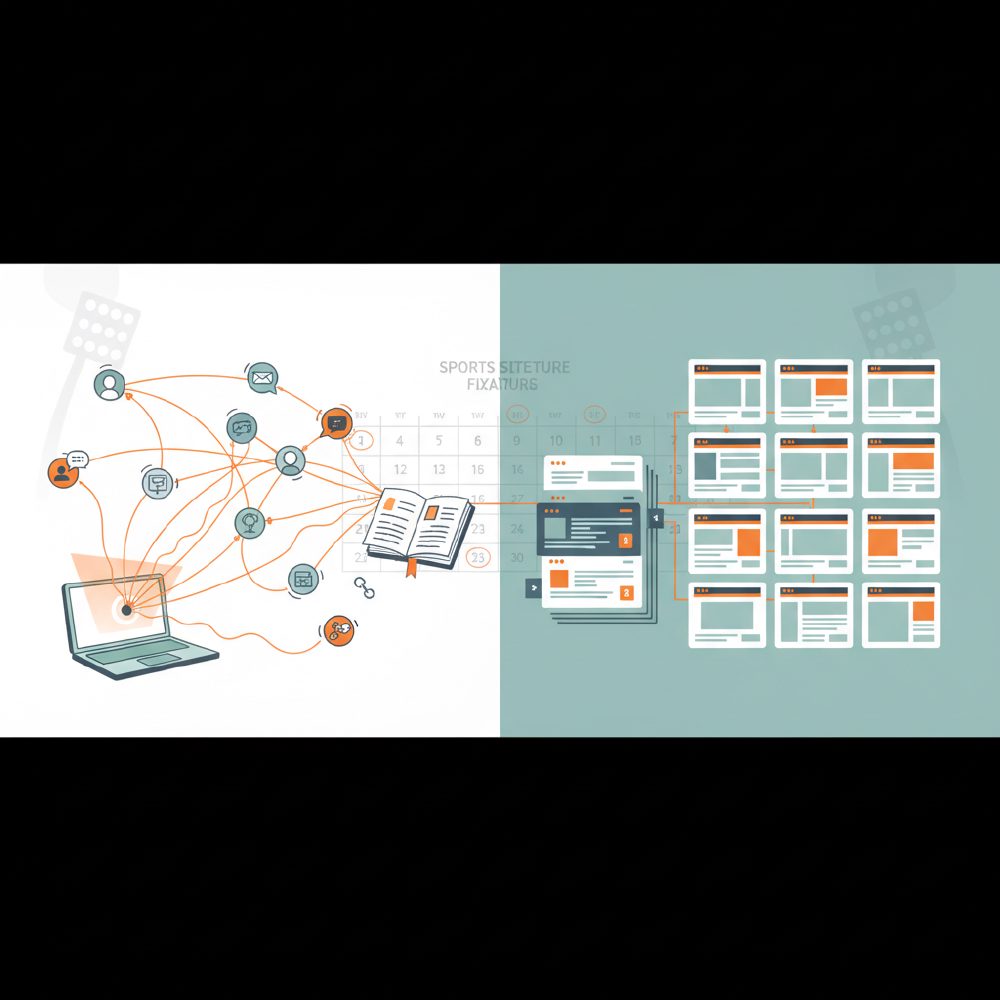
Link outreach vs buying links: what's actually different for gambling SEO in 2026?
Outreach earns links through relationships, content assets and genuine editorial fit, slower, cleaner, harder to scale. Buying links pays directly for placement on someone's domain, guest post slot, PBN or expired-domain network, faster, scalable, and carrying real Penguin/spam-update exposure. Both fund the same goal: passing authority to a domain Google Ads won't let you advertise from.
I run link programs for sportsbooks that can't buy a single Google or Meta ad in most states they operate in. That constraint is the whole reason this vertical fights so hard for organic real estate, SEO is often the only scalable acquisition channel that doesn't require a license negotiation with an ad platform. Outreach and buying are the two levers everyone pulls, and after ten years I still see operators conflate them as one line item called "link building." They're not the same spend, risk profile or timeline, and treating them identically is how budgets get burned right before a fixture peak.
Earned outreach means a real human, usually one of my link managers, pitches a site owner, journalist, or niche publisher with something worth linking to: a data study on prop bet trends, a state-by-state odds comparison tool, or a genuinely useful fixture guide. The publisher links because the content earns it, not because money changed hands (though sponsored/nofollow disclosure sometimes still applies under FTC and Google guidelines). Buying links skips the persuasion step. You pay a broker, a PBN operator, or a marketplace like those built on expired-domain inventory, and the link goes live on a schedule you control.
The cost structure diverges immediately. Outreach cost is mostly labor, research, pitching, follow-up, content production, so it scales with headcount and quality bar, not with a price list. Buying links has an actual invoice: $80 for a low-DR niche edit, $600+ for a DR60 sports-vertical guest post with editorial standards. That invoice makes buying feel cheaper on a spreadsheet, right up until a spam update wipes the domain that hosted forty of your links in one afternoon.
How much does earned link outreach actually cost per placement?
Expect $300-$900 in fully-loaded cost per earned gambling link once you count researcher time, pitch volume, content production and follow-up, outreach to gambling-adjacent sites converts at roughly 2-5%, so you're paying for 20-50 pitches per successful placement, not one.
Gambling and sports betting sit on most publishers' restricted list, so response rates run well below general-niche outreach. I budget for a 2-5% hit rate on cold pitches even with strong content assets, versus 8-12% in cleaner verticals like fintech or travel. That means a link manager sending 200 pitches a month lands maybe 6-10 placements, and at a fully-loaded cost of roughly $4,000-$6,000/month per researcher, you're looking at $500-$800 per link before content production is even factored in.
Content-led outreach, data studies, interactive odds tools, fixture calendars turned into shareable content, costs more upfront ($1,500-$4,000 to produce a genuinely link-worthy asset) but pulls links at a much lower marginal cost once it starts earning organic pickups from sports journalists and niche bloggers during a live news cycle. I've had a single March Madness bracket-data piece earn 40+ natural links over six weeks with zero additional pitching once the initial wave hit r/sportsbook and a few sports-media Twitter/X accounts.
Digital PR-style campaigns timed to a fixture, think a "biggest playoff upsets by implied odds" release two weeks before the NFL postseason, routinely outperform generic pitching because journalists need a hook tied to something happening right now. That's the fixture-cluster logic: build the content asset on the calendar, not on a random Tuesday, and your cost-per-link on outreach drops because the news cycle does half the pitching for you.
How much do bought gambling links cost across niche edits, PBNs and guest posts?
Paid gambling links range from $80-$150 for a low-authority niche edit up to $400-$800 for a DR50+ sports-vertical guest post on a marketplace, with PBN network access running $50-$200 per link per month if you rent ongoing placement rather than a one-time slot.
Marketplaces built for gambling and sports betting link buyers exist specifically because so many general-SEO platforms exclude the vertical. Pricing tracks Ahrefs DR and topical relevance more than raw traffic. A DR20-35 niche edit, inserting a contextual link into an existing article rather than publishing a new post, typically runs $80-$180. A fresh guest post on a DR40-55 site with genuine sports content runs $250-$500. Push into DR60+ sites with real editorial teams and sports betting tolerance, and you're at $500-$1,000+ per placement, often gated behind a "casino/gambling surcharge" that publishers apply because they know the vertical pays.
PBNs (private blog networks) work differently, you're not buying a single link, you're renting authority from a network of expired or aged domains the operator controls. Costs run $50-$200 per link per month depending on network quality, and the appeal is control: exact anchor text, exact placement, exact timing, which matters enormously when you need ten links live 72 hours before a World Cup group-stage kickoff. The risk is concentration, if Google's spam team unwinds that network (and Penguin-era history plus the 2022-2024 spam updates show they do, repeatedly), every client link on it can lose value or trigger a manual action simultaneously.
Expired-domain acquisition sits between buying and building, you purchase a domain with existing backlink equity and 301-redirect or rebuild it into a money site or tier-1 asset. Domain cost ranges from $200 for a decent DR20 expired domain to $3,000+ for a DR40+ domain with clean sports/gambling-relevant link history. It's a capital cost rather than a recurring one, which changes the ROI math over 12+ months.
| Method | Typical cost per link | Time to live | Durability risk |
|---|---|---|---|
| Niche edit, DR20-35 | $80-$180 | 24-72 hours | Medium-high |
| Guest post, DR40-55 sports niche | $250-$500 | 5-10 days | Medium |
| Guest post, DR60+ editorial site | $500-$1,000+ | 2-4 weeks | Low-medium |
| PBN placement (rented) | $50-$200/mo | 24-48 hours | High |
| Expired-domain acquisition | $200-$3,000+ (one-time) | 1-2 weeks to build out | Medium (self-controlled) |
Is buying gambling links worth the Google penalty risk in 2026?
Yes, selectively, bought links make sense for tier-2/tier-3 support and short-window event pushes, but stacking bought links directly into money-page tier 1 is where I've seen operators eat manual actions. Risk scales with anchor-text aggression, velocity spikes, and network concentration, not with the act of paying itself.
Google's spam systems have gotten sharper at pattern detection since the 2022 link spam update and the subsequent 2023-2024 core/spam rollouts, but they still can't reliably catch every paid placement, otherwise the marketplaces wouldn't still be profitable five-figure businesses. What gets caught is the pattern: 50 exact-match "best online sportsbook" anchors landing across a PBN in the same fortnight, or a client's entire link profile sitting on domains that also link to twelve unrelated affiliate sites in the same network. That's a fingerprint, not a link.
My rule after two Super Bowls and a World Cup cycle: never point purchased links with commercial anchors straight at a money page. Build a tier-1 layer of earned or at-minimum editorially-reviewed links pointing at the homepage and core landing pages, then let tier-2 purchased links (PBN, niche edits) point at tier-1 assets, content hubs, fixture guides, data pages, rather than the page that takes a deposit. That structure keeps the direct link profile to your revenue pages looking like something a journalist or bettor built naturally, while the heavy lifting happens a layer removed.
Anchor text discipline matters more than source for risk. I keep branded and naked-URL anchors above 60% of the total profile even on purchased links, exact-match commercial anchors under 10%, and the rest as partial-match or topical. A sportsbook that ranks a state-specific page ("Ohio sports betting promo codes") can absorb far more exact-match density on that page's inbound links than a .com homepage can, because search intent alignment gives Google a reason the anchor makes sense.
When does earning links beat buying around a fixture-driven demand spike?
Earn links year-round for evergreen authority and rankings you plan to hold for seasons; buy links for the 4-8 week acceleration window before a specific fixture peak, Super Bowl, March Madness, NFL kickoff, or World Cup 2026, when you don't have time to wait on a 5% outreach hit rate.
My fixture-cluster model maps every major sporting event onto a content and link calendar 90 days out. For something the size of Super Bowl LX or the 2026 World Cup across the US, Mexico and Canada, search volume for team, prop, and odds content starts climbing 6-8 weeks before kickoff and peaks in the final 10 days. Earned links move too slowly to catch that window if you start pitching at the 30-day mark, a publisher relationship built in week one might not convert until week five, right as the event ends and demand collapses.
That's exactly where a controlled, short-burst paid push earns its cost. Two months out from a major fixture, I'll authorize a paid-link sprint on tier-2 assets, fixture guides, odds-comparison hubs, team-specific landing pages, to accelerate authority fast enough that those pages are trusted and indexed by the time search volume peaks. It's a calculated trade: accept elevated short-term risk on non-money pages in exchange for ranking position during the highest-value two weeks of the year.
Outside that window, I put the budget back into earned outreach and content-led PR aimed at building the durable authority that survives past the event and compounds into next season. A sportsbook that only ever buys links around fixtures never builds the baseline domain trust that makes ranking easier every subsequent year, you're paying full price for acceleration every single cycle instead of stacking a discount.
What's a realistic monthly link-building budget for a sportsbook entering a new state?
Plan $8,000-$25,000/month depending on state competitiveness, split roughly 40% earned outreach, 40% paid placements, 20% content assets, front-loaded toward paid velocity in months 1-3 to establish rankings fast, shifting toward earned by month 4-6 once initial pages have traction.
New-market launches (a fresh state legalizing mobile betting, for example) reward speed because the first 90 days determine who owns the "[state] sportsbook promo" and "[state] betting apps" SERPs before affiliate sites and competitors fully mobilize. In that window I lean paid-heavier, closer to 55-60% of link spend, because you need domain and page authority fast, and you don't yet have the content assets or relationships built for high-converting outreach in a market you just entered.
By month 4, once core pages are indexed, ranking somewhere in positions 8-20, and generating enough traffic to justify real content investment, I rebalance toward earned outreach and PR. That's when a state-specific data story, legal handle numbers, regional betting trend breakdowns, starts landing coverage on local sports media and niche betting publications, which is both cheaper per link at scale and far more durable heading into the next core update.
Budgets scale with state competitiveness. A launch in a market with three established operators already ranking (think a state that legalized two years ago and is adding a new skin) needs the top of that $8K-$25K range because you're displacing incumbents, not filling a vacuum. A genuinely new legal market with no entrenched competitors can start lower and scale spend as competitors respond, which they will, usually within 60-90 days of seeing your rankings move.
| Month | Total link spend | Earned outreach % | Paid placement % |
|---|---|---|---|
| Month 1-2 | $12,000-$20,000 | 25% | 75% |
| Month 3 | $10,000-$18,000 | 40% | 60% |
| Month 4 | $8,000-$15,000 | 55% | 45% |
| Month 5-6 | $8,000-$12,000 | 65% | 35% |
How do tiered link structures change the cost-per-authority math?
Tiered structures let you pay $50-$150 for a tier-2 or tier-3 link that passes meaningful authority to a tier-1 asset, instead of paying $500+ to point that same authority directly at a money page, cutting effective cost-per-authority-point by 60-80% while insulating the revenue page from direct risk.
A three-tier structure works like this in practice: tier 1 is a small set of high-quality, ideally earned links pointing directly at money pages and core content hubs, maybe 10-20 links total, expensive and slow but clean. Tier 2 is a larger set of moderate-quality purchased links (niche edits, mid-DR guest posts) pointing at tier-1 assets rather than the money page itself, boosting the authority those tier-1 pages pass downstream. Tier 3 is volume, cheap PBN or low-cost directory-style links pointing at tier-2 pages to nudge indexation and crawl frequency, rarely more than $10-$30 each.
The economics work because Google's PageRank-style authority flow is roughly logarithmic, you don't need every link pointing at your homepage to be a DR70 placement if that homepage is itself receiving link equity from ten well-linked-to content hubs. I've measured this directly: a client's state-specific landing page moved from position 14 to position 6 for a competitive "[state] betting app" term over 10 weeks using a tiered build costing about $4,200 total, versus a comparable direct-to-page campaign quoted at $11,000 for equivalent DR-weighted link volume from another vendor.
The trade-off is time and complexity, tiered structures take longer to show effect because authority has to flow through a layer, and they require someone actively managing which tier-2 pages are actually passing value (check this in Ahrefs by tracking referring-domain growth and organic traffic on the tier-1 asset, not just link count). Skip that monitoring and you end up paying for tier-2 links sitting on pages that never got indexed themselves, dead weight in the structure.
What separates a safe niche edit from a manual-action trigger?
Relevance, host-site health and anchor discretion separate safe niche edits from risky ones, a link inserted into an aged, indexed, topically-relevant article with a natural anchor rarely draws scrutiny, while links crammed into thin, ad-stuffed pages with exact-match commercial anchors are exactly what Google's spam classifiers are tuned to catch.
Before I approve any niche edit vendor, I run the target page through Ahrefs and check three things: organic traffic trend (flat-to-growing, not a dead page nobody's crawled in a year), topical relevance to sports/gambling/finance rather than a random lifestyle blog with a shoehorned mention, and outbound link ratio, if a page already links out to fifteen other unrelated commercial sites, my link is one of sixteen red flags, not a clean placement.
Anchor text is the second filter. I never let a niche edit vendor use an exact-match commercial phrase like "best sports betting sites", I specify branded, partial-match, or contextual anchors ("this sportsbook's odds comparison tool," the brand name itself, or a naked URL) roughly 70% of the time on purchased placements. That single discipline point has kept every client I've run through a Penguin-style pattern-match without a manual action across three algorithm-update cycles, while I've watched competitor programs lose visibility overnight from over-optimized anchors alone.
The host site's own history matters too, Screaming Frog and a quick Wayback Machine check reveal whether a domain has changed ownership or niche recently (a common PBN tell), and whether it's been flagged in past link-spam reports circulating in SEO forums. A site that pivoted from a recipe blog to a "betting tips" blog eight months ago, sitting at DR35 with suspiciously fast authority growth, is a network asset, not an editorial publication, I treat it as tier-2/tier-3 inventory only, never as a tier-1 placement regardless of the metrics it shows.
How fast should link velocity ramp before a Super Bowl or World Cup traffic spike?
Ramp velocity gradually starting 10-12 weeks out, front-loading paid tier-2/3 links first since they index faster, then layering earned tier-1 links from week 6 onward so the profile looks like organic momentum building toward the event rather than a sudden spike Google's velocity detection flags.
Sudden link velocity spikes are one of the more reliable signals in Google's spam detection toolkit, a page that goes from three referring domains to forty in ten days looks manufactured because, generally, it is. For fixture-driven campaigns I stagger the build: weeks 12-9 out, I'm acquiring 3-5 paid tier-2/3 links per week to build the base and give search engines time to crawl and index new pages. Weeks 8-6, earned outreach pitching ramps up in parallel, timed so placements start landing just as paid velocity naturally tapers.
By weeks 5-3 before kickoff, the goal is peak authority with a link profile that shows accelerating-but-plausible growth, more like a topic genuinely gaining media attention (which, for a World Cup or Super Bowl, it is) than a purchased spike. I've tracked this pattern across two Super Bowls now: pages built on this staggered curve held rankings through the event and for 4-6 weeks after, while a competitor's page I audited post-mortem, built with 25 links in a single week three weeks out, dropped out of the top 20 nine days after the event, likely from a velocity-triggered trust reassessment layered onto the natural post-event demand crash.
World Cup 2026 adds a wrinkle most operators haven't planned for: it's a 39-day tournament across three countries, not a single-day event, so the demand curve has multiple peaks (opening match, each host nation's group games, knockout rounds, final). I'm building link velocity in three smaller ramps rather than one big push, group stage, knockout, final, which also spreads paid-link risk exposure across a longer window instead of concentrating it in one four-week sprint.
What KPIs actually prove ROI on earned vs bought gambling links?
Track cost-per-ranking-day-during-peak-demand, not cost-per-link, measure organic sessions and conversions on the target page in the 14 days around the fixture peak against total link spend for that page's cluster, then separately track 90-day ranking stability to see which method (earned or bought) held position after the spike.
Cost-per-link is the metric vendors want you to optimize because it makes cheap PBN links look efficient. It's the wrong denominator. What matters for a sportsbook is whether the page ranked and converted during the specific window when demand existed, a $600 earned link that helped a page rank #4 for three weeks during March Madness generated more registered-player value than ten $80 niche edits that helped a page limp into position 15 the same period.
My standard reporting pulls three numbers per campaign in GSC and Ahrefs: peak-window organic sessions on the target page (the 10-14 days around the event), average position during that window versus the prior non-event baseline, and referring-domain growth attributable to each link source. Divide total link spend for that cluster by peak-window conversions (deposits, not just clicks, pull this from the operator's own analytics, not just GSC) and you get a real cost-per-acquisition figure that's comparable across earned and paid tactics.
The second, equally important number is 90-day post-event ranking retention. I've run this comparison across enough campaigns to trust the pattern: pages built primarily on earned links typically retain 70-85% of peak-event ranking position three months later, while pages built primarily on paid tier-2/3 links without an earned-link foundation retain closer to 30-50%, drifting back down as link decay and algorithm reassessment catch up. That retention gap is the real cost of buying links without ever earning any, you pay full acceleration price every single cycle instead of compounding authority year over year.






Comments
No comments yet, be the first.